Powerstep · Synthetic Athletic Insoles & Orthotics
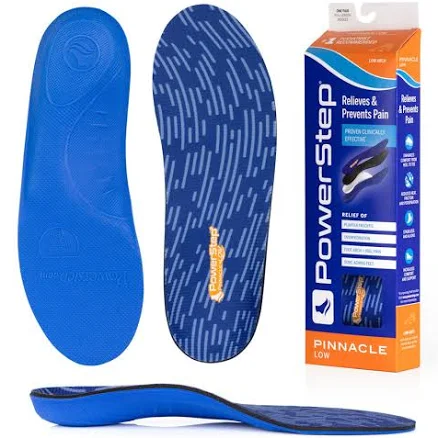
PowerStep Pinnacle Low Insoles
Lower concern insole, but confirm materials with the brand if PFAS matters to you.
PowerStep Pinnacle insoles use foam and fabric without known PFAS-heavy treatments. The brand makes no PFAS statements, and standard insole materials carry lower risk than coated apparel.
Still want this one anyway? Check the price on Amazon. We’d swap it.
Material
Foam, fabric, leather
Brand disclosure
Brand is silent on PFAS
Lab data
No public lab test
You may also be interested in
Top-graded picks in the categories readers replace first, every one scored on the same rubric.

- polypropylene filter housing, carbon/sediment cartridge
- We found no PFAS statement from the brand
- Bacterial growth in spent cartridges
3 hazards checked on this product, all on its full breakdown.

Aquasure
Premier Series 75 GPD Under Sink Reverse Osmosis Water Filtration System
- RO membrane, carbon filters, stainless steel housing
- We found no PFAS statement from the brand
- Bacterial and microbial growth in housing and filters
4 hazards checked on this product, all on its full breakdown.

Avocado
Vegan Mattress
- organic cotton, natural latex, coconut coir, recycled steel coils
- The brand calls it PFAS-free, which we have not verified
- Heavy metals
2 hazards checked on this product, all on its full breakdown.
What PowerStep Pinnacle Low Insoles is made of, ingredients and materials
PowerStep Pinnacle Low insoles use a layered construction of foam cushioning, fabric covering, and leather components. Foam cushioning (typically polyurethane or EVA) is a stable material with minimal leaching risk at body temperature and indoor humidity. Leather tanning and fabric dyes are the main chemical exposure points, though leather is generally well-regulated for heavy metals in consumer markets. The fabric layer's dye chemistry and any flame retardants or finishes are not publicly disclosed by the brand.
What’s concerning
Category baseline
The starting point for this type of product, before anything specific to this product is counted.
No PFAS disclosure
No public statement from the brand about PFAS in this product.
Azo dyes in fabric covering
Fabric layer composition and dye chemistry are not disclosed by PowerStep. Azo dyes are used in many textiles but restricted in EU and Japan; US regulation is weaker. No specific reports link PowerStep insoles to azo dye exposure, but without material certification, risk cannot be ruled out.
Formaldehyde / VOCs
Polyurethane foam and fabric-to-foam adhesives can contain formaldehyde or releasers as cross-linking agents. PowerStep does not provide off-gassing data or VOC certifications. Risk is low for body-worn products at room temperature, but sensitive individuals or high-heat storage may encounter detectable odors.
Source, ATSDR ↗Skin sensitization from dyes or leather finishing chemicals
Individuals with sensitive skin or metal allergies (e.g., chromium from tanning) may experience contact dermatitis. PowerStep provides no ingredient list or allergen warnings. Risk varies by individual and is not specific to this brand but applies to all leather-and-fabric insoles without full disclosure.
What’s reassuring
Base material not linked to PFAS
The main material recorded for this product is not one associated with PFAS.
Heavy metals
Leather components in consumer footwear products are generally subject to implicit supply-chain compliance with heavy metal limits in major markets. No recalls or complaints involving lead or cadmium in PowerStep insoles have been documented. Leather Working Group certification is absent, so independent verification of tanning chemistry is not available.
Source, FDA ↗Flame retardants
Insoles are not regulated as flammable textiles in the US, so flame retardant additives are not mandatory. No public disclosure or complaint record suggests their presence in PowerStep products, but formulation is not independently verified.
Source, EPA ↗How is this PFAS grade calculated?
The brand's record and disclosure
PowerStep does not publicly disclose material certifications, chemical test results, or PFAS policies on their website or product documentation. The brand has no documented recalls or public safety controversies on record. They do not advertise third-party certifications (e.g., OEKO-TEX, Leather Working Group) for their insole products. This silence makes independent verification difficult, but absence of reported incidents suggests no acute safety crisis.
How it compares in its category
Insoles as a category carry lower chemical risk than footwear uppers because they do not involve synthetic polymers (polyurethane, PVC) that are common sources of phthalates or antimony. Leather-topped insoles like this are more chemically transparent than fabric-only or gel-core alternatives, which may use undisclosed synthetic resins or polymers. Many competing insole brands (Superfeet, Spenco, Dr. Scholl's) similarly lack public chemical disclosure, so PowerStep is neither above nor below category norm.
If you buy it
Store insoles in a cool, dry environment away from direct heat or prolonged sunlight, as foam can degrade and off-gas volatile compounds at high temperatures. Replace every 6-12 months depending on use intensity, as foam compression reduces cushioning and structural integrity. Hand wash with mild soap and water if needed; do not machine wash or expose to solvents. Monitor for any skin irritation; if rash or odor develops, discontinue use and contact the brand for material information.
What is not known about PFAS in this product?
- Basis
- Model estimate, 72% confidence, not a lab result
- Lab test
- None on record for this exact product
- Brand statement
- Powerstep has made none
Formulations change between production runs, so check the current label. How we grade.
More synthetic athletic insoles & orthotics grades
How we score, every product runs through the same public 0-100 rubric based on materials, coatings, brand disclosure, lab findings, and recalls. See the full methodology → Spotted a mistake? Report an error.