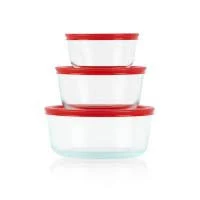
Pyrex · Food Storage Containers
Pyrex 6-Piece Food Storage Container Set
Borosilicate glass containers with plastic lids and no PFAS coating on record.
Pyrex glass storage containers are borosilicate glass, with no PFAS concern on record from the glass itself. The plastic lids are not described as treated, and no third-party PFAS testing is available.
We flunk more products than we pass. This one earned its grade. How we grade
Material
borosilicate glass with plastic lids
Lab data
No public lab test
You may also be interested in
Top-graded picks in the categories readers replace first, every one scored on the same rubric.

- polypropylene filter housing, carbon/sediment cartridge
- We found no PFAS statement from the brand
- Bacterial growth in spent cartridges
3 hazards checked on this product, all on its full breakdown.

Aquasure
Premier Series 75 GPD Under Sink Reverse Osmosis Water Filtration System
- RO membrane, carbon filters, stainless steel housing
- We found no PFAS statement from the brand
- Bacterial and microbial growth in housing and filters
4 hazards checked on this product, all on its full breakdown.

Avocado
Vegan Mattress
- organic cotton, natural latex, coconut coir, recycled steel coils
- The brand calls it PFAS-free, which we have not verified
- Heavy metals
2 hazards checked on this product, all on its full breakdown.
What Pyrex 6-Piece Food Storage Container Set is made of, ingredients and materials
Pyrex food storage containers are borosilicate glass, a silicate compound fused at high temperature with boron oxide, making it extremely resistant to thermal shock and chemical leaching. The lids are typically polypropylene (PP) or a PP-based polymer blend, both with lower concern for migration at room temperature and typical refrigerator storage. Borosilicate glass does not leach lead, cadmium, or other heavy metals into food, and the material is chemically stable across normal storage and moderate reheating conditions.
What’s concerning
Category baseline
The starting point for this type of product, before anything specific to this product is counted.
No PFAS disclosure
No public statement from the brand about PFAS in this product.
Plastic lid degradation and replacement necessity
Polypropylene lids in this set will soften, discolor, or lose seal integrity after repeated heating, dishwasher cycles, or exposure to hot foods. When gaskets fail, containers no longer provide an airtight seal and may accumulate odors or bacteria; replacement lids are sold separately but are not always easy to find as matching sets.
Microplastic shedding from lids under heat stress
If plastic lids are exposed to prolonged high temperatures (oven heating, dishwasher hot cycles, or microwaving without venting), microscopic plastic fragments may migrate into stored food. Risk is low under normal refrigerated storage but increases if lids are left on during reheating.
Undisclosed chemicals in lid coatings or gasket materials
Pyrex does not publicly state whether silicone gaskets or polypropylene lids contain PFOA, PFAS, or other non-regulated polymer additives. Industry practice includes antimicrobial or water-resistant treatments that may include fluorinated compounds, though migration into food at room temperature is typically minimal.
Borosilicate glass breakage and cut hazard
While borosilicate glass is more durable than standard soda-lime glass, it is still glass and can crack or shatter if dropped or subjected to rapid thermal shock (ice-cold food placed directly in a hot oven). Sharp fragments pose ingestion and laceration risk; this is a mechanical hazard, not a chemical one, but relevant to overall product safety.
What’s reassuring
Bare uncoated material
Recorded as a bare, uncoated material with no surface coating or treatment.
Lead
Borosilicate glass composition does not include lead or cadmium as raw materials, and no recalls or reports indicate migration of heavy metals from Pyrex containers into food. Ceramic or enameled cookware would carry higher risk in this regard.
Source, ATSDR ↗How is this PFAS grade calculated?
The brand's record and disclosure
Pyrex is owned by Instant Brands and has a long history in kitchenware without major product safety recalls tied to food leaching or chemical migration in recent decades. The brand does not publicly disclose PFAS use in lid coatings or manufacturing, which is typical of the industry but leaves a transparency gap. Pyrex products meet FDA food contact substance regulations, though the company has not pursued third-party certifications (such as GreenGuard or BPA-Free certified) that would signal extra due diligence on non-regulated chemicals in lid materials.
How it compares in its category
Borosilicate glass containers like Pyrex are not a material linked to BPA/BPS and phthalate concerns that have been found in some polycarbonate and PVC alternatives. Most competing glass storage brands (Rubbermaid Brilliance, OXO, even store brands) use similar borosilicate glass with polypropylene lids, so Pyrex occupies a mainstream, low-hazard tier rather than a premium or budget outlier. The main differentiation in the category is lid seal quality and longevity, not chemical safety profile.
If you buy it
Store food at room temperature or refrigerated; borosilicate glass is microwave-safe but allow lids to cool before sealing to avoid pressure buildup. Replace lids if the silicone gasket becomes cracked, discolored, or no longer seals, as degraded seals can trap moisture and may harbor bacterial growth; the glass containers themselves are indefinitely reusable. Avoid prolonged contact with extremely acidic foods (vinegar, citrus) at high temperatures, which can very slowly degrade the glaze or any decorative coatings on older Pyrex items, though the core glass has no hazard of this kind on record. Wash lids by hand or on the top rack of a dishwasher to extend gasket life.
What is not known about PFAS in this product?
- Basis
- Model estimate, 82% confidence, not a lab result
- Lab test
- None on record for this exact product
- Brand statement
- Pyrex has made a specific claim
Formulations change between production runs, so check the current label. How we grade.
More food storage containers grades
How we score, every product runs through the same public 0-100 rubric based on materials, coatings, brand disclosure, lab findings, and recalls. See the full methodology → Spotted a mistake? Report an error.