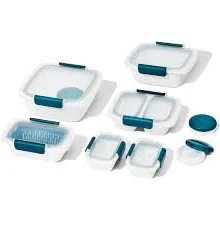
OXO Good Grips Prep & Go Container Set
Lower concern; simple plastic food container with no known PFAS triggers, but brand offers no explicit disclosure.
OXO Good Grips Prep & Go containers are injection-molded polypropylene with silicone seals, common food-storage materials without established PFAS use. The product has no nonstick coating, water-repellent treatment, or stain resistance that would typically introduce fluorochemicals. OXO has not published PFAS statements.
We flunk more products than we pass. This one earned its grade. How we grade
Material
Polypropylene (PP) plastic containers with silicone gaskets
Lab data
No public lab test
You may also be interested in
Top-graded picks in the categories readers replace first, every one scored on the same rubric.

- polypropylene filter housing, carbon/sediment cartridge
- We found no PFAS statement from the brand
- Bacterial growth in spent cartridges
3 hazards checked on this product, all on its full breakdown.

Aquasure
Premier Series 75 GPD Under Sink Reverse Osmosis Water Filtration System
- RO membrane, carbon filters, stainless steel housing
- We found no PFAS statement from the brand
- Bacterial and microbial growth in housing and filters
4 hazards checked on this product, all on its full breakdown.

Avocado
Vegan Mattress
- organic cotton, natural latex, coconut coir, recycled steel coils
- The brand calls it PFAS-free, which we have not verified
- Heavy metals
2 hazards checked on this product, all on its full breakdown.
What OXO Good Grips Prep & Go Container Set is made of, ingredients and materials
This set uses polypropylene (PP, plastic #5) for the rigid containers and silicone for the gaskets. Polypropylene is a relatively stable plastic with a higher melting point (around 130°C / 266°F) compared to softer plastics like polystyrene or PVC, making it less prone to leaching under normal cold-storage and warm-food conditions. Silicone gaskets are chemically inert and do not typically release harmful compounds during food contact. The risk of BPA, phthalates, or other endocrine disruptors from this material pairing is substantially lower than from polycarbonate or older polyvinyl chloride containers.
What’s concerning
Category baseline
The starting point for this type of product, before anything specific to this product is counted.
No PFAS disclosure
No public statement from the brand about PFAS in this product.
Microplastics
Repeated mechanical stress (stacking, dropping, dishwasher cycles) or prolonged UV exposure can cause surface cracking and micro-particle shedding from the polypropylene; risk is low under normal storage conditions but increases with age. Regular inspection for visible wear is recommended.
Source, EPA ↗What’s reassuring
Base material not linked to PFAS
The main material recorded for this product is not one associated with PFAS.
BPA & bisphenols
Polypropylene does not inherently contain BPA or BPS, and OXO's typical manufacturing does not use these chemicals in the base resin. No recalls or complaints on record for this product line.
Source, FDA ↗Phthalates
Phthalate plasticizers are not standard in polypropylene formulations; they are more common in flexible PVC and polyvinyl chloride products. Silicone gaskets do not use phthalates as a rule.
Source, ATSDR ↗Silicone gasket breakdown or leachables
High-quality food-grade silicone (which OXO typically sources) has minimal leaching risk and no documented issues in this product category. Gasket integrity should be monitored visually for cracks or deformation.
Off-gassing from plastic storage
Polypropylene has low volatile organic compound (VOC) emissions at room temperature, in contrast to softer plastics. New containers may have a faint plastic odor that dissipates within hours to days and does not indicate a safety hazard.
How is this PFAS grade calculated?
The brand's record and disclosure
OXO does not publish explicit third-party certifications (such as BPA-free validation or SVHC declarations) on this product line, nor does the brand maintain a public PFAS policy statement. This silence is not unusual for mainstream kitchenware brands and does not indicate a known contamination issue. OXO has not faced documented recalls or safety controversies specific to this container line for chemical leaching. The brand's general reputation is oriented toward ergonomic design and durability rather than advanced material transparency.
How it compares in its category
Polypropylene food containers show lower concern in the plastic storage category and are widely recommended by food safety agencies for microwave and dishwasher use within temperature limits. This product is functionally equivalent to comparable offerings from Rubbermaid, Pyrex (plastic lines), and Sistema. Glass or stainless-steel alternatives eliminate plastic leaching risk entirely but are heavier and more expensive. OXO's design (locking lids, stackability) is typical of mid-range storage container sets and does not introduce additional chemical exposure compared to competing PP-based systems.
If you buy it
Do not microwave these containers unless OXO explicitly labels them microwave-safe; most polypropylene products are not recommended for microwave heating because sustained heat can soften the plastic and potentially degrade the gasket seal. Hand-wash or follow label guidance for dishwasher compatibility, as repeated high-temperature cycles may eventually compromise silicone durability. Replace containers if lids become warped, gaskets crack, or the plastic becomes cloudy or brittle, as these are signs of material degradation. Store only at room temperature or refrigeration; do not use for hot-food storage immediately after cooking.
What is not known about PFAS in this product?
- Basis
- Model estimate, 72% confidence, not a lab result
- Lab test
- None on record for this exact product
- Brand statement
- OXO has made a specific claim
Formulations change between production runs, so check the current label. How we grade.
What are the PFAS-free alternatives to OXO Good Grips Prep & Go Container Set?
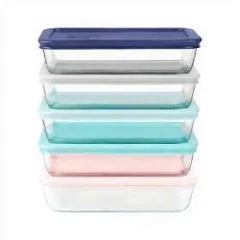
- borosilicate glass with metal lids (likely stainless steel or aluminum)
- Metal lid corrosion and leaching
3 hazards checked on this product, all on its full breakdown.
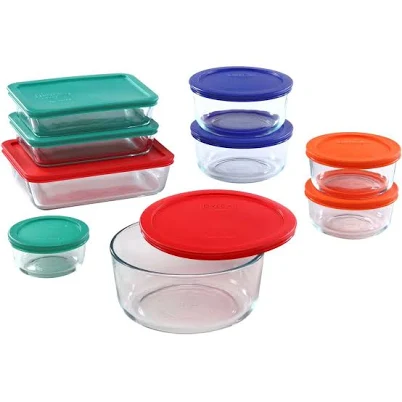
- borosilicate glass with plastic lids
- PFAS
4 hazards checked on this product, all on its full breakdown.
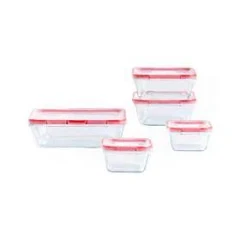
- Borosilicate glass containers with plastic lids (PP/TPE closure material unspecified)
- Microplastics
4 hazards checked on this product, all on its full breakdown.
More food storage containers grades
How we score, every product runs through the same public 0-100 rubric based on materials, coatings, brand disclosure, lab findings, and recalls. See the full methodology → Spotted a mistake? Report an error.