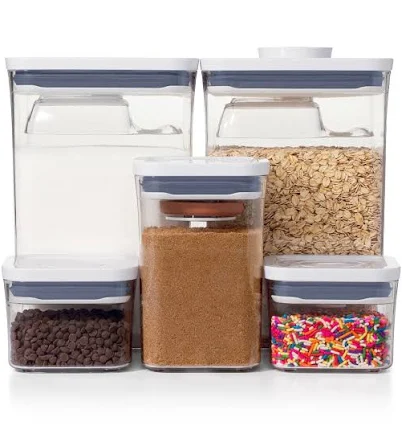
OXO POP Container Baking Set
Lower concern; basic plastic food storage without known PFAS triggers, but OXO provides no transparency on coatings or treatments.
OXO POP containers are rigid plastic storage with snap-lock lids designed for dry goods. The main risk factors like nonstick coatings, water-repellent treatments, and stain-resistant finishes don't typically appear in basic food-storage canisters. OXO makes no public disclosure about PFAS or coating chemistry.
We flunk more products than we pass. This one earned its grade. How we grade
Material
Plastic (polypropylene/polycarbonate) food storage containers and lids
Lab data
No public lab test
You may also be interested in
Top-graded picks in the categories readers replace first, every one scored on the same rubric.

- polypropylene filter housing, carbon/sediment cartridge
- We found no PFAS statement from the brand
- Bacterial growth in spent cartridges
3 hazards checked on this product, all on its full breakdown.

Aquasure
Premier Series 75 GPD Under Sink Reverse Osmosis Water Filtration System
- RO membrane, carbon filters, stainless steel housing
- We found no PFAS statement from the brand
- Bacterial and microbial growth in housing and filters
4 hazards checked on this product, all on its full breakdown.

Avocado
Vegan Mattress
- organic cotton, natural latex, coconut coir, recycled steel coils
- The brand calls it PFAS-free, which we have not verified
- Heavy metals
2 hazards checked on this product, all on its full breakdown.
What OXO POP Container Baking Set is made of, ingredients and materials
The OXO POP Baking Set uses polypropylene (PP) for the main containers and polycarbonate (PC) or acrylic for lids/seals. Polypropylene has a high melting point (around 130°C / 266°F) and is not a material linked to BPA or phthalate leaching under normal kitchen conditions. Polycarbonate, if present in lids, carries older concerns about bisphenol A (BPA), though modern OXO products typically use BPA-free formulations, though the company does not publicly specify this for all lines.
What’s concerning
Category baseline
The starting point for this type of product, before anything specific to this product is counted.
No PFAS disclosure
No public statement from the brand about PFAS in this product.
Microplastic shedding from wear
Repeated opening/closing and hand-washing can cause fine plastic particles to detach from the container edges and seals over time, especially if lids are used roughly or stored in damp conditions. Risk is low with normal use but increases with product age.
Lead
OXO POP lids use silicone or rubber gaskets that can crack, shrink, or lose elasticity after 3-5 years of use or exposure to dishwasher heat. A compromised seal allows moisture and contaminants to enter stored foods, especially in baking mixes prone to absorbing humidity.
Source, ATSDR ↗Chemical absorption and odor/flavor transfer
Polypropylene absorbs volatile compounds from strong-smelling foods and cleaning products over time. OXO containers are not immune to this; extended storage of spiced or acidic foods may leave persistent odors and taste residue in the plastic, though no toxicity results directly.
What’s reassuring
Base material not linked to PFAS
The main material recorded for this product is not one associated with PFAS.
BPA & bisphenols
OXO has not disclosed whether lids contain BPA or BPS. Polycarbonate used in some OXO lids may have carried BPA in older formulations, but modern batches are assumed BPA-free by industry standard. No leaching incidents are documented for this product line.
Source, FDA ↗Phthalate plasticizers
Polypropylene does not require phthalates for flexibility. If polycarbonate or acrylic is used in lids or seals, phthalates are unlikely in food-contact formulations subject to FDA oversight, but OXO does not confirm absence.
How is this PFAS grade calculated?
The brand's record and disclosure
OXO is a subsidiary of Helen of Troy and has a reputation for practical, durable kitchen products. The company has not published comprehensive chemical disclosure statements or third-party certifications (such as NSF or FDA compliance documentation) readily available to consumers. No major recalls or contamination incidents specific to the POP container line are documented in public safety databases. OXO remains silent on PFAS treatments or coatings, which is typical for mainstream food storage brands but leaves a transparency gap.
How it compares in its category
OXO POP containers occupy the mid-range of the food storage market. They are more affordable than glass alternatives and more durable than thin single-use plastics, but offer less transparency than premium brands like Pyrex (glass) or Rubbermaid Brilliance (which publishes material specs). Compared to budget PP containers, OXO's design and seal quality are notably stronger, reducing the risk of lid degradation and microparticle release over time.
If you buy it
Do not microwave these containers unless the label explicitly permits it; polycarbonate lids can degrade under heat. Store dry goods (flour, sugar, baking supplies) rather than acidic or fatty foods for extended periods, as plastics can absorb odors and flavors. Hand-wash with warm water and mild soap; avoid abrasive scrubbers that scratch the surface. Replace containers every 3-5 years or if lids no longer seal tightly, as wear can compromise freshness and invite microbial growth.
What is not known about PFAS in this product?
- Basis
- Model estimate, 72% confidence, not a lab result
- Lab test
- None on record for this exact product
- Brand statement
- OXO has made a specific claim
Formulations change between production runs, so check the current label. How we grade.
What are the PFAS-free alternatives to OXO POP Container Baking Set?
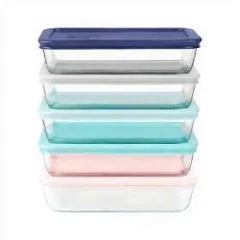
- borosilicate glass with metal lids (likely stainless steel or aluminum)
- Metal lid corrosion and leaching
3 hazards checked on this product, all on its full breakdown.
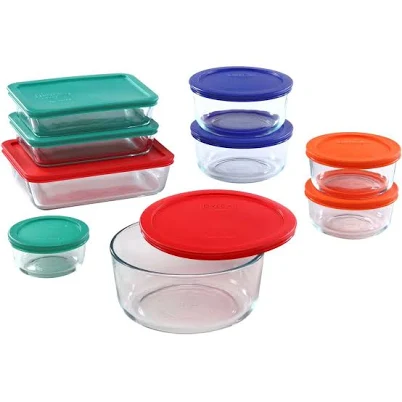
- borosilicate glass with plastic lids
- PFAS
4 hazards checked on this product, all on its full breakdown.
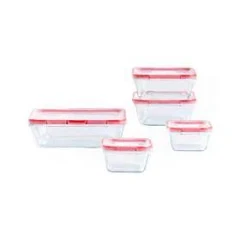
- Borosilicate glass containers with plastic lids (PP/TPE closure material unspecified)
- Microplastics
4 hazards checked on this product, all on its full breakdown.
More food storage containers grades
How we score, every product runs through the same public 0-100 rubric based on materials, coatings, brand disclosure, lab findings, and recalls. See the full methodology → Spotted a mistake? Report an error.