Rubbermaid · Food Storage Containers
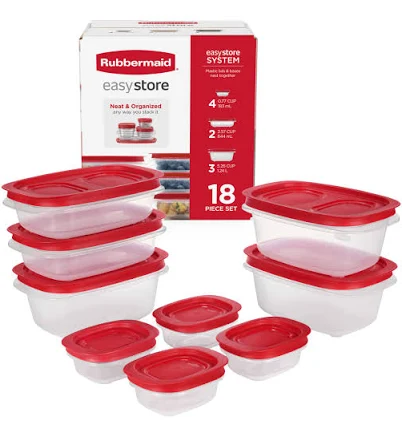
Rubbermaid EasyStore Medium Rectangle Containers 18-Piece Set
Lower concern; basic plastic food storage with no known PFAS triggers, but no brand transparency.
Rubbermaid EasyStore containers are made from polypropylene, a commodity thermoplastic with no inherent PFAS chemistry and no nonstick, waterproof, or stain-resistant coatings. The brand makes no PFAS disclosures.
We flunk more products than we pass. This one earned its grade. How we grade
Material
polypropylene (PP) plastic containers and lids
Brand disclosure
Brand is silent on PFAS
Lab data
No public lab test
You may also be interested in
Top-graded picks in the categories readers replace first, every one scored on the same rubric.

- polypropylene filter housing, carbon/sediment cartridge
- We found no PFAS statement from the brand
- Bacterial growth in spent cartridges
3 hazards checked on this product, all on its full breakdown.

Aquasure
Premier Series 75 GPD Under Sink Reverse Osmosis Water Filtration System
- RO membrane, carbon filters, stainless steel housing
- We found no PFAS statement from the brand
- Bacterial and microbial growth in housing and filters
4 hazards checked on this product, all on its full breakdown.

Avocado
Vegan Mattress
- organic cotton, natural latex, coconut coir, recycled steel coils
- The brand calls it PFAS-free, which we have not verified
- Heavy metals
2 hazards checked on this product, all on its full breakdown.
What Rubbermaid EasyStore Medium 18-Piece Set is made of, ingredients and materials
These containers are polypropylene (PP, plastic #5), a thermoplastic polymer chosen for food storage because it is rigid, microwave-safe at low temperatures, and does not leach BPA or phthalates under normal use. Polypropylene is one of the more chemically stable food-grade plastics and does not break down into microplastics during typical cold or warm (not hot) storage. The lids are also PP, meaning the entire set avoids the mixed-material complexity that sometimes introduces incompatible additives.
What’s concerning
Category baseline
The starting point for this type of product, before anything specific to this product is counted.
No PFAS disclosure
No public statement from the brand about PFAS in this product.
Microplastics
If containers are microwaved at high power or exposed to boiling liquids repeatedly, polymer chains may degrade and shed microparticles into food. Risk is low under label-recommended use (cool/warm storage, brief reheating) but increases with misuse.
Source, EPA ↗Lid seal degradation and mold/bacterial growth
User reports on retail sites occasionally mention lid warping or seal failure after dishwasher use or prolonged storage, potentially allowing mold or bacterial colonization at the seal interface. This is a durability and hygiene issue, not a chemical safety issue, but warrants inspection before refilling.
What’s reassuring
Base material not linked to PFAS
The main material recorded for this product is not one associated with PFAS.
BPA & bisphenols
Polypropylene does not contain BPA by formulation; no BPA exposure is expected from this product under any normal use condition.
Source, FDA ↗Phthalates
Polypropylene is not formulated with phthalate plasticizers; no phthalate leaching risk is documented for PP food storage containers.
Source, ATSDR ↗Polymer additives (colorants, UV stabilizers, slip agents)
FDA-cleared polypropylene resin typically includes inert additives (titanium dioxide for opacity, hindered amine light stabilizers). No published data indicates leaching of these additives into food at concentrations of concern from this product.
How is this PFAS grade calculated?
The brand's record and disclosure
Rubbermaid is a Newell subsidiary with a long history in durable plastic consumer goods. The company has not published detailed ingredient or chemical disclosure statements for this specific product line, nor has it pursued third-party certification (e.g., GreenGuard, FDA Compliance Plus labeling beyond baseline). No major recalls or chemical safety controversies are on record for the EasyStore line. The brand's silence on PFAS or other intentional additives is typical of the mass-market food storage sector.
How it compares in its category
Polypropylene containers have lower concern than polycarbonate (linked to BPA) and are more durable than thin PET (polyethylene terephthalate). Comparable products from OXO, Pyrex glass, and Tupperware offer similar polypropylene options at similar or higher price points. The main trade-off is that PP is less heat-tolerant than glass or stainless steel, and repeated heating above 100°C can degrade the resin.
If you buy it
Use these containers for cold or room-temperature food storage; avoid the dishwasher's heated dry cycle and do not microwave on high power or for extended periods. Replace any containers showing visible cracking, cloudiness, or persistent odor, as these are signs of resin fatigue. Store away from direct sunlight and heat sources (stove, oven) to minimize polymer stress. Hand-wash with mild soap and cool water for longest life.
What is not known about PFAS in this product?
- Basis
- Model estimate, 78% confidence, not a lab result
- Lab test
- None on record for this exact product
- Brand statement
- Rubbermaid has made none
Formulations change between production runs, so check the current label. How we grade.
What are the PFAS-free alternatives to Rubbermaid EasyStore Medium Rectangle Containers 18-Piece Set?
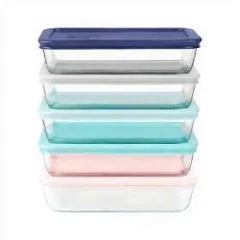
- borosilicate glass with metal lids (likely stainless steel or aluminum)
- Metal lid corrosion and leaching
3 hazards checked on this product, all on its full breakdown.
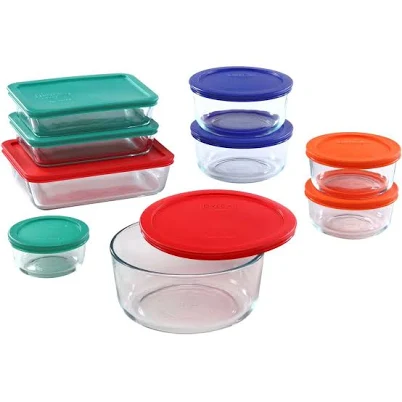
- borosilicate glass with plastic lids
- PFAS
4 hazards checked on this product, all on its full breakdown.
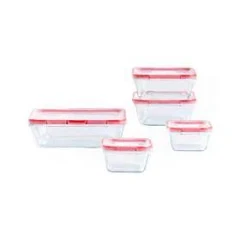
- Borosilicate glass containers with plastic lids (PP/TPE closure material unspecified)
- Microplastics
4 hazards checked on this product, all on its full breakdown.
More food storage containers grades
How we score, every product runs through the same public 0-100 rubric based on materials, coatings, brand disclosure, lab findings, and recalls. See the full methodology → Spotted a mistake? Report an error.