Pyrex · Food Storage Containers
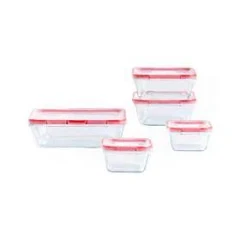
Pyrex Freshlock 10-Piece Glass Storage Set
Lower PFAS concern; glass containers are inherently low-risk; check lid material if possible.
Pyrex Freshlock uses borosilicate glass as the primary food-contact material, which doesn't contain or leach PFAS. The main uncertainty is the plastic closure lids and gaskets, which Pyrex doesn't publicly specify. Glass storage containers present lower PFAS risk than coated cookware or treated textiles.
We flunk more products than we pass. This one earned its grade. How we grade
Material
Borosilicate glass containers with plastic lids (PP/TPE closure material unspecified)
Lab data
No public lab test
You may also be interested in
Top-graded picks in the categories readers replace first, every one scored on the same rubric.

- polypropylene filter housing, carbon/sediment cartridge
- We found no PFAS statement from the brand
- Bacterial growth in spent cartridges
3 hazards checked on this product, all on its full breakdown.

Aquasure
Premier Series 75 GPD Under Sink Reverse Osmosis Water Filtration System
- RO membrane, carbon filters, stainless steel housing
- We found no PFAS statement from the brand
- Bacterial and microbial growth in housing and filters
4 hazards checked on this product, all on its full breakdown.

Avocado
Vegan Mattress
- organic cotton, natural latex, coconut coir, recycled steel coils
- The brand calls it PFAS-free, which we have not verified
- Heavy metals
2 hazards checked on this product, all on its full breakdown.
What Pyrex Freshlock 10-Piece Glass Storage Set is made of, ingredients and materials
Pyrex Freshlock containers use borosilicate glass, which is engineered to resist thermal shock and chemical leaching. The lids appear to be polypropylene (PP) or TPE (thermoplastic elastomer) based on typical Pyrex specifications, though the exact polymer and any additives are not specified on readily available product documentation. Borosilicate glass is not a material linked to leaching metals, BPA, or other organic compounds under normal food storage conditions. The plastic lids are the only potential exposure point for additives, but PP and TPE are generally considered lower-risk plastics when not heated.
What’s concerning
Category baseline
The starting point for this type of product, before anything specific to this product is counted.
No PFAS disclosure
No public statement from the brand about PFAS in this product.
Microplastics
Polypropylene and TPE lids can degrade over repeated heating cycles or extended UV exposure, potentially shedding microparticles into stored food. This risk is minimized if lids are kept away from heat sources and replaced every 2-3 years with regular use.
Source, EPA ↗Additive migration from plastic lids
PP and TPE lid formulations may contain plasticizers, stabilizers, or release agents not disclosed publicly. Direct contact with acidic or oily foods at room temperature poses minimal risk, but exact additive composition is not available.
Glass breakage and physical injury
Borosilicate glass is durable but not unbreakable; drops, thermal shock from rapid temperature changes, or manufacturing defects can cause fractures. This is a handling and product-design issue rather than a chemical safety hazard.
Bacterial growth in degraded or poorly sealed lids
If lids warp or seals fail, food storage integrity is compromised, allowing bacterial colonization. This is a maintenance issue rather than a material defect specific to Pyrex.
What’s reassuring
Bare uncoated material
Recorded as a bare, uncoated material with no surface coating or treatment.
BPA & bisphenols
Modern Pyrex products are not known to use BPA in lids, and PP/TPE alternatives do not typically require BPA. No recalls or documented contamination have been reported for this product line.
Source, FDA ↗How is this PFAS grade calculated?
The brand's record and disclosure
Pyrex (currently owned by Instant Brands) has a long history as a trusted kitchenware brand and has not faced major safety recalls related to this product line in recent years. The company does not publicly disclose detailed chemical composition or PFAS testing for its plastic lids, which reflects a broader industry pattern of minimal transparency on lid additives. No formal certifications (such as FDA food-contact compliance statements) are prominently advertised, though the product is legally permitted for food contact in the United States. Pyrex has maintained a silent stance on PFAS, neither confirming nor denying use in lid formulations.
How it compares in its category
Glass storage containers universally outperform plastic-only alternatives in terms of leaching risk, as glass is inert and does not degrade over time. Compared to ceramic containers with glaze coatings, Pyrex avoids the small risk of lead or cadmium in decorative enamels. The main trade-off is durability, borosilicate glass is brittle and can break, whereas many plastic competitors are shatterproof. Pyrex's plastic lids are comparable to those found on competing glass brands (Rubbermaid, OXO, Anchor Hocking) in terms of material type and disclosure practices.
If you buy it
Store food at room temperature or refrigerated; never place lids (plastic) directly in ovens or microwaves, as they can warp or potentially release volatile compounds if overheated above 140-150 degrees Fahrenheit. Hand wash lids rather than using dishwashers to extend their lifespan and minimize thermal stress. Replace lids if they become warped, cracked, or no longer seal tightly, as degraded plastic may shed microparticles. The glass itself is dishwasher-safe and will not degrade, but inspect regularly for chips or cracks that could harbor bacteria or cause cuts.
What is not known about PFAS in this product?
- Basis
- Model estimate, 88% confidence, not a lab result
- Lab test
- None on record for this exact product
- Brand statement
- Pyrex has made a specific claim
Formulations change between production runs, so check the current label. How we grade.
More food storage containers grades
How we score, every product runs through the same public 0-100 rubric based on materials, coatings, brand disclosure, lab findings, and recalls. See the full methodology → Spotted a mistake? Report an error.