Pyrex · Food Storage Containers
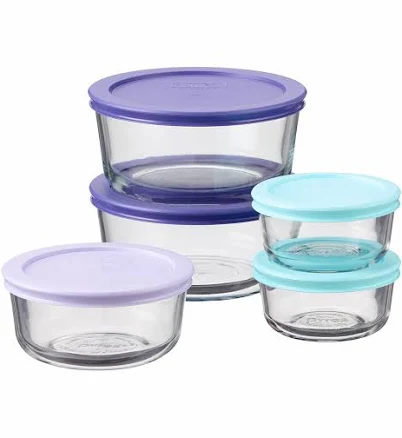
Pyrex Simply Store 10-Piece Glass Storage Container Set
Lower PFAS concern; glass itself is inherently PFAS-resistant, though plastic lids warrant caution.
Pyrex Simply Store uses borosilicate glass, which doesn't require Teflon-family coating coatings and presents lower intrinsic PFAS risk. The plastic lids, likely polypropylene or similar, may contain PFAS additives or processing residues; the brand provides no disclosure.
We flunk more products than we pass. This one earned its grade. How we grade
Material
borosilicate glass containers with plastic lids
Lab data
No public lab test
You may also be interested in
Top-graded picks in the categories readers replace first, every one scored on the same rubric.

- polypropylene filter housing, carbon/sediment cartridge
- We found no PFAS statement from the brand
- Bacterial growth in spent cartridges
3 hazards checked on this product, all on its full breakdown.

Aquasure
Premier Series 75 GPD Under Sink Reverse Osmosis Water Filtration System
- RO membrane, carbon filters, stainless steel housing
- We found no PFAS statement from the brand
- Bacterial and microbial growth in housing and filters
4 hazards checked on this product, all on its full breakdown.

Avocado
Vegan Mattress
- organic cotton, natural latex, coconut coir, recycled steel coils
- The brand calls it PFAS-free, which we have not verified
- Heavy metals
2 hazards checked on this product, all on its full breakdown.
What Pyrex Simply Store 10-Piece Container Set is made of, ingredients and materials
Pyrex Simply Store uses borosilicate glass for containers and polypropylene (PP) plastic for lids. Borosilicate glass is highly resistant to thermal shock and chemical leaching because of its silica-alumina composition, making it lower concern for food storage compared to some alternatives. The PP lids are the variable, PP itself is generally stable, but repeated heating can degrade the plastic and potentially release oligomers; lids are not designed for microwave use in most Pyrex products.
What’s concerning
Category baseline
The starting point for this type of product, before anything specific to this product is counted.
No PFAS disclosure
No public statement from the brand about PFAS in this product.
BPA & bisphenols
Pyrex does not disclose whether PP lids contain BPA, phthalates, or other additives. PP is BPA-free by design, but heating degradation can mobilize residual oligomers; risk is low at room temperature but increases with repeated microwave or hot dishwasher use.
Source, FDA ↗Lid degradation and seal failure
Consumer reports indicate that Pyrex PP lids become cloudy, warp, or lose seal integrity after 2-5 years of use, particularly with dishwasher exposure. This is a durability issue rather than a chemical safety issue, but failed seals can allow food contamination.
Microplastic shedding from lids
Worn or scratched PP lids may shed micro-particles over time, especially if repeatedly dishwashed. No data exists for Pyrex specifically, but this is a theoretical risk with any plastic food-contact component over a long service life.
What’s reassuring
Bare uncoated material
Recorded as a bare, uncoated material with no surface coating or treatment.
Thermal shock and glass breakage
Borosilicate glass is engineered to withstand temperature swings, and Pyrex has a long safety record; however, sudden temperature extremes (oven to ice bath) or drops can cause breakage, which is a mechanical rather than chemical hazard.
Lead
Borosilicate glass used in food storage is not glazed and does not contain lead or cadmium; the material itself is food-grade soda-lime silicate or borosilicate formulation free of these heavy metals.
Source, ATSDR ↗How is this PFAS grade calculated?
The brand's record and disclosure
Pyrex (now owned by Instant Brands) is one of the oldest food storage brands in North America with a long history of borosilicate glass cookware and storage. The company does not prominently disclose plastic additive information (BPA, phthalates, etc.) on product pages, which is typical for the category but falls short of full transparency. No major recalls for leaching or chemical contamination have been widely reported for this product line. The brand has maintained a reputation for durability, though some consumers report lid degradation or clouding over years of use.
How it compares in its category
This product sits in the mainstream, mid-market segment, superior to single-use plastic containers and cheaper alternatives, but comparable to Rubbermaid Brilliance (also PP lids) and Anchor Hocking glass sets. Glass-based storage presents lower concern than plastic-only alternatives because the food contact surface is chemically inert. The main trade-off versus all-glass systems (glass lids) is convenience and durability; plastic lids are easier to close but have a finite lifespan.
If you buy it
Do not heat containers with lids on in the microwave; remove lids before reheating. Replace lids if they become cloudy, cracked, or no longer seal properly, as degraded plastic can leach. Hand-wash lids in cool to warm water rather than high-heat dishwasher cycles to extend life. Glass containers themselves are oven-safe and durable for decades; the lids are the consumable item you will likely replace periodically.
What is not known about PFAS in this product?
- Basis
- Model estimate, 88% confidence, not a lab result
- Lab test
- None on record for this exact product
- Brand statement
- Pyrex has made a specific claim
Formulations change between production runs, so check the current label. How we grade.
More food storage containers grades
How we score, every product runs through the same public 0-100 rubric based on materials, coatings, brand disclosure, lab findings, and recalls. See the full methodology → Spotted a mistake? Report an error.