Rubbermaid · Food Storage Containers
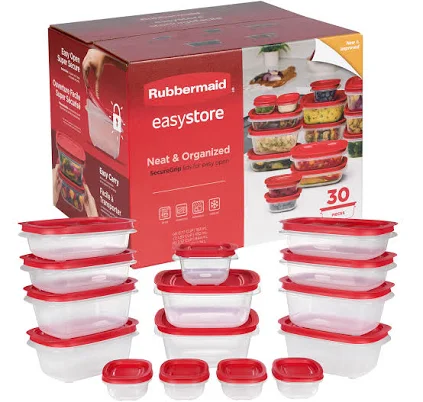
Rubbermaid EasyStore Containers with Lids 30-Piece Set
Lower-concern choice; rigid food-storage plastics rarely contain intentional PFAS, but Rubbermaid should clarify.
Rubbermaid EasyStore containers are rigid polypropylene food storage, a material category without common PFAS use. The brand makes no public claims about PFAS, typical for non-coated plastic storage. No lab data or recalls flag concern, but explicit PFAS-free certification would strengthen confidence.
We flunk more products than we pass. This one earned its grade. How we grade
Material
polypropylene (PP) plastic containers and lids
Brand disclosure
Brand is silent on PFAS
Lab data
No public lab test
You may also be interested in
Top-graded picks in the categories readers replace first, every one scored on the same rubric.

- polypropylene filter housing, carbon/sediment cartridge
- We found no PFAS statement from the brand
- Bacterial growth in spent cartridges
3 hazards checked on this product, all on its full breakdown.

Aquasure
Premier Series 75 GPD Under Sink Reverse Osmosis Water Filtration System
- RO membrane, carbon filters, stainless steel housing
- We found no PFAS statement from the brand
- Bacterial and microbial growth in housing and filters
4 hazards checked on this product, all on its full breakdown.

Avocado
Vegan Mattress
- organic cotton, natural latex, coconut coir, recycled steel coils
- The brand calls it PFAS-free, which we have not verified
- Heavy metals
2 hazards checked on this product, all on its full breakdown.
What Rubbermaid EasyStore 30-Piece Set is made of, ingredients and materials
These containers are polypropylene (PP, #5 plastic), a thermoplastic polymer chosen for food storage because it resists cracking and has a higher melting point than softer plastics like #1 and #2. PP does not contain BPA or phthalates by formulation. The rigid structure and opacity of these containers mean they are less prone to scratching and degradation than thin-walled or clear alternatives, which reduces the surface area where leaching might initiate.
What’s concerning
Category baseline
The starting point for this type of product, before anything specific to this product is counted.
No PFAS disclosure
No public statement from the brand about PFAS in this product.
Microplastics
Repeated heating above recommended limits or prolonged UV exposure may cause PP to become brittle, crack, and shed microparticles. Risk is low if containers are replaced when visibly degraded and not exposed to extreme heat.
Source, EPA ↗Unreacted monomers and oligomers leaching at elevated temperatures
Polypropylene may release trace levels of unreacted propylene or other oligomeric residues when heated. Rubbermaid does not disclose residual monomer content; risk is minimized by avoiding microwaving and high-temperature storage.
Lid seal degradation and bacterial colonization
Silicone or rubber gaskets in lids can degrade, crack, or harbor bacteria if not dried promptly after washing. This is a maintenance issue rather than a chemical hazard but affects food safety over time.
What’s reassuring
Base material not linked to PFAS
The main material recorded for this product is not one associated with PFAS.
BPA & bisphenols
Polypropylene is not formulated with BPA or BPS. No trace contamination or intentional addition has been reported in PP rigid food containers as a product class.
Source, FDA ↗Phthalate plasticizers
PP is inherently rigid and does not require phthalate plasticizers for flexibility. This product type is not a documented source of phthalate exposure.
How is this PFAS grade calculated?
The brand's record and disclosure
Rubbermaid, owned by Newell Brands, has not published detailed material safety data sheets or third-party certifications (e.g., NSF, BPA-free declarations) for this specific product line in widely accessible sources. The company has faced no major recalls related to chemical leaching from rigid food-storage containers. Rubbermaid maintains FDA compliance for food-contact plastics but does not voluntarily disclose ingredient lists or testing protocols to consumers.
How it compares in its category
Rigid polypropylene containers have a lower concern profile for repeated heating compared to #1 PET (polyethylene terephthalate), and comparable hazard considerations to other PP brands like Glad and OXO in composition. Glass alternatives and stainless steel eliminate plastic leaching risk entirely but are heavier and more fragile. BPA-free labeled competitors (e.g., Pyrex glass, Sistema stainless) offer explicit chemical certifications that Rubbermaid does not.
If you buy it
Avoid heating these containers above 100 to 120 degrees Celsius (212 to 250 degrees Fahrenheit) to prevent polymer softening and potential leaching of unreacted monomers or additives. Do not use in microwave or direct stovetop; transfer contents to glass or ceramic for heating. Inspect lids and seals regularly for cracks, cloudiness, or warping; discard and replace after 2-3 years of heavy use or if visible damage appears. Handwash rather than dishwasher to extend lifespan and reduce thermal stress.
What is not known about PFAS in this product?
- Basis
- Model estimate, 78% confidence, not a lab result
- Lab test
- None on record for this exact product
- Brand statement
- Rubbermaid has made none
Formulations change between production runs, so check the current label. How we grade.
What are the PFAS-free alternatives to Rubbermaid EasyStore Containers with Lids 30-Piece Set?
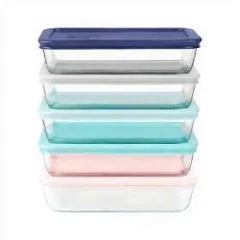
- borosilicate glass with metal lids (likely stainless steel or aluminum)
- Metal lid corrosion and leaching
3 hazards checked on this product, all on its full breakdown.
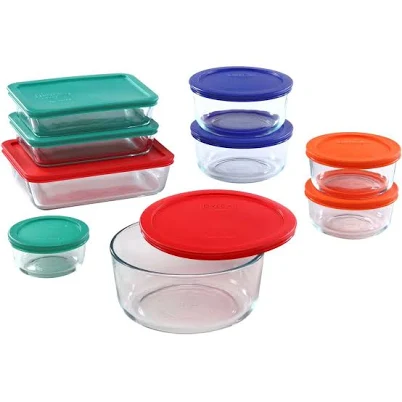
- borosilicate glass with plastic lids
- PFAS
4 hazards checked on this product, all on its full breakdown.
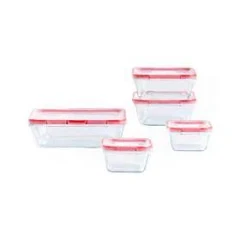
- Borosilicate glass containers with plastic lids (PP/TPE closure material unspecified)
- Microplastics
4 hazards checked on this product, all on its full breakdown.
More food storage containers grades
How we score, every product runs through the same public 0-100 rubric based on materials, coatings, brand disclosure, lab findings, and recalls. See the full methodology → Spotted a mistake? Report an error.