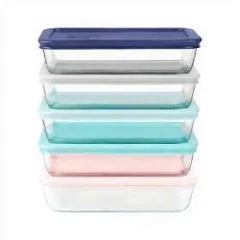
Pyrex · Food Storage Containers
Pyrex Glass Meal Prep Set
Glass containers with no coating on record present lower PFAS concern.
This product is borosilicate glass with metal lids. No water-repellent finish or coating on record. The brand has no PFAS statement on record. Glass is not a material linked to PFAS, and no surface treatment was disclosed.
We flunk more products than we pass. This one earned its grade. How we grade
Material
borosilicate glass with metal lids (likely stainless steel or aluminum)
Lab data
No public lab test
You may also be interested in
Top-graded picks in the categories readers replace first, every one scored on the same rubric.

- polypropylene filter housing, carbon/sediment cartridge
- We found no PFAS statement from the brand
- Bacterial growth in spent cartridges
3 hazards checked on this product, all on its full breakdown.

Aquasure
Premier Series 75 GPD Under Sink Reverse Osmosis Water Filtration System
- RO membrane, carbon filters, stainless steel housing
- We found no PFAS statement from the brand
- Bacterial and microbial growth in housing and filters
4 hazards checked on this product, all on its full breakdown.

Avocado
Vegan Mattress
- organic cotton, natural latex, coconut coir, recycled steel coils
- The brand calls it PFAS-free, which we have not verified
- Heavy metals
2 hazards checked on this product, all on its full breakdown.
What Pyrex Glass Meal Prep Set is made of, ingredients and materials
Pyrex meal prep containers are borosilicate glass, a silica-based material engineered to resist thermal shock and chemical leaching. Unlike standard soda-lime glass, borosilicate has a lower coefficient of expansion, meaning it won't shatter easily from temperature changes and doesn't leach minerals into food. The lids are typically metal (stainless steel or aluminum) with rubber or silicone gaskets; these are physically isolated from food contact by the glass body itself.
What’s concerning
No PFAS disclosure
No public statement from the brand about PFAS in this product.
Category baseline
The starting point for this type of product, before anything specific to this product is counted.
Metal lid corrosion and leaching
Stainless steel and aluminum lids can corrode if exposed to acidic foods (tomato sauce, vinegar) or high-salt environments over extended storage. Corrosion is cosmetic in most cases but may eventually compromise seal integrity or introduce trace metals; replacement lids are readily available and inexpensive.
Silicone or rubber gasket degradation
Gaskets in Pyrex meal prep lids can absorb odors, stain, or crack after 2-5 years of regular use. While degraded gaskets don't pose acute toxicity risk, they lose sealing effectiveness, reducing freshness protection and making containers unsuitable for liquid foods; inspection and replacement are straightforward.
Thermal shock fracture from glass
Borosilicate glass is durable but will crack or shatter if exposed to sudden extreme temperature changes (e.g., freezer to preheated oven without gradual transition). This is a mechanical hazard, not a chemical one, but can result in sharp glass fragments in food; proper usage protocol mitigates this.
What’s reassuring
Bare uncoated material
Recorded as a bare, uncoated material with no surface coating or treatment.
Lead
Pyrex meal prep containers use plain borosilicate glass without decorative coatings or enamels, so there is no established risk of heavy metal glazes. Any printing or logos are surface-applied and not in food contact.
Source, ATSDR ↗Microplastics
Glass does not shed microplastics when heated or worn, unlike plastic containers. This is a key safety advantage of the material class.
Source, EPA ↗How is this PFAS grade calculated?
The brand's record and disclosure
Pyrex (owned by Instant Brands as of 2017) has a long history as a trusted kitchenware brand with no significant safety recalls tied to its core glass containers. The company does not publicly disclose PFAS mitigation strategies for this product line, which is not unusual for glass goods since the material class is inherently low-risk for these chemicals. No major toxicology controversies are on public record for Pyrex glass meal prep products themselves, though the brand experienced manufacturing shifts after ownership changes that briefly affected quality perception.
How it compares in its category
Glass meal prep containers show lower concern in food storage compared to plastics (BPA, phthalates) and ceramics (potential lead glazes). Pyrex's borosilicate formulation is chemically equivalent to other premium glass brands (Anchor, Libbey) but benefits from wider market presence and established temperature-rating standards. Metal-lidded glass sets shift some hazard profile to lid materials, though stainless steel and silicone are generally low-concern if properly maintained.
If you buy it
Use containers up to their stated oven temperature limit (typically 400-500F for Pyrex meal prep sets); do not use on direct flame or stovetop. Inspect rubber or silicone gaskets annually for cracks, discoloration, or odor, and replace lids if seals degrade. Avoid sudden temperature swings (e.g., moving from freezer directly to hot oven) to prevent thermal shock fracture. Hand wash lids separately if concerned about long-term lid-material durability; glass bodies are dishwasher-safe and effectively permanent.
What is not known about PFAS in this product?
- Basis
- Model estimate, 92% confidence, not a lab result
- Lab test
- None on record for this exact product
- Brand statement
- Pyrex has made a specific claim
Formulations change between production runs, so check the current label. How we grade.
More food storage containers grades
How we score, every product runs through the same public 0-100 rubric based on materials, coatings, brand disclosure, lab findings, and recalls. See the full methodology → Spotted a mistake? Report an error.