Spenco · Synthetic Athletic Insoles & Orthotics
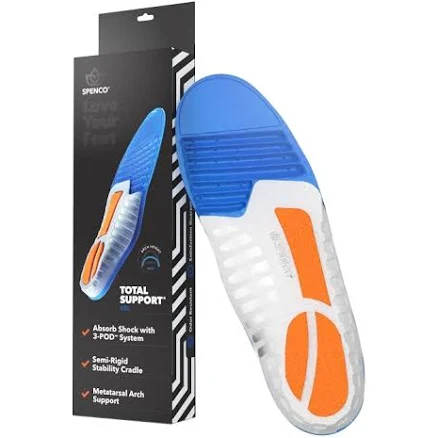
Spenco Gel Total Support Insoles
Insufficient material transparency; PFAS risk unclear but likely lower concern.
Spenco gel insoles use cushioning compounds not fully disclosed publicly. Gel and foam are generally lower PFAS concern.
Still want this one anyway? Check the price on Amazon. We’d swap it.
Material
Gel cushioning with foam base, materials not fully disclosed
Brand disclosure
Brand is silent on PFAS
Lab data
No public lab test
You may also be interested in
Top-graded picks in the categories readers replace first, every one scored on the same rubric.

Aqua Pure
3M Aqua-Pure AP802B Whole House Filter Housing
- polypropylene filter housing, carbon/sediment cartridge
- We found no PFAS statement from the brand
- Bacterial growth in spent cartridges
3 hazards checked on this product. See all of them.

Aquasure
Premier Series 75 GPD Under Sink Reverse Osmosis Water Filtration System
- RO membrane, carbon filters, stainless steel housing
- We found no PFAS statement from the brand
- Bacterial and microbial growth in housing and filters
4 hazards checked on this product. See all of them.

Avocado
Vegan Mattress
- organic cotton, natural latex, coconut coir, recycled steel coils
- The brand calls it PFAS-free, which we have not verified
- Heavy metals
2 hazards checked on this product. See all of them.
What Spenco Gel Total Support Insoles is made of, ingredients and materials
Spenco Total Support Insoles use a proprietary gel cushioning layer bonded to a foam base; exact polymer composition and additives are not publicly disclosed by the manufacturer. The gel is designed to absorb impact and distribute pressure, common in arch-support footwear, but the lack of material specification means potential additives (plasticizers, colorants, stabilizers) cannot be independently verified. Gel cushioning materials typically pose lower chemical leaching risk than rigid plastics because they contact skin rather than food and experience lower temperatures during normal use.
What’s concerning
Category baseline
The starting point for this type of product, before anything specific to this product is counted.
No PFAS disclosure
No public statement from the brand about PFAS in this product.
Formaldehyde / VOCs
Foam-to-gel adhesion may involve formaldehyde-releasing binders common in cushioning manufacturing, but no testing data or complaints are on record for this product. Closed-cell foam design minimizes outgassing risk.
Source, ATSDR ↗Microplastics
Aged or mechanically damaged gel may fragment into micro-particles; however, shed material remains inside the shoe and does not pose inhalation or ingestion risk during normal wear. Long-term landfill impact is unknown.
Source, EPA ↗What’s reassuring
Base material not linked to PFAS
The main material recorded for this product is not one associated with PFAS.
Gel polymer additives (plasticizers, colorants, stabilizers)
No public material safety data or reported leaching from Spenco gel insoles. Gel-to-skin contact during normal use is low-risk because gel does not dissolve at body temperature and minimal dermal absorption occurs, but undisclosed additives prevent full hazard assessment.
Antimony in polyester components
Antimony is a catalyst in polyester synthesis but is not typically associated with elastomeric gel or open-cell foam. Not a recognized hazard in this product class unless the gel contains undisclosed polyester fibers.
Contact sensitization or skin irritation
No pattern of adverse skin reactions reported for Spenco insoles. Risk is individual; people with latex allergy or polymer sensitivity should test on a small foot area first or contact manufacturer for material specifics.
The full breakdown
The brand's record and disclosure
Spenco (founded 1977, privately held) maintains minimal public transparency about material sourcing or chemical composition; no published safety certifications, material safety data sheets, or PFAS commitment are readily available. The brand has not faced widely documented recalls or safety controversies related to these insoles. This silence on materials is common in the footwear cushioning industry but limits independent verification of manufacturing practices or additive safety.
How it compares in its category
Gel insoles occupy a middle ground in the arch-support category, less chemically complex than synthetic foams treated with antimicrobial or flame-retardant coatings, but more processed than cork or latex alternatives. Competitors like Superfeet and Powerstep similarly avoid detailed material disclosure. Unlike textiles in the shoe upper or footwear glues, insole gel formulations are not routinely tested for formaldehyde, azo dyes, or antimony, as these hazards are associated with fibers and coatings rather than elastomeric cushions.
If you buy it
Store insoles at room temperature away from direct heat sources (heat above 60°C may degrade gel integrity, though normal foot warmth will not). Replace every 12-18 months or when gel feels flattened, as degraded cushioning loses support and may shed micro-fragments. Wash only with mild soap and air dry; do not machine wash or expose to solvents. Monitor for any skin irritation (rare but possible if you have contact sensitivity); if redness or itching develops, discontinue use and rinse feet thoroughly.
What we don’t know
- Basis
- Model estimate, 62% confidence, not a lab result
- Lab test
- None on record for this exact product
- Brand statement
- Spenco has made none
Formulations change between production runs, so check the current label. How we grade.
More synthetic athletic insoles & orthotics grades
How we score, every product runs through the same public 0-100 rubric based on materials, coatings, brand disclosure, lab findings, and recalls. See the full methodology → Spotted a mistake? Report an error.