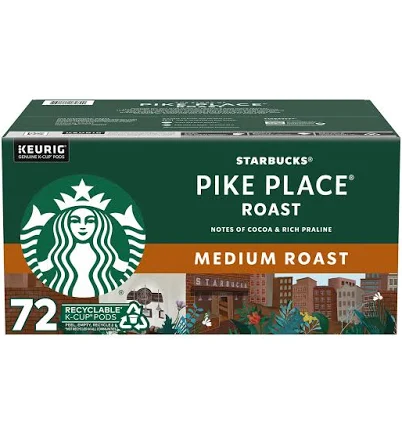
Starbucks Pike Place K-Cup
Unknown PFAS risk due to undisclosed pod lining chemistry.
Starbucks does not disclose the composition of the K-Cup pod plastic or its water-resistant barrier layer. The lining chemistry is not stated on record.
The better-graded swap
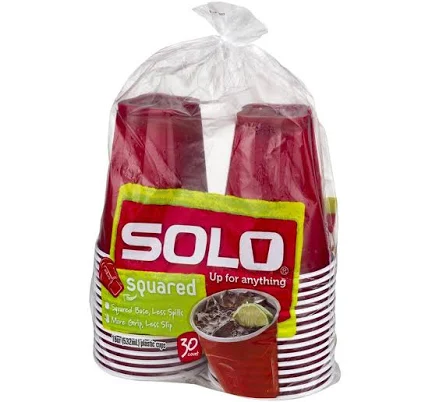
Solo
Solo Cup Company Grips Plastic Cups SQ1830
70/100 safety
Same rubric that flunked this product. The swap earned Good.
Still want this one anyway? Check the price on Amazon. We’d swap it.
Material
K-Cup plastic pod with paper/cellulose filter and unknown coating/lining
Brand disclosure
Brand is silent on PFAS
Lab data
No public lab test
You may also be interested in
Top-graded picks in the categories readers replace first, every one scored on the same rubric.

- polypropylene filter housing, carbon/sediment cartridge
- We found no PFAS statement from the brand
- Bacterial growth in spent cartridges
3 hazards checked on this product, all on its full breakdown.

Aquasure
Premier Series 75 GPD Under Sink Reverse Osmosis Water Filtration System
- RO membrane, carbon filters, stainless steel housing
- We found no PFAS statement from the brand
- Bacterial and microbial growth in housing and filters
4 hazards checked on this product, all on its full breakdown.

Avocado
Vegan Mattress
- organic cotton, natural latex, coconut coir, recycled steel coils
- The brand calls it PFAS-free, which we have not verified
- Heavy metals
2 hazards checked on this product, all on its full breakdown.
What Starbucks Pike Place K-Cup is made of, ingredients and materials
Pike Place K-Cups consist of a plastic pod shell (polypropylene exterior), a paper/cellulose filter, and an unknown plastic or coating lining that contacts hot water and ground coffee during brewing. The lining composition is Starbucks' proprietary information and has not been publicly disclosed, which means its chemical stability under heat cannot be independently verified. Hot water percolating through an unknown lining raises concerns about leaching of plasticizers or other additives into your beverage.
What’s concerning
Category baseline
The starting point for this type of product, before anything specific to this product is counted.
No PFAS disclosure
No public statement from the brand about PFAS in this product.
Waterproof / stain-resistant treatment
Water-repellent coating treatments have historically used PFAS.
Unknown plastic/coating lining leachables
The K-Cup pod lining composition is proprietary and undisclosed. Hot water contact with unknown polymers or coatings may result in migration of plasticizers, bisphenols, or other additives into brewed coffee, particularly under high brewing temperatures typical of K-Cup machines.
Microplastics
Repeated hot water exposure and mechanical stress from K-Cup puncturing during brewing may cause the pod lining to shed microscopic plastic particles into coffee. No published data on Pike Place K-Cups specifically, but polymer degradation under thermal stress is a documented mechanism in single-serve pod systems.
Source, EPA ↗BPA & bisphenols
Starbucks does not label Pike Place K-Cups as BPA-free or BPS-free. Older polycarbonate or epoxy-lined pods contained BPA; modern alternatives sometimes substitute BPS (bisphenol S), which has similar estrogenic activity. Without composition disclosure, exposure cannot be ruled out.
Source, FDA ↗Inadequate pod recycling/cross-contamination
K-Cups are notoriously difficult to recycle; most end up in landfills. Even pods advertised as recyclable often contaminate sorting facilities if residual coffee oil remains inside. This is an environmental rather than direct-use hazard, but relates to product lifecycle transparency and brand responsibility.
What’s reassuring
None known for paper filter itself
The cellulose/paper filter component has no established safety concern in standard K-Cup applications. Bleaching residues are minimal and not a documented issue with commercial coffee pods.
How is this PFAS grade calculated?
The brand's record and disclosure
Starbucks has not published detailed material safety data or ingredient/composition lists for K-Cup pod linings. The company has not pursued third-party certification (such as BPA-free labeling or compostability standards that would require transparency). Nestlé, which manufactures K-Cups under license, has faced criticism over pod recyclability and material transparency but has not voluntarily disclosed lining chemistry. This silence on composition is a red flag for consumer safety assessment.
How it compares in its category
Single-serve pods are among the least transparent beverage-contact products on the market. Loose leaf or ground coffee brewed in ceramic, glass, or stainless steel eliminates the unknown-lining variable entirely. Some pod manufacturers (e.g., certain third-party producers) now market BPA-free or certified compostable pods, which require partial disclosure; Starbucks does not advertise such certifications. The Pike Place pod sits in the middle-to-lower end of transparency for its category.
If you buy it
Use water at or below 195 degrees Fahrenheit to minimize leaching stress on the pod lining, though K-Cup brewers typically use near-boiling water. Do not reuse pods or store brewed coffee in the pod; consume immediately. Replace pods that show visible discoloration, swelling, or odor changes. Consider switching to refillable K-Cup pods (filled with loose Starbucks ground coffee) as a middle-ground option that reduces reliance on unknown pod linings.
What is not known about PFAS in this product?
- Basis
- Model estimate, 35% confidence, not a lab result
- Lab test
- None on record for this exact product
- Brand statement
- Starbucks has made none
Formulations change between production runs, so check the current label. How we grade.
What are the PFAS-free alternatives to Starbucks Pike Place K-Cup?
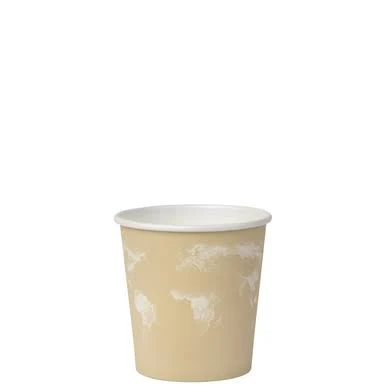
- Plant-based compostable PLA coating
- A third party reports verifying it as PFAS-free
- Leachables from undisclosed grease-resistant coating
3 hazards checked on this product, all on its full breakdown.
- polystyrene plastic (PS) with grip coating
- We found no PFAS statement from the brand
- Polystyrene monomer and oligomer leaching
4 hazards checked on this product, all on its full breakdown.
- Expanded polystyrene foam
- We found no PFAS statement from the brand
- Styrene monomer leaching
3 hazards checked on this product, all on its full breakdown.
Find an alternative on AmazonMore coffee cups grades
How we score, every product runs through the same public 0-100 rubric based on materials, coatings, brand disclosure, lab findings, and recalls. See the full methodology → Spotted a mistake? Report an error.