
Tommy Hilfiger Women's Allover Script Halter Swimsuit
Lower concern; standard swimwear without disclosed water-repellent coating treatment.
Basic polyester or nylon halter suit shows no evidence of Teflon-family coating or water-repellent coating treatment. Tommy Hilfiger provides no PFAS disclosure.
The better-graded swap
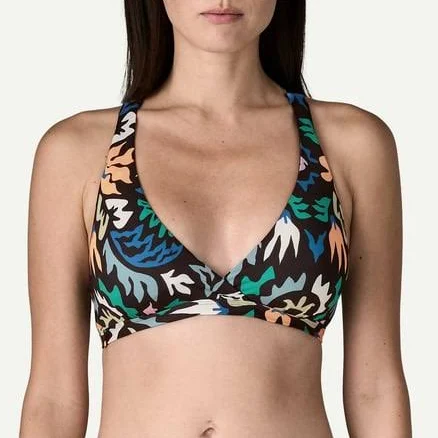
Patagonia
Patagonia Women's Bottom Turn Racerback Bikini Top
90/100 safety
Same rubric that flunked this product. The swap earned Excellent.
Still want this one anyway? Check the price on Amazon. We’d swap it.
Material
polyester/nylon blend swimwear, likely no water-repellent treatment
Brand disclosure
Brand is silent on PFAS
Lab data
No public lab test
What Tommy Hilfiger Women's Allover Script is made of, ingredients and materials
This swimsuit is a polyester/nylon blend, the industry standard for performance swimwear. Neither material requires water-repellent (water-repellent coating) coatings, which are the primary source of PFAS in textiles. Polyester itself is inert when worn; nylon poses no elevated chemical leaching risk in normal use. The main durability concern is chlorine and UV degradation of the fibers over time, not chemical leaching.
What’s concerning
Category baseline
The starting point for this type of product, before anything specific to this product is counted.
No PFAS disclosure
No public statement from the brand about PFAS in this product.
Azo dyes and dye allergens
Polyester/nylon blends commonly use disperse azo dyes for color fastness. No safety testing or allergen declarations are disclosed for this specific product. Sensitive individuals may experience contact dermatitis; this risk is not unique to Tommy Hilfiger but applies across mass-market swimwear.
Antimony in polyester resin
Polyester fiber production may use antimony trioxide as a catalyst. Residual antimony levels in finished fabric are typically very low and not bioavailable through skin contact during normal wear. No specific testing for this product exists in public records.
Formaldehyde / VOCs
Nylon/polyester blends may be treated with formaldehyde-based resins for wrinkle resistance or shape retention. No disclosure of finishing chemistry is provided by Tommy Hilfiger for this swimsuit. Off-gassing diminishes significantly after the first few washes.
Source, ATSDR ↗Microplastic shedding
All synthetic fiber swimwear, including this polyester/nylon blend, sheds microfibers during washing. The quantity and environmental impact depend on wash frequency and water temperature; this is not a wearer health hazard but an environmental concern.
Chlorine and UV fiber degradation
Polyester and nylon both degrade under repeated chlorine exposure and UV sunlight. This causes visible pilling, color fading, and elastic failure over months of regular pool use. Proper rinsing and storage can slow but not prevent this.
What’s reassuring
Base material not linked to PFAS
The main material recorded for this product is not one associated with PFAS.
The full breakdown
The brand's record and disclosure
Tommy Hilfiger has not published detailed chemical composition or safety certifications specific to swimwear lines. The brand maintains no publicly disclosed PFAS commitment or restricted substance list (RSL) for this category. No recalls or safety complaints specific to this swimsuit style are on record. Brand transparency on textile chemistry is minimal compared to category leaders like Speedo or Patagonia.
How it compares in its category
This product sits in the mainstream commercial swimwear tier. It avoids the premium-market certifications (bluesign, GOTS, Oeko-Tex) but also avoids the high-intensity treatment chemicals common in technical/performance lines. Typical alternatives at this price point and brand profile show similar disclosure gaps and material profiles. No category-specific advantage or disadvantage is evident.
If you buy it
Rinse immediately after saltwater or chlorine use to extend fiber life and remove residual pool/ocean chemicals. Wash in cool water with mild detergent; avoid hot water and bleach, which degrade nylon faster. Air dry flat or on a hanger; do not use a dryer. Replace the suit when elastic degrades or seams show wear, typically after 40-60 wears in regular use.
What we don’t know
- Basis
- Model estimate, 72% confidence, not a lab result
- Lab test
- None on record for this exact product
- Brand statement
- Tommy Hilfiger has made none
Formulations change between production runs, so check the current label. How we grade.
Better-graded alternatives in Swimwear
Patagonia
Women's Bottom Turn Racerback Bikini Top
- Nylon/polyester blend with elastane (standard swimwear)
- The brand calls it PFAS-free, which we have not verified
- Elastane (spandex) degradation under heat or chlorine
More swimwear grades
How we score, every product runs through the same public 0-100 rubric based on materials, coatings, brand disclosure, lab findings, and recalls. See the full methodology → Spotted a mistake? Report an error.