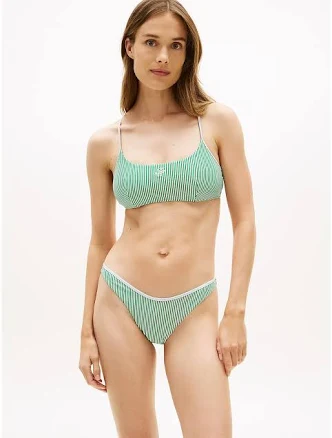
Tommy Hilfiger Women's Crossed-Back Seersucker Bikini Top
Minimal PFAS concern with untreated cotton seersucker fabric.
The seersucker cotton or cotton blend uses no water-repellent treatment, relying instead on its natural crinkled texture. Tommy Hilfiger discloses nothing about PFAS, but untreated cotton swimwear generally carries minimal PFAS risk.
The better-graded swap
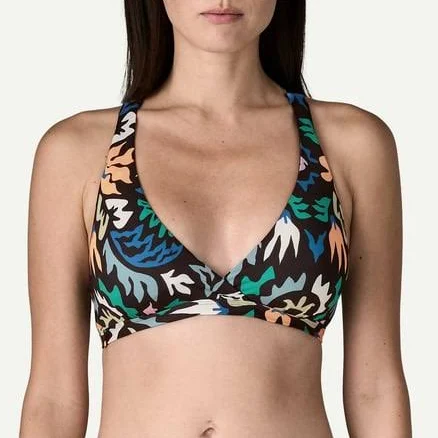
Patagonia
Patagonia Women's Bottom Turn Racerback Bikini Top
90/100 safety
Same rubric that flunked this product. The swap earned Excellent.
Still want this one anyway? Check the price on Amazon. We’d swap it.
Material
Seersucker cotton blend (typical, 100% cotton or cotton/polyester)
Brand disclosure
Brand is silent on PFAS
Lab data
No public lab test
What Tommy Hilfiger Women's Crossed-Back is made of, ingredients and materials
Seersucker is traditionally 100% cotton or a cotton-dominant blend (often cotton/polyester at 80/20 or similar ratios). The puckered texture comes from differential weaving tension, not chemical treatment. Cotton naturally sheds microfibers when wet and abraded, but seersucker's loose weave means slightly higher shedding than tight weaves. No water-resistance coating means no Teflon-type coating or fluorochemical finish to degrade.
What’s concerning
Category baseline
The starting point for this type of product, before anything specific to this product is counted.
No PFAS disclosure
No public statement from the brand about PFAS in this product.
Heavy metals
Seersucker is typically piece-dyed after weaving. Tommy Hilfiger does not disclose dye class (reactive, azo, sulfur). Azo dyes, while largely phased out in EU and regulated in many countries, remain in use globally and can release aromatic amines under degradation or sweat exposure. No specific recall or test result on record for this product.
Source, FDA ↗Formaldehyde / VOCs
Cotton blends may receive wrinkle-resistant or softening finishes that release formaldehyde. Seersucker's texture does not typically require anti-wrinkle treatment, lowering this risk. However, elastane or polyester components may carry formaldehyde-releasing cross-linkers. No test data available for this specific SKU.
Source, ATSDR ↗Microfiber shedding
Cotton and cotton-blend swimwear shed microfibers during wash and wear. Seersucker's loose weave structure sheds at higher rates than tight knits. Shed fibers contribute to aquatic microplastic pollution. Washing in a mesh bag and air drying reduces shedding slightly.
Elastane degradation and leaching
Elastane (spandex) in the blend degrades under UV, chlorine, heat, and prolonged stretching. Degradation products and residual monomers can leach into skin; no safety limits are established for swimwear elastane in most jurisdictions. Rinsing and cool-water washing extend elastane life and reduce leachate.
Antimony in polyester components
If the blend includes polyester, antimony oxide may be present as a catalyst from polyester production. Most antimony remains bound in polymer but can migrate in trace amounts under acidic or prolonged contact. Typical exposure through swimwear is minimal; no recalls on record.
What’s reassuring
Base material not linked to PFAS
The main material recorded for this product is not one associated with PFAS.
The full breakdown
The brand's record and disclosure
Tommy Hilfiger does not publicly disclose detailed chemical composition or restricted substance lists for swimwear lines. The brand has not faced major safety recalls for swimwear in recent years. Like most mass-market swimwear makers, Tommy Hilfiger does not independently certify fabrics (e.g., Oeko-Tex) or provide transparency on dyes or finishing agents used in production. No established controversies specific to this product line.
How it compares in its category
Standard mass-market swimwear often uses polyester microfiber or nylon blends with elastane, which carry greater microplastic and chemical finish concerns. Pure cotton swimwear is less common due to poor chlorine/salt durability and slower dry time, placing seersucker blends in a middle ground, familiar cotton comfort with some synthetic durability. Brand-owned cotton or Oeko-Tex certified alternatives (Patagonia, Lively) offer higher chemical transparency, though at higher price.
If you buy it
Rinse immediately after saltwater or chlorine exposure to remove salts and prevent fiber degradation. Wash in cool water with mild detergent; avoid bleach, which weakens cotton. Air dry flat to prevent elastic fatigue and shape loss. Replace when elastic loses tension (typically 1-2 years of regular use) or seams fray. Do not machine dry; heat damages elastane and accelerates cotton aging.
What we don’t know
- Basis
- Model estimate, 72% confidence, not a lab result
- Lab test
- None on record for this exact product
- Brand statement
- Tommy Hilfiger has made none
Formulations change between production runs, so check the current label. How we grade.
Better-graded alternatives in Swimwear
Patagonia
Women's Bottom Turn Racerback Bikini Top
- Nylon/polyester blend with elastane (standard swimwear)
- The brand calls it PFAS-free, which we have not verified
- Elastane (spandex) degradation under heat or chlorine
More swimwear grades
How we score, every product runs through the same public 0-100 rubric based on materials, coatings, brand disclosure, lab findings, and recalls. See the full methodology → Spotted a mistake? Report an error.