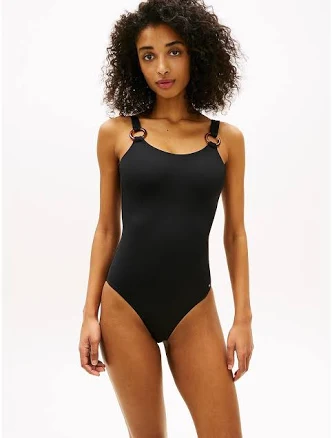
Tommy Hilfiger Women's O-Ring Scoop Back One-Piece Swimsuit
Lower concern; standard swimsuit with no known PFAS triggers.
Conventional polyester-blend one-piece lacks published water-repellent coating, stain-resistant, or fluorinated treatment. Tommy Hilfiger makes no PFAS claims or offers certification.
The better-graded swap
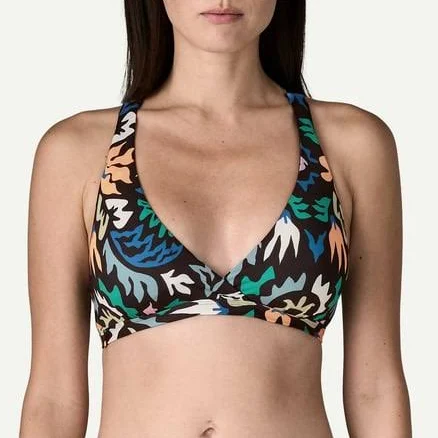
Patagonia
Patagonia Women's Bottom Turn Racerback Bikini Top
90/100 safety
Same rubric that flunked this product. The swap earned Excellent.
Still want this one anyway? Check the price on Amazon. We’d swap it.
Material
Polyester blend swimsuit fabric
Brand disclosure
Brand is silent on PFAS
Lab data
No public lab test
What Tommy Hilfiger Women's O-Ring Scoop Back is made of, ingredients and materials
This swimsuit is a polyester blend, the industry standard for chlorine resistance and durability in swimwear. Polyester itself is chemically stable in use and does not leach monomers the way polycarbonate (BPA) or vinyl (phthalates) can. The O-ring scoop-back design uses the same polyester material throughout, with no separate plastic components or coatings that would introduce additional risk.
What’s concerning
Category baseline
The starting point for this type of product, before anything specific to this product is counted.
No PFAS disclosure
No public statement from the brand about PFAS in this product.
Formaldehyde / VOCs
Polyester swimwear may contain trace formaldehyde-releasing finishes applied for wrinkle resistance or fabric stiffening during manufacturing. Tommy Hilfiger does not disclose finish chemistry. Rinsing before first wear reduces residual levels.
Source, ATSDR ↗Heavy metals
The swimsuit color is achieved through synthetic dyes; azo dyes (which can break down to release aromatic amines) are not banned in the US for apparel. No specific test data for this product is available. Risk is typical for polyester swimwear in this price range.
Source, FDA ↗Antimony trioxide catalyst residue
Most polyester is synthesized using antimony trioxide as a catalyst; trace residues may remain in the final fiber. Dermal migration is negligible under normal wear, but levels are not routinely disclosed by manufacturers including Tommy Hilfiger.
Elastic degradation and microparticle shedding
The O-ring and back elastic components degrade with repeated chlorine exposure and UV, shedding microfibers over time. This is a mechanical wear issue common to all swimwear, not a chemical hazard specific to this brand.
Allergic contact dermatitis from dyes or finishes
Individuals with sensitive skin or known dye allergies may react to residual textile chemicals. A test wash or brief wear trial on a small area (ankle or inner arm) is prudent for sensitive individuals before full use.
What’s reassuring
Base material not linked to PFAS
The main material recorded for this product is not one associated with PFAS.
The full breakdown
The brand's record and disclosure
Tommy Hilfiger (owned by PVH Corp) does not publish detailed chemical safety reports specifically for swimwear. The brand maintains standard US textile compliance (Prop 65, CPSIA) but has not issued voluntary restricted substance lists for apparel. No recalls or documented chemical safety incidents are on record for Tommy Hilfiger swimwear. Disclosure remains typical industry practice rather than transparent or leading.
How it compares in its category
Polyester blend swimwear is the dominant material category; this product sits squarely in the mainstream. Premium swimwear brands (Speedo, Arena) use identical polyester formulations. Budget alternatives may use recycled polyester, which carries no additional known hazard but offers no clear safety advantage. The scoop-back construction is common and introduces no unusual material changes.
If you buy it
Rinse thoroughly after each use in chlorinated or saltwater pools to remove residual chemicals and prevent fabric degradation. Wash in cold water with mild detergent; avoid bleach and hot water, which accelerate polyester aging. Air-dry flat or hung; tumble drying is not recommended and may damage elastic components. Replace when elastic loses recovery (typically 2-3 seasons of regular use) or fabric becomes thin or discolored.
What we don’t know
- Basis
- Model estimate, 72% confidence, not a lab result
- Lab test
- None on record for this exact product
- Brand statement
- Tommy Hilfiger has made none
Formulations change between production runs, so check the current label. How we grade.
Better-graded alternatives in Swimwear
Patagonia
Women's Bottom Turn Racerback Bikini Top
- Nylon/polyester blend with elastane (standard swimwear)
- The brand calls it PFAS-free, which we have not verified
- Elastane (spandex) degradation under heat or chlorine
More swimwear grades
How we score, every product runs through the same public 0-100 rubric based on materials, coatings, brand disclosure, lab findings, and recalls. See the full methodology → Spotted a mistake? Report an error.