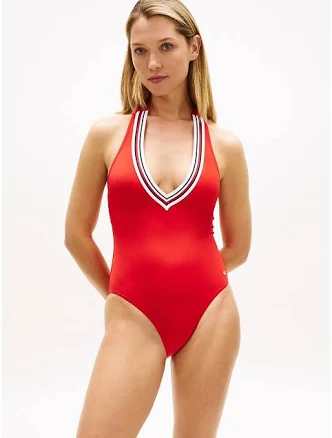
Tommy Hilfiger Women's Signature Stripe Plunge Halter Swimsuit
Lower PFAS concern; standard swimwear without water-repellent claims.
Basic plunge halter suit in nylon or polyamide lacks marketed water-repellent or stain-resistant treatment. Tommy Hilfiger provides no PFAS disclosure or certification.
The better-graded swap
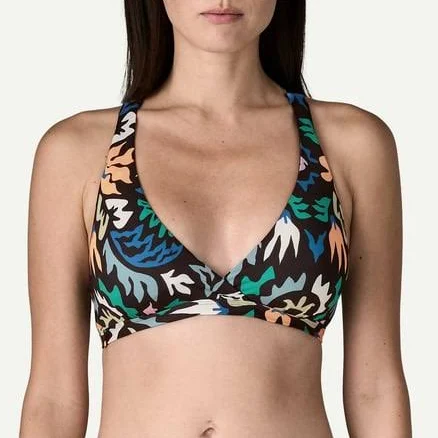
Patagonia
Patagonia Women's Bottom Turn Racerback Bikini Top
90/100 safety
Same rubric that flunked this product. The swap earned Excellent.
Still want this one anyway? Check the price on Amazon. We’d swap it.
Material
polyamide/nylon blend (standard swimwear)
Brand disclosure
Brand is silent on PFAS
Lab data
No public lab test
What Tommy Hilfiger Women's Signature Stripe is made of, ingredients and materials
This swimsuit is polyamide/nylon blend, the industry standard for swimwear due to durability, stretch recovery, and chlorine resistance. Polyamide itself does not leach harmful chemicals under normal use conditions (wearing, swimming, rinsing). The fabric is not inherently prone to microplastic shedding in water the way some synthetic textiles are, though all synthetics shed fibers over their lifetime.
What’s concerning
Category baseline
The starting point for this type of product, before anything specific to this product is counted.
No PFAS disclosure
No public statement from the brand about PFAS in this product.
Azo dyes and synthetic dyes
Polyamide swimwear commonly uses acid or disperse dyes; the signature stripe pattern likely contains synthetic dyes. No specific testing of this product is public, but azo dye safety depends on dye class and fixation quality. Tommy Hilfiger does not disclose dye sourcing or testing.
Formaldehyde / VOCs
Swimwear may be treated with formaldehyde-containing resins for shape retention or anti-microbial properties. No recall or documentation of this product specifically, but standard industry practice for durable swimwear. The halter construction may require additional finish treatments.
Source, ATSDR ↗Elastane (spandex) degradation and leaching
Swimwear blends typically contain 15-20% elastane; this polymer degrades under UV and chlorine, releasing oligomers into water over time. No health threshold is established, but frequent swimmers may absorb trace amounts. Proper storage (cool, dark) and chlorine rinsing reduce exposure.
What’s reassuring
Base material not linked to PFAS
The main material recorded for this product is not one associated with PFAS.
Heavy metals
Synthetic dyes in polyamide occasionally contain trace heavy metals (cadmium, lead) if imported dyes are not certified. No public testing or alerts for Tommy Hilfiger swimwear; risk is low for branded mainstream manufacturers with supplier oversight.
Source, FDA ↗Antimony in polyester or polyamide
Polyamide does not use antimony as a catalyst unlike polyester (PET), so this hazard is not relevant to this nylon blend. Included for completeness of textile category assessment.
The full breakdown
The brand's record and disclosure
Tommy Hilfiger does not publicly disclose detailed chemical content or third-party certifications (GOTS, OEKO-TEX) for most swimwear lines. The brand has no documented recalls or regulatory actions specific to swimwear safety. This represents typical industry opacity rather than a red flag, though lack of transparency means fewer guarantees about dyes, finishing treatments, or elastomer additives.
How it compares in its category
This product sits at the mainstream middle of the swimwear market. It lacks eco-certifications or chemical disclosure that higher-end or sustainability-focused brands (e.g., Patagonia) provide, but avoids the extreme budget segment where quality control is less consistent. Most major athletic and fashion swimwear brands use similar polyamide blends with comparable hazard profiles.
If you buy it
Rinse the suit thoroughly in fresh water after each use to remove chlorine, salt, and sunscreen residue, which degrade elastane and can accelerate fiber shedding. Avoid high heat (machine dry, direct sunlight for hours) as polyamide softens above 80C and elastane degrades faster. Hand wash in cool water and lay flat to dry. Replace when elastic loses recovery or seams fray, typically after 40-60 wears depending on chlorine exposure.
What we don’t know
- Basis
- Model estimate, 72% confidence, not a lab result
- Lab test
- None on record for this exact product
- Brand statement
- Tommy Hilfiger has made none
Formulations change between production runs, so check the current label. How we grade.
Better-graded alternatives in Swimwear
Patagonia
Women's Bottom Turn Racerback Bikini Top
- Nylon/polyester blend with elastane (standard swimwear)
- The brand calls it PFAS-free, which we have not verified
- Elastane (spandex) degradation under heat or chlorine
More swimwear grades
How we score, every product runs through the same public 0-100 rubric based on materials, coatings, brand disclosure, lab findings, and recalls. See the full methodology → Spotted a mistake? Report an error.