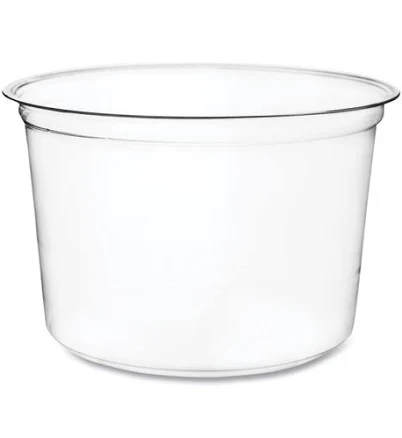
Vegware Round Deli Pots Diameter x
BPI Certified Compostable certification on record, alongside a water-repellent or grease-resistant treatment of unstated chemistry.
This product carries BPI Certified Compostable certification, whose criteria restrict PFAS, which we record as third-party verification. Vegware says its Nourish molded fibre is made with no added PFAS. Its record describes a water-repellent or grease-resistant treatment of unstated chemistry, which is still counted.
Brand says: “Vegware says its Nourish molded fibre is made with no added PFAS.”
We flunk more products than we pass. This one earned its grade. How we grade
Material
Bagasse (sugar cane fiber) with water-based coating
Brand disclosure
Third-party verified PFAS-free
Lab data
No public lab test
You may also be interested in
Top-graded picks in the categories readers replace first, every one scored on the same rubric.

- polypropylene filter housing, carbon/sediment cartridge
- We found no PFAS statement from the brand
- Bacterial growth in spent cartridges
3 hazards checked on this product, all on its full breakdown.

Aquasure
Premier Series 75 GPD Under Sink Reverse Osmosis Water Filtration System
- RO membrane, carbon filters, stainless steel housing
- We found no PFAS statement from the brand
- Bacterial and microbial growth in housing and filters
4 hazards checked on this product, all on its full breakdown.

Avocado
Vegan Mattress
- organic cotton, natural latex, coconut coir, recycled steel coils
- The brand calls it PFAS-free, which we have not verified
- Heavy metals
2 hazards checked on this product, all on its full breakdown.
What Vegware Round Deli Pots Diameter x is made of, ingredients and materials
Vegware Round Deli Pots are made from bagasse, the fibrous residue left after sugar cane juice extraction. This material is inherently compostable and contains no synthetic polymers, eliminating the risk of microplastic shedding into food. The water-based coating applied to achieve grease and moisture resistance is the only non-fiber component; its exact chemistry is not publicly disclosed, but water-based coatings are typically lower-hazard alternatives to traditional Teflon-type coating or synthetic wax barriers.
What’s concerning
Category baseline
The starting point for this type of product, before anything specific to this product is counted.
Waterproof / stain-resistant treatment
Water-repellent coating treatments have historically used PFAS.
Water-based coating degradation and unknown additives
The water-based grease-resistant treatment is not chemically disclosed. Unidentified additives or slip agents may leach into greasy foods over time, especially with repeated use or storage of high-fat items.
Bagasse fiber shedding into food
Mechanical wear, flexing, or heat exposure can cause fiber fragments to separate from the container. Risk is low for intact, properly stored containers but increases with age or damage to the inner surface.
Mold or microbial growth if retained moisture
Bagasse is organic and hygroscopic; if containers are washed, stored damp, or used with condensation-prone foods, fungal growth is possible. This is a storage hygiene issue, not a manufacturing defect.
What’s reassuring
Third-party PFAS-free verification
A third party reports verifying this product as PFAS-free.
Formaldehyde / VOCs
No evidence suggests Vegware uses formaldehyde-based adhesives in bagasse molding. BPI certification typically flags such processes, but formulation details are not public.
Source, ATSDR ↗Bleaching residues or processing chemicals
Bagasse pulp may be bleached during processing; chlorine or oxygen-based bleach residues are a theoretical concern, but no specific testing or recalls exist for this product line.
How is this PFAS grade calculated?
The brand's record and disclosure
Vegware holds BPI Certification for compostability, independently verified by the Biodegradable Products Institute, a third-party standard. The company does not appear on major product-safety recall databases for this line. However, the specific chemistry of the water-based coating is proprietary and not disclosed on packaging or public documentation; this limits transparency around potential additives. The PFAS grade of 70/100 reflects acceptable risk given certification, though the grease-resistant treatment's formulation remains opaque.
How it compares in its category
Bagasse-based deli containers occupy a middle ground between conventional plastic takeout tubs (high microplastic and BPA risk) and uncoated cardboard (poor grease barrier). Unlike polystyrene or polyethylene terephthalate alternatives, bagasse avoids synthetic polymer hazards. However, compared to ceramic or glass reusables for home storage, single-use bagasse containers cannot be reprinted and must be composted or discarded, making them an environmental choice rather than a chemical-safety upgrade.
If you buy it
Use these containers for room-temperature or cool foods only; bagasse is designed for takeout and is not microwave-safe, and heat may compromise both the fiber matrix and the water-based coating. Do not soak or wash in commercial dishwashers, as prolonged moisture exposure can degrade the coating over time. Inspect the interior surface before each use for peeling or flaking of the coating; discontinue use if damage is visible. Store in a dry, cool location to extend coating integrity.
What is not known about PFAS in this product?
- Basis
- Model estimate, 75% confidence, not a lab result
- Lab test
- None on record for this exact product
- Brand statement
- Vegware has made a specific claim
Formulations change between production runs, so check the current label. How we grade.
What are the PFAS-free alternatives to Vegware Round Deli Pots Diameter x?
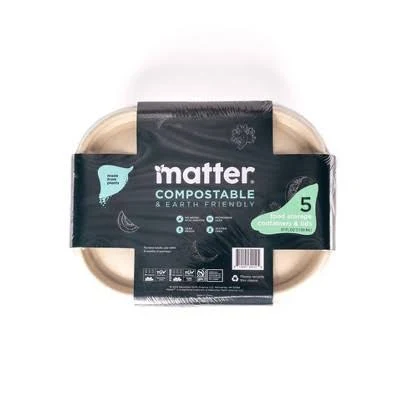
- Plant-based fiber pulp (compostable)
- A third party reports verifying it as PFAS-free
- Microbe/mold growth if stored damp
2 hazards checked on this product, all on its full breakdown.
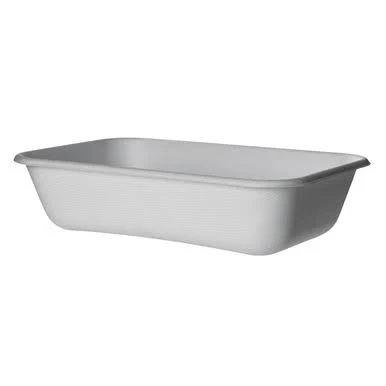
Eco-Products
Eco Products WorldView Compostable Take-Out Containers EP-SCRC32
- Plant-based fiber (compostable sugarcane bagasse)
- A third party reports verifying it as PFAS-free
- Bleaching agents and processing residues
3 hazards checked on this product, all on its full breakdown.
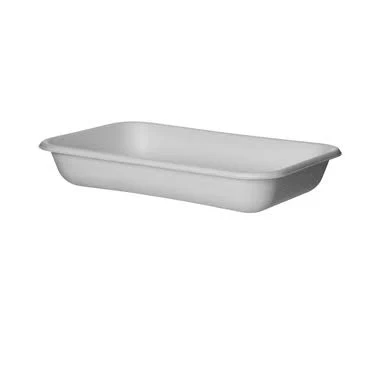
Eco-Products
WorldView Sugarcane Take-Out Containers
- Sugarcane bagasse (post-consumer fiber)
- A third party reports verifying it as PFAS-free
- Cellulose fiber degradation and food contact
2 hazards checked on this product, all on its full breakdown.
More food packaging grades
How we score, every product runs through the same public 0-100 rubric based on materials, coatings, brand disclosure, lab findings, and recalls. See the full methodology → Spotted a mistake? Report an error.