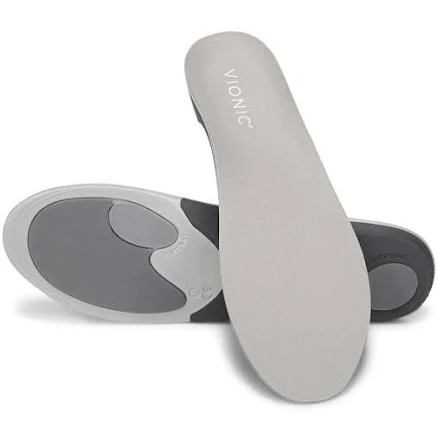
Vionic · Synthetic Athletic Insoles & Orthotics
Active Full Insole
Lower concern; typical insole without known PFAS drivers.
Vionic insoles are foam-based cushioning without known PFAS treatment indicators or brand claims. No lab testing or certifications are available to verify or challenge PFAS content.
Still want this one anyway? Check the price on Amazon. We’d swap it.
Material
Foam cushioning, textile upper
Brand disclosure
Brand is silent on PFAS
Lab data
No public lab test
You may also be interested in
Top-graded picks in the categories readers replace first, every one scored on the same rubric.

- polypropylene filter housing, carbon/sediment cartridge
- We found no PFAS statement from the brand
- Bacterial growth in spent cartridges
3 hazards checked on this product, all on its full breakdown.

Aquasure
Premier Series 75 GPD Under Sink Reverse Osmosis Water Filtration System
- RO membrane, carbon filters, stainless steel housing
- We found no PFAS statement from the brand
- Bacterial and microbial growth in housing and filters
4 hazards checked on this product, all on its full breakdown.

Avocado
Vegan Mattress
- organic cotton, natural latex, coconut coir, recycled steel coils
- The brand calls it PFAS-free, which we have not verified
- Heavy metals
2 hazards checked on this product, all on its full breakdown.
What Active Full Insole is made of, ingredients and materials
Vionic's Active Full Insole uses cushioning foam (likely polyurethane or EVA-based) paired with a textile upper layer. Foam provides arch support and shock absorption but degrades gradually with use, shedding microparticles over time. The textile component may contain processing residues like formaldehyde resins used in finishing, though amounts in insoles are typically minimal since foot exposure is indirect and contact time is limited compared to worn apparel.
What’s concerning
Category baseline
The starting point for this type of product, before anything specific to this product is counted.
No PFAS disclosure
No public statement from the brand about PFAS in this product.
Formaldehyde / VOCs
The textile upper may contain formaldehyde-releasing finishes used to improve wrinkle resistance and durability. Exposure risk is low because contact is indirect (worn inside shoes) and duration per day is limited, but sensitive individuals or children may experience minor irritation with new insoles.
Source, ATSDR ↗Foam degradation and microparticle shedding
Polyurethane and EVA foams naturally fragment under repeated compression and flexing. Over 6 to 12 months of use, particles may accumulate in socks or shoes; while no toxicological concern is established for foam microparticles in this context, replacement cycles minimize exposure.
Adhesive residues between foam and textile
Insole construction typically uses industrial adhesives to bond foam to the textile layer. Most residues off-gas during manufacturing and shipping, but new insoles may emit trace volatile organics; airing out new insoles for 24 to 48 hours before use reduces potential exposure.
Azo dyes in textile coloring
If the textile upper is dyed, azo dyes (used in many textiles) can theoretically release aromatic amines under sweat or friction, though risk is minimal because insole dyes are not regulated as strictly as apparel. No specific incidents are on record for insole dyes.
Mold and bacterial growth from moisture
Insoles worn in closed shoes accumulate sweat and moisture, creating conditions for mold and bacterial colonization if not dried regularly. This is a hygiene and comfort issue rather than a chemical safety one, but prolonged exposure to mold metabolites may trigger respiratory or allergic responses in sensitive individuals.
What’s reassuring
Base material not linked to PFAS
The main material recorded for this product is not one associated with PFAS.
How is this PFAS grade calculated?
The brand's record and disclosure
Vionic, owned by Kizik Holdings, markets itself as a comfort-focused footwear brand with podiatrist partnerships but has not published detailed material transparency or chemical disclosure statements. No major recalls or safety controversies are on record for this product line. The brand's silence on PFAS and other chemical inputs is consistent with most mainstream footwear manufacturers, though it does not indicate testing or harm avoidance.
How it compares in its category
Insoles occupy a middle ground in footwear safety, they avoid the direct skin contact intensity of socks or shoe linings but see more wear and breakdown than external shoe materials. Vionic insoles are comparable to Dr. Scholl's, Superfeet, and Powerstep alternatives in material class and likely hazard profile. Most competing insoles use polyurethane or EVA foam and textile coverings without special certifications, making this product unremarkable in safety terms.
If you buy it
Replace insoles every 6 to 12 months as foam compresses and microparticle shedding increases; compressed foam loses supportive function. Store in a dry place to prevent mold growth in the textile layer, especially in humid climates. Wash the textile upper by hand with mild soap if needed, but avoid prolonged soaking that degrades foam adhesion. Do not expose to direct heat or sunlight, which accelerates polymer breakdown and off-gassing.
What is not known about PFAS in this product?
- Basis
- Model estimate, 72% confidence, not a lab result
- Lab test
- None on record for this exact product
- Brand statement
- Vionic has made none
Formulations change between production runs, so check the current label. How we grade.
More synthetic athletic insoles & orthotics grades
How we score, every product runs through the same public 0-100 rubric based on materials, coatings, brand disclosure, lab findings, and recalls. See the full methodology → Spotted a mistake? Report an error.