By PFAS Authority · Updated October 6, 2026
Top grades to buy
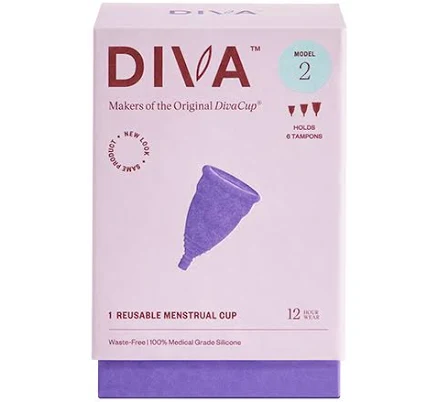
Diva Cup
Model 2
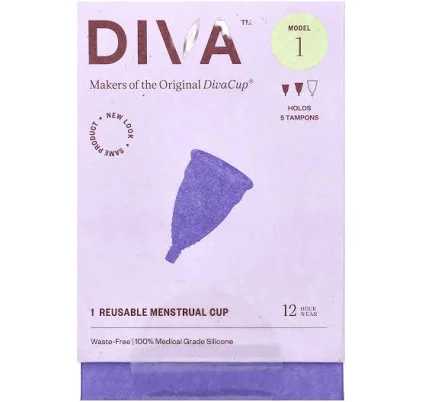
Diva Cup
#1 Pre-Childbirth
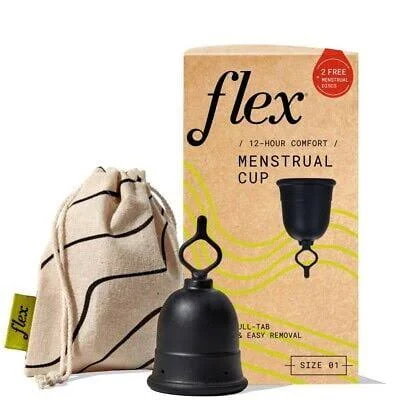
Flex
Cup Menstrual Slim Pack of 1
Model-based grades, not lab tests. We flunk more than we pass. How grading works
PFAS in Menstrual Cups, Which Brands Grade Best and Worst
Based on available materials and data, every menstrual cup and disc currently in our database grades out as "Good" with a model-based estimate of 70 out of 100, including every product from Flex, Saalt, Lena, and Diva Cup that we reviewed. No menstrual cup in our records graded as a safety concern, but that does not mean any of them are confirmed "PFAS-free" in a lab sense. Of the group, the Lena Sensitive Menstrual Cup and the broader Lena Menstrual Cup line edge ahead on our honest read because Lena has built its brand narrative almost entirely around single-polymer medical-grade silicone with minimal additives, which simplifies the PFAS-risk picture compared to products that blend coatings, dyes, or disc-rim materials.
That said, "edge ahead" is a qualitative call layered on top of identical numeric grades, not a claim that Lena is independently lab-verified as cleaner than Saalt, Flex, or Diva Cup. All four brands currently sit in the same "Good" tier in our system, and all four rely on silicone as the primary material, which is inherently a lower-concern category for PFAS compared to coated textiles or non-stick cookware. This guide breaks down each product line so you can decide which fits your priorities, and it points to our broader period care category page and our product finder if you want to compare beyond cups.
Summary comparison
| Product | PFAS grade (model estimate) | Verdict |
|---|---|---|
| Lena Sensitive Menstrual Cup | Good, 70/100 | Lower concern, single-material silicone, simple formulation |
| Lena Menstrual Cup | Good, 70/100 | Lower concern, consistent with Lena's single-polymer approach |
| Lena Menstrual Cup, Large Pink | Good, 70/100 | Lower concern, pigment adds a variable worth noting |
| Saalt Menstrual Cup | Good, 70/100 | Lower concern, strong brand transparency on sourcing |
| Saalt Menstrual Cup Twin Pack | Good, 70/100 | Lower concern, same formulation as single-pack cup |
| Saalt Soft Menstrual Cup Duo Pack | Good, 70/100 | Lower concern, softer silicone blend, still limited public testing data |
| Flex Cup Starter Bundle | Good, 70/100 | Lower concern, bundle includes multiple product types to evaluate individually |
| Flex Silicone Menstrual Cups | Good, 70/100 | Lower concern, standard medical-grade silicone claim |
| Flex Cup Menstrual Slim, Pack of 1 | Good, 70/100 | Lower concern, slimmer profile, same base material claim |
| Flex Menstrual Discs | Good, 70/100 | Lower concern, disc format changes wear pattern and rim material questions |
| Flex Reusable Menstrual Disc | Good, 70/100 | Lower concern, reusable rim design merits ongoing scrutiny |
| Diva Cup #1, Pre-Childbirth | Good, 70/100 | Lower concern, longest market history among the group |
Why menstrual cups grade well as a category
Menstrual cups and discs are mostly molded from medical-grade silicone, a polymer class that does not require PFAS-based processing aids in the way some textiles, cookware coatings, or waterproof fabrics do. That structural fact is a large part of why every product in our database lands in the "Good" tier. It is not a guarantee. Silicone products can still pick up PFAS exposure through mold-release agents, pigments, or supply-chain contamination that brands do not always disclose, and our grade of 70/100 reflects that residual uncertainty rather than a clean bill of health. Think of it as a model-based estimate from materials and public disclosure, not a lab test result.
Lena, materials and claims
Lena markets its cups as made from soft, medical-grade silicone with no latex, no BPA, and no dyes added to most of its core line. The Lena Sensitive Menstrual Cup is positioned as a softer-durometer option for people who find standard cups too firm, while the Lena Menstrual Cup and the Large Pink variant use a firmer base silicone with an added pigment for the colored version.
Brand claims, Lena states its cups are made from 100 percent medical-grade silicone and are free of major known allergens. These are brand-stated claims, not independently lab-verified PFAS test results published in our sources.
Pros, Single-material construction simplifies the risk picture. Long-standing presence in the menstrual cup market with a stable formulation. Sensitive line offers a softer option without introducing a different polymer class.
Cons, The pigmented Large Pink variant introduces a colorant that is not independently broken down in available disclosures. No third-party PFAS lab panel is cited in our sources for any Lena product, so the Good grade rests on material category and brand disclosure rather than verified lab results.
Saalt, materials and claims
Saalt builds its cup line around what it describes as a proprietary, super-soft, 100 percent medical-grade silicone blend. The core Saalt Menstrual Cup and the Saalt Menstrual Cup Twin Pack share the same formulation, while the Soft Menstrual Cup Duo Pack uses a softer blend aimed at sensitive users and teens.
Brand claims, Saalt states its cups are hypoallergenic, free of dyes and BPA, and manufactured in an FDA-registered facility. Saalt has also published sustainability and giveback program details publicly. These remain brand-stated claims in our sources rather than confirmed third-party PFAS lab results.
Pros, Consistent formulation across its product range makes it easier to evaluate as a single material system. Public-facing transparency about manufacturing location and facility registration is more detailed than many competitors. Soft variant gives an alternative durometer without switching material families.
Cons, As with the rest of the category, no independent PFAS lab panel is cited for Saalt in available sources, so the Good grade reflects material-category reasoning, not a certified absence of PFAS. The softer duo pack blend is a distinct formulation from the standard cup and has not been separately disclosed in detail.
Flex, materials and claims
Flex offers the widest range in this comparison, spanning cups and discs. The Flex Silicone Menstrual Cups and Flex Cup Menstrual Slim, Pack of 1 use what Flex describes as medical-grade silicone, while the Flex Menstrual Discs and Flex Reusable Menstrual Disc use a flatter, flexible polymer rim design that sits differently in the body than a cup. The Flex Cup Starter Bundle packages multiple formats together.
Brand claims, Flex states its products are made without BPA, latex, or added dyes, and markets both disposable and reusable disc lines under the same general materials language. These are brand-stated claims; our sources do not show an independent PFAS lab report specific to Flex products.
Pros, Broad product range lets users choose between cup and disc formats without switching brands. The starter bundle is useful for comparing formats before committing to one. Reusable disc option reduces single-use waste compared to disposable alternatives.
Cons, The disc format's flatter rim and different polymer handling compared to a cup means the two Flex product families should not be assumed to carry identical risk profiles, even though both currently grade Good. The starter bundle mixes formats, so a buyer should treat each component as a separate evaluation rather than one blended product.
Diva Cup, materials and claims
The Diva Cup #1, Pre-Childbirth is one of the longest-running products in the menstrual cup market and is made from what the brand describes as 100 percent medical-grade silicone, sized specifically for people who have not given birth vaginally.
Brand claims, Diva Cup states its product is free of latex, plastic, BPA, dyes, and toxins. These are brand-stated claims, and our sources do not include a published third-party PFAS lab panel for this specific SKU.
Pros, Long market history means a large body of user experience exists, even if that experience is not a substitute for lab testing. Size-specific design for pre-childbirth anatomy is a genuinely useful differentiator for fit. Widely available through mainstream retail, which can simplify returns and replacement.
Cons, Being an established product does not equate to newer or more rigorous disclosure. Like every other product here, the Good grade is a model-based estimate from materials and public disclosure, not confirmation from an independent lab.
What to avoid
Based on available materials and data, here are the patterns worth watching for when shopping for a menstrual cup or disc, even within a category that broadly grades well.
- Unverified "medical-grade silicone" claims with no material spec sheet. Many brands use this phrase, but few publish the actual silicone grade or supplier documentation. Treat it as a brand claim until shown otherwise.
- Added color dyes or glitter finishes. Pigments and specialty finishes introduce additional chemical inputs that are not always disclosed in detail, as seen with the Lena Large Pink variant compared to Lena's undyed line.
- Scented or "antimicrobial-treated" cups and discs. Any marketed antimicrobial or fragrance-release coating is a potential vector for undisclosed chemical treatments, including fluorinated compounds, and none of the products reviewed here make this claim, which is itself a point in their favor.
- Reusable rim materials blended with plastics. Disc products that combine a flexible rim with a different cup material deserve closer label reading than single-material silicone cups.
- No manufacturing or facility disclosure. Brands that will not name a manufacturing country or facility registration make it harder to assess sourcing risk, a transparency gap that Saalt and Diva Cup address more directly than some smaller competitors.
For a wider view of where PFAS tends to show up in adjacent categories, see our guides on cosmetics clothing, and swimwear, since many period-care shoppers also ask about these.
Our pick
Based on available materials and data, there is no single standout winner by the numbers alone, since all twelve products in our database, from Lena to Saalt to Flex to Diva Cup, share the same Good grade and 70/100 score. If forced to choose, we lean toward the Lena Sensitive Menstrual Cup for its single-polymer, undyed formulation, which keeps the variables simple. The Saalt Menstrual Cup is a close second for its clearer manufacturing disclosure. Neither pick should be read as a lab-confirmed PFAS-free claim; it is a relative judgment within a category where every product is currently rated lower concern rather than high concern. Shoppers who want to compare these against other period-care products can browse our full period care roundup or run a side-by-side search with our product finder.
Frequently asked questions
Do menstrual cups contain PFAS?
Based on available materials and data, the menstrual cups and discs reviewed here show no evidence of PFAS found in reviewed sources, and all are built primarily from medical-grade silicone, a material category that generally carries lower PFAS risk than coated textiles or non-stick cookware. This is a model-based estimate from materials and public disclosure, not a certified lab result, and absence of evidence in public sources is not the same as a confirmed absence of the chemicals.
Is a Good grade of 70 out of 100 the same as a safety guarantee?
No. A Good grade means our model found lower concern based on the materials disclosed and the product category, not that a product has been independently lab-tested and certified free of PFAS. Brand statements about being free of dyes, BPA, or latex are brand-stated claims unless a specific third-party lab panel is cited alongside them.
Does PFAS exposure from period products cause health problems?
Some research has linked PFAS exposure broadly to various health concerns, but that research describes association, not proven causation, and it is not specific to the menstrual cups graded in this guide. If you have health concerns related to PFAS exposure, consult a healthcare provider rather than relying solely on product grades.
Now check your own stuff
See every product we’ve graded in this category, best-graded first.
Get the graded list, free.
The products we score each week, and the best-graded alternative in every category.
No spam. Unsubscribe anytime.