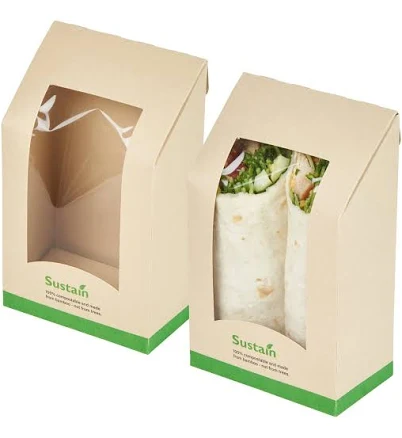
Sustain Bamboo Paper Sandwich / Wrap Take Out Container
Lower concern but coating secrecy raises minor questions about PFAS exposure.
This takeout box uses natural bamboo but includes an undisclosed food-contact coating. Waterproofing bamboo containers often requires PFAS-based treatments, though non-PFAS options exist.
The better-graded swap
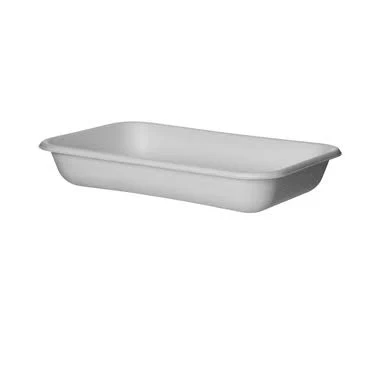
Eco-Products
Eco-Products WorldView Sugarcane Take-Out Containers
100/100 safety
Same rubric that flunked this product. The swap earned Excellent.
Still want this one anyway? Check the price on Amazon. We’d swap it.
Material
Bamboo fiber with food-contact coating (unspecified)
Brand disclosure
Brand is silent on PFAS
Lab data
No public lab test
You may also be interested in
Top-graded picks in the categories readers replace first, every one scored on the same rubric.

- polypropylene filter housing, carbon/sediment cartridge
- We found no PFAS statement from the brand
- Bacterial growth in spent cartridges
3 hazards checked on this product, all on its full breakdown.

Aquasure
Premier Series 75 GPD Under Sink Reverse Osmosis Water Filtration System
- RO membrane, carbon filters, stainless steel housing
- We found no PFAS statement from the brand
- Bacterial and microbial growth in housing and filters
4 hazards checked on this product, all on its full breakdown.

Avocado
Vegan Mattress
- organic cotton, natural latex, coconut coir, recycled steel coils
- The brand calls it PFAS-free, which we have not verified
- Heavy metals
2 hazards checked on this product, all on its full breakdown.
What Sustain Bamboo Paper Out Container is made of, ingredients and materials
Sustain containers are molded from bamboo fiber, a rapidly renewable agricultural waste product, bonded with a food-contact coating whose exact composition the brand does not publicly disclose. The coating is critical because it provides the grease and moisture barrier that makes the product functional for takeout use. Bamboo fiber itself is inert and non-toxic, but any coating can leach if degraded, overheated, or formulated with problem additives. The lack of transparency about this coating is the main concern.
What’s concerning
Category baseline
The starting point for this type of product, before anything specific to this product is counted.
No PFAS disclosure
No public statement from the brand about PFAS in this product.
Waterproof / stain-resistant treatment
Water-repellent coating treatments have historically used PFAS.
Food-contact coating leaching (unknown composition)
The brand does not disclose the resin or additives in the coating. If it contains urea-formaldehyde or phenol-formaldehyde (common in molded fiber), or if any synthetic binders contain BPA or phthalates, leaching risk increases under heat or high-fat foods. Current evidence is insufficient to grade higher, but opacity demands precaution.
Microplastics
Molded fiber coatings can degrade mechanically over repeated use or if flexed. If the coating is a synthetic polymer, fragmentation could release micro-particles. This is difficult to verify without disassembly and microscopy, but remains a theoretical pathway, especially if containers are reused.
Source, EPA ↗Thermal leaching from heat exposure
Bamboo fiber containers are often recommended for cold or ambient foods only. If microwaved or filled with hot liquids, coating adhesion and polymer stability decline, increasing the likelihood of additive migration. No published testing on containers exists, but this is standard risk for all coated fiber food packaging above 60-70 degrees Celsius.
Formaldehyde / VOCs
Bamboo fiber boards are typically pressed and cured with formaldehyde-based resins. While food-contact coatings should seal these, off-gassing or incomplete sealing could lead to trace formaldehyde exposure. The brand has not published emissions data or off-gassing certifications (e.g., FloorScore, ULE), making this unverified.
Source, ATSDR ↗Bacterial or mold growth in porous substrate if coating fails
If the coating cracks or delaminates, the porous bamboo fiber beneath can absorb moisture and harbor bacteria or mold, especially in warm or damp storage. This is a hygiene rather than chemical hazard but relevant to food safety during the product lifecycle.
How is this PFAS grade calculated?
The brand's record and disclosure
The brand markets heavily on sustainability and eco-friendliness but does not publish third-party test results, ingredient lists for coatings, or certifications from agencies like FDA or NSF for the food-contact layer. The company has not issued public statements addressing PFAS, BPA, or other synthetic additives in their coatings. This silence is not unusual for small eco-brands but represents a gap in transparency that makes independent hazard assessment difficult. No major recalls or health incidents have been documented for sandwich containers.
How it compares in its category
Bamboo fiber takeout containers sit between conventional plastic clamshells (higher chemical burden) and uncoated paper (lower barrier protection). They avoid the Teflon-type coating fume risk of some nonstick coatings and the BPA/BPS leaching risk of polycarbonate or certain plastics. However, competing products from larger manufacturers (e.g., Footprint, Vegware) often disclose coating materials and have pursued third-party certifications, which the brand has not widely publicized. Compostability claims are strong but depend on industrial composting infrastructure, not home disposal.
If you buy it
Use these containers at room temperature or cool food only; microwave and dishwasher use risk coating degradation and unknown leachate release. Replace containers if you notice discoloration, flaking, or odor changes, which suggest coating breakdown. Store dry and away from prolonged moisture or oils, which can soften the barrier. Given the coating secrecy, these are best suited for single-use takeout scenarios rather than repeated meal prep storage where coating exposure is higher.
What is not known about PFAS in this product?
- Basis
- Model estimate, 62% confidence, not a lab result
- Lab test
- None on record for this exact product
- Brand statement
- has made none
Formulations change between production runs, so check the current label. How we grade.
What are the PFAS-free alternatives to Sustain Bamboo Paper Sandwich / Wrap Take Out Container?
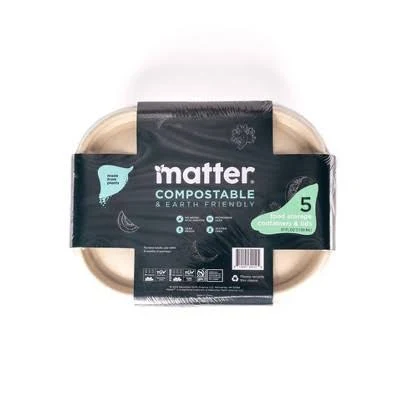
- Plant-based fiber pulp (compostable)
- A third party reports verifying it as PFAS-free
- Microbe/mold growth if stored damp
2 hazards checked on this product, all on its full breakdown.
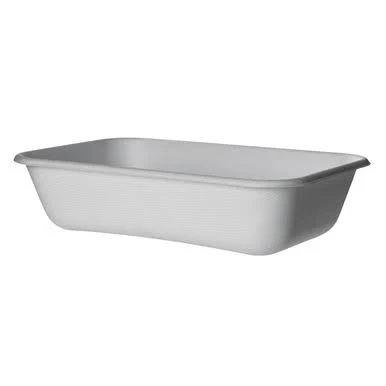
Eco-Products
Eco Products WorldView Compostable Take-Out Containers EP-SCRC32
- Plant-based fiber (compostable sugarcane bagasse)
- A third party reports verifying it as PFAS-free
- Bleaching agents and processing residues
3 hazards checked on this product, all on its full breakdown.
Eco-Products
WorldView Sugarcane Take-Out Containers
- Sugarcane bagasse (post-consumer fiber)
- A third party reports verifying it as PFAS-free
- Cellulose fiber degradation and food contact
2 hazards checked on this product, all on its full breakdown.
More food packaging grades
How we score, every product runs through the same public 0-100 rubric based on materials, coatings, brand disclosure, lab findings, and recalls. See the full methodology → Spotted a mistake? Report an error.