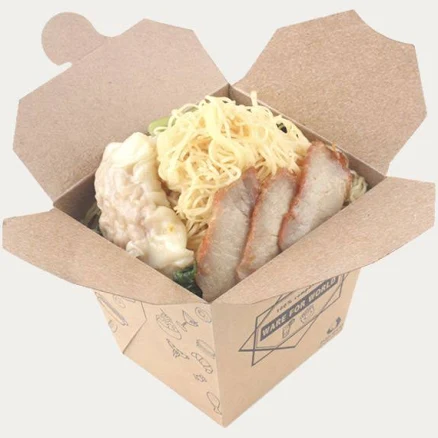
Eco-Friendly Bio Pack Food Boxes, Sustainable Custom Food Packaging
Wait unless brand discloses coating details; grease-resistant food packaging often contains PFAS.
BioPak markets these as sustainable and eco-friendly but reveals nothing about coatings that provide water and grease resistance. Food containers with these properties typically contain PFAS chemistry.
The better-graded swap
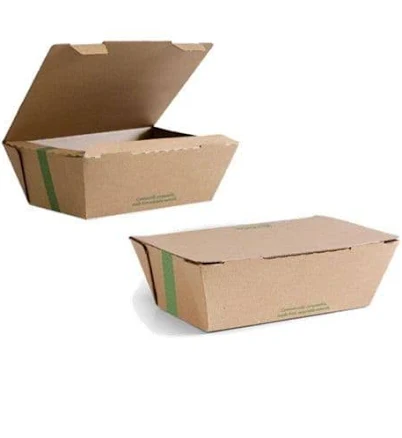
Vegware
Vegware Compostable Microflute Takeaway Box
100/100 safety
Same rubric that flunked this product. The swap earned Excellent.
Still want this one anyway? Check the price on Amazon. We’d swap it.
Material
Unspecified polymer/coating; likely cardboard-based with grease-resistant treatment
Brand disclosure
Brand is silent on PFAS
Lab data
No public lab test
You may also be interested in
Top-graded picks in the categories readers replace first, every one scored on the same rubric.

- polypropylene filter housing, carbon/sediment cartridge
- We found no PFAS statement from the brand
- Bacterial growth in spent cartridges
3 hazards checked on this product, all on its full breakdown.

Aquasure
Premier Series 75 GPD Under Sink Reverse Osmosis Water Filtration System
- RO membrane, carbon filters, stainless steel housing
- We found no PFAS statement from the brand
- Bacterial and microbial growth in housing and filters
4 hazards checked on this product, all on its full breakdown.

Avocado
Vegan Mattress
- organic cotton, natural latex, coconut coir, recycled steel coils
- The brand calls it PFAS-free, which we have not verified
- Heavy metals
2 hazards checked on this product, all on its full breakdown.
What Eco-Friendly Bio Pack Food Packaging is made of, ingredients and materials
BioPac food boxes are cardboard-based packaging with an unspecified grease-resistant coating, likely a polymer laminate or wax-like treatment. This coating prevents oil and moisture migration, which is functional but chemically opaque. The lack of material transparency means the actual polymer resin, adhesives, and any water-repellent agents (historically PFAS chemicals) remain undisclosed to consumers. For food contact, coating composition directly affects migration risk into fatty or acidic foods.
What’s concerning
Category baseline
The starting point for this type of product, before anything specific to this product is counted.
Vague safety claims only
Uses vague language ("eco-friendly", "clean") without a specific PFAS statement.
Waterproof / stain-resistant treatment
Water-repellent coating treatments have historically used PFAS.
PFAS
Unspecified 'grease-resistant treatment' in cardboard food packaging historically relies on PFAS or related fluorinated compounds. BioPac's silence on chemistry and lack of public declaration about fluorinated polymers places this in high-probability range for fluorinated polymers, especially for short-term commercial product lines.
Source, ATSDR ↗Coating migration into fatty foods
Unknown polymer coating chemistry means migration potential cannot be assessed. Synthetic resin coatings can leach monomers, plasticizers, or processing residues into oily foods; risk increases with heat and storage time.
Adhesive residues and solvents
Laminated cardboard-based boxes use adhesives to bond coatings to cardboard. Formaldehyde-based or solvent-containing adhesives may off-gas or migrate, particularly if boxes are stored in warm conditions before use.
Microplastics
If the coating is a synthetic polymer, mechanical stress, moisture, or thermal cycling can cause fragmentation. Particles small enough to transfer to food are a theoretical but not yet well-quantified food safety pathway.
Source, EPA ↗What’s reassuring
Ink or print additives on exterior
Custom food boxes often include printed branding. No specific reports of hazardous inks in BioPac products, but exterior print should not contact food due to standard industrial ink practices.
How is this PFAS grade calculated?
The brand's record and disclosure
BioPac maintains a sustainability marketing stance but does not publicly disclose the specific chemistry of its grease-resistant treatment or confirm PFAS-free status. No third-party certifications (such as FDA approved coatings list, or PFOA/PFOS elimination statements) are evident in available sources. The silent stance on coating details is consistent with many compostable-marketed packaging brands that use legacy formulations. Absence of certification is a red flag for food-contact applications.
How it compares in its category
Most compostable food packaging marketed as 'eco-friendly' still uses synthetic polymer coatings for grease resistance; BioPac is typical in this gap. Alternatives include uncoated kraft paper (lower water resistance), silicone-coated boxes (clearer disclosure, lower concern for some applications), or PLA-laminated options (better material transparency). Industry-wide, grease-resistant cardboard is a known source of PFAS exposure via food contact, making this product category a documented concern for regulatory agencies.
If you buy it
Restrict use to dry foods (bakery items, non-oily prepared foods) and short-term storage to minimize migration risk from unknown coatings. Do not use for hot or fatty foods, which accelerate leaching from synthetic coatings. Store boxes away from moisture and heat to reduce coating degradation. Before repeat purchase, request the manufacturer's technical data sheet (TDS) specifying coating type and PFAS status; lack of response signals low priority on chemical transparency.
What is not known about PFAS in this product?
- Basis
- Model estimate, 35% confidence, not a lab result
- Lab test
- None on record for this exact product
- Brand statement
- BioPac has made none
Formulations change between production runs, so check the current label. How we grade.
What are the PFAS-free alternatives to Eco-Friendly Bio Pack Food Boxes, Sustainable Custom Food Packaging?
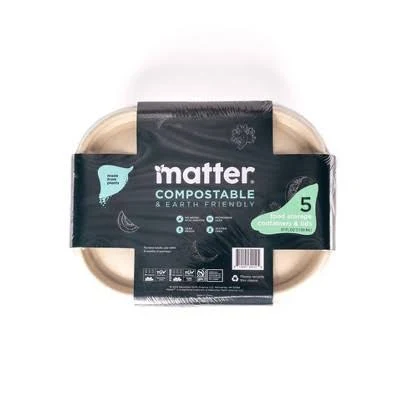
- Plant-based fiber pulp (compostable)
- A third party reports verifying it as PFAS-free
- Microbe/mold growth if stored damp
2 hazards checked on this product, all on its full breakdown.
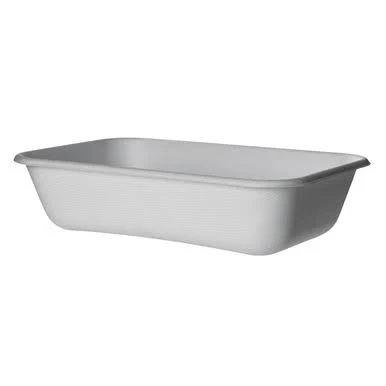
Eco-Products
Eco Products WorldView Compostable Take-Out Containers EP-SCRC32
- Plant-based fiber (compostable sugarcane bagasse)
- A third party reports verifying it as PFAS-free
- Bleaching agents and processing residues
3 hazards checked on this product, all on its full breakdown.
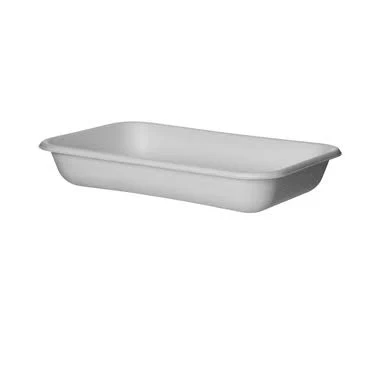
Eco-Products
WorldView Sugarcane Take-Out Containers
- Sugarcane bagasse (post-consumer fiber)
- A third party reports verifying it as PFAS-free
- Cellulose fiber degradation and food contact
2 hazards checked on this product, all on its full breakdown.
More food packaging grades
How we score, every product runs through the same public 0-100 rubric based on materials, coatings, brand disclosure, lab findings, and recalls. See the full methodology → Spotted a mistake? Report an error.