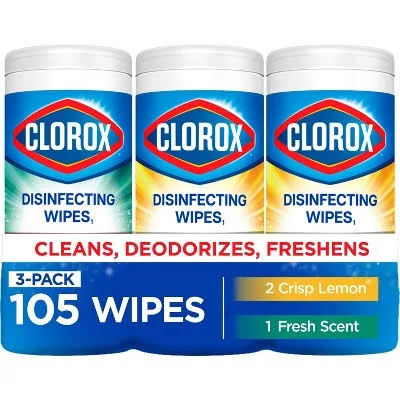
Clorox Disinfecting Cleaning Wipes 3-Pack
Skip or contact Clorox, no PFAS transparency on disinfectant chemistry.
Clorox Disinfecting Wipes contain an undisclosed active disinfectant formula and do not publicly disclose PFAS use, testing, or avoidance. Disinfectant products sometimes use PFAS-based surfactants.
We flunk more products than we pass. This one earned its grade. How we grade
Material
nonwoven fabric (polypropylene, polyester blend), disinfectant active ingredient unknown composition
Lab data
No public lab test
You may also be interested in
Top-graded picks in the categories readers replace first, every one scored on the same rubric.

- polypropylene filter housing, carbon/sediment cartridge
- We found no PFAS statement from the brand
- Bacterial growth in spent cartridges
3 hazards checked on this product, all on its full breakdown.

Aquasure
Premier Series 75 GPD Under Sink Reverse Osmosis Water Filtration System
- RO membrane, carbon filters, stainless steel housing
- We found no PFAS statement from the brand
- Bacterial and microbial growth in housing and filters
4 hazards checked on this product, all on its full breakdown.

Avocado
Vegan Mattress
- organic cotton, natural latex, coconut coir, recycled steel coils
- The brand calls it PFAS-free, which we have not verified
- Heavy metals
2 hazards checked on this product, all on its full breakdown.
What Clorox Disinfecting Cleaning Wipes 3-Pack is made of, ingredients and materials
Clorox Disinfecting Wipes are a nonwoven fabric substrate (polypropylene and polyester blend) saturated with a liquid disinfectant formulation. The active disinfectant ingredient(s) and their chemical identity are not disclosed on the product label or in publicly available safety data sheets reviewed here. The nonwoven base itself is inert and not a primary hazard source; the concern centers on the proprietary disinfectant liquid, which may contain undisclosed surfactants, stabilizers, or preservatives.
What’s concerning
Category baseline
The starting point for this type of product, before anything specific to this product is counted.
No PFAS disclosure
No public statement from the brand about PFAS in this product.
Undisclosed disinfectant chemistry and hidden actives
The proprietary disinfectant formulation is not itemized on the label. Industry-standard disinfectants in this category often include quaternary ammonium compounds (quats) or sodium hypochlorite derivatives, both of which can irritate skin and mucous membranes with prolonged contact. Without full disclosure, routine use patterns cannot be fully risk-assessed.
Preservative sensitization and skin irritation
Saturated wipe products require antimicrobial preservatives to prevent microbial colonization in the wet substrate. Common preservatives in cleaning wipes (methylisothiazolinone, phenoxyethanol) are known skin sensitizers in some populations. No ingredient list is provided here, so specific preservative risk is unquantified.
Inhalation risk from vapors during use
Nonwoven wipes release volatile components of the disinfectant formulation during wiping, particularly in warm or low-ventilation conditions. The extent depends on the specific actives and solvents used; without disclosure, ventilation guidance cannot be tailored.
Eye and mucous membrane irritation from active ingredients
Disinfectant wipes are not intended for facial use or eye contact. Standard EPA-registered disinfectants carry irritation warnings; Clorox labeling advises avoiding contact with eyes and face, indicating known risk even at intended concentrations.
What’s reassuring
Base material not linked to PFAS
The main material recorded for this product is not one associated with PFAS.
Microplastic shedding from nonwoven fabric
Polypropylene-polyester nonwoven fabrics can shed microfibers if aggressively abraded, though typical wiping pressure is low. No published recalls or safety reports specific to Clorox wipes microfiber shedding are on record, but the concern is category-wide and not product-specific.
How is this PFAS grade calculated?
The brand's record and disclosure
Clorox has faced historical scrutiny over ingredient transparency in consumer-grade disinfectants, though the company maintains EPA registration for its active disinfectant claims. The brand does not publicly commit to PFAS-free formulations across its product line, and no third-party certifications (e.g. Internal safety data sheets exist but are not routinely made accessible to consumers; requests for ingredient detail typically require direct contact with Clorox customer service.
How it compares in its category
Disinfecting wipes are a high-turnover, high-convenience category with widely variable ingredient transparency. Clorox's market position relies on broad-spectrum disinfection claims rather than clean-label positioning; competing brands (e.g., Seventh Generation, Mrs. Meyer's) explicitly list active ingredients and hold third-party ecolabels. Wipes in this category typically carry higher chemical load per unit than equivalent liquid disinfectants, since saturation requires higher concentrations of actives and preservatives.
If you buy it
Use wipes in well-ventilated spaces to minimize inhalation of disinfectant vapors, especially in small enclosed areas (bathrooms, cars). Do not allow prolonged skin contact; wash hands after use if wipe residue remains on fingers. Store container sealed and away from heat or direct sunlight to prevent premature evaporation of the disinfectant. Replace wipes if they become dry or if formulation separates, as degraded wipes may harbor bacterial growth rather than inhibit it. Consider requesting a full ingredient disclosure (including all disinfectant actives and preservatives) from Clorox before regular use in sensitive environments (daycare, immunocompromised households).
What is not known about PFAS in this product?
- Basis
- Model estimate, 35% confidence, not a lab result
- Lab test
- None on record for this exact product
- Brand statement
- Clorox has made a specific claim
Formulations change between production runs, so check the current label. How we grade.
More cleaning wipes grades
How we score, every product runs through the same public 0-100 rubric based on materials, coatings, brand disclosure, lab findings, and recalls. See the full methodology → Spotted a mistake? Report an error.