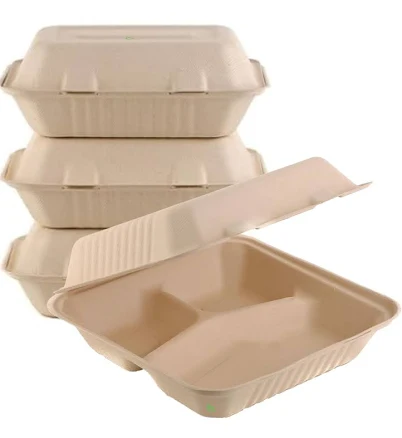
3 Compartment Compostable Hinged Clamshell Take Out Containers 9x9 / 20 Pcs
Lower PFAS concern, though grease-resistance method remains unclear.
These compostable clamshells use plant-based plastics instead of fluorinated polymers, lowering typical PFAS risk. The brand doesn't publicly reveal PFAS testing or how it achieves grease resistance, so contact them if PFAS-free assurance matters for your needs.
The better-graded swap
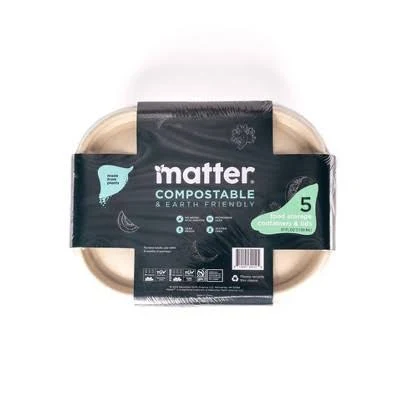
Matter
Matter Compostable Food Storage Container 5ct
100/100 safety
Same rubric that flunked this product. The swap earned Excellent.
Still want this one anyway? Check the price on Amazon. We’d swap it.
Material
Compostable bioplastic (likely PLA or PBAT blend)
Brand disclosure
Brand is silent on PFAS
Lab data
No public lab test
You may also be interested in
Top-graded picks in the categories readers replace first, every one scored on the same rubric.

- polypropylene filter housing, carbon/sediment cartridge
- We found no PFAS statement from the brand
- Bacterial growth in spent cartridges
3 hazards checked on this product, all on its full breakdown.

Aquasure
Premier Series 75 GPD Under Sink Reverse Osmosis Water Filtration System
- RO membrane, carbon filters, stainless steel housing
- We found no PFAS statement from the brand
- Bacterial and microbial growth in housing and filters
4 hazards checked on this product, all on its full breakdown.

Avocado
Vegan Mattress
- organic cotton, natural latex, coconut coir, recycled steel coils
- The brand calls it PFAS-free, which we have not verified
- Heavy metals
2 hazards checked on this product, all on its full breakdown.
What 3 Compartment Compostable Containers 9x9 / is made of, ingredients and materials
These containers are made from compostable bioplastics, most likely polylactic acid (PLA), polybutylene adipate terephthalate (PBAT), or a blend. PLA is derived from renewable resources like corn starch and breaks down in industrial composting facilities within 90-180 days, unlike conventional polystyrene (PS) which persists for centuries. However, PLA is not a material with lower concern than PS for direct food contact; both can leach monomers and additives into food, especially under heat or with acidic/fatty foods. The advantage is end-of-life environmental impact, not necessarily chemical safety during use.
What’s concerning
Category baseline
The starting point for this type of product, before anything specific to this product is counted.
No PFAS disclosure
No public statement from the brand about PFAS in this product.
Waterproof / stain-resistant treatment
Water-repellent coating treatments have historically used PFAS.
Monomer and oligomer leaching (PLA)
PLA can release lactic acid monomers and oligomers into fatty or acidic foods, especially under heat. Levels are generally low at room temperature but increase with microwave use or prolonged storage of oily foods.
Undisclosed additives in proprietary blends
Compostable blends often include plasticizers, colorants, and processing aids not listed on consumer labels. Without third-party certification or material safety data sheet access, specific additives and their migration potential remain unknown.
Thermal degradation and fume release
Exposure of PLA to temperatures above 80°C can trigger thermal decomposition and emission of volatile organic compounds (VOCs) including lactide and cyclic oligomers. Microwave use poses a known risk; conventional oven heating is not recommended.
Microplastics
Compostable containers can fragment into microplastics if stored in direct sunlight, repeatedly flexed, or washed at high temperatures. Fragments may enter food or the environment if containers are discarded improperly instead of composted.
Source, EPA ↗What’s reassuring
BPA & bisphenols
PLA and PBAT formulations typically do not require or use BPA or phthalates by design, making contamination unlikely unless contaminated recycled material is blended in. No reports of BPA or phthalate presence in standard containers are on record.
Source, FDA ↗How is this PFAS grade calculated?
The brand's record and disclosure
The brand does not disclose detailed material composition, additives, or third-party certifications on publicly available sources. No recalls or safety controversies specific to this brand are on record. The silence on chemical composition is typical for small compostable packaging manufacturers but limits transparency regarding plasticizers, colorants, or processing aids used in the blend. Absence of BPA or phthalate declarations is not the same as testing confirmation.
How it compares in its category
Compostable clamshells show lower concern than conventional polystyrene foam or rigid plastic containers in terms of persistent chemical exposure and environmental burden, but offer no chemical advantage over paper-based or cardboard alternatives if those are available. Unlike conventional plastics that may contain legacy BPA or phthalates, PLA-based containers rarely include these, but unregulated additives in proprietary blends remain a gap. They occupy a middle ground, better than virgin petrochemical plastics, but dependent on end-user composting infrastructure and manufacturer transparency.
If you buy it
Do not use these containers for hot foods or in the microwave, as PLA softens at temperatures above 60°C (140°F) and may leach oligomers and monomers into food. Use only for cold or room-temperature items such as deli items, baked goods, or salads. After use, place in a certified industrial composting bin; home composting does not generate sufficient heat to break down PLA. Store in a cool, dry place to prevent premature degradation; do not reuse for non-compostable waste, as contamination prevents industrial processing.
What is not known about PFAS in this product?
- Basis
- Model estimate, 72% confidence, not a lab result
- Lab test
- None on record for this exact product
- Brand statement
- has made none
Formulations change between production runs, so check the current label. How we grade.
What are the PFAS-free alternatives to 3 Compartment Compostable Hinged Clamshell Take Out Containers 9x9 / 20 Pcs?
- Plant-based fiber pulp (compostable)
- A third party reports verifying it as PFAS-free
- Microbe/mold growth if stored damp
2 hazards checked on this product, all on its full breakdown.
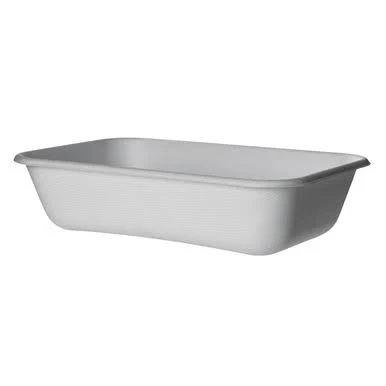
Eco-Products
Eco Products WorldView Compostable Take-Out Containers EP-SCRC32
- Plant-based fiber (compostable sugarcane bagasse)
- A third party reports verifying it as PFAS-free
- Bleaching agents and processing residues
3 hazards checked on this product, all on its full breakdown.
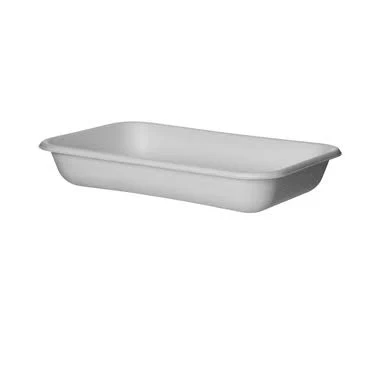
Eco-Products
WorldView Sugarcane Take-Out Containers
- Sugarcane bagasse (post-consumer fiber)
- A third party reports verifying it as PFAS-free
- Cellulose fiber degradation and food contact
2 hazards checked on this product, all on its full breakdown.
More food packaging grades
How we score, every product runs through the same public 0-100 rubric based on materials, coatings, brand disclosure, lab findings, and recalls. See the full methodology → Spotted a mistake? Report an error.