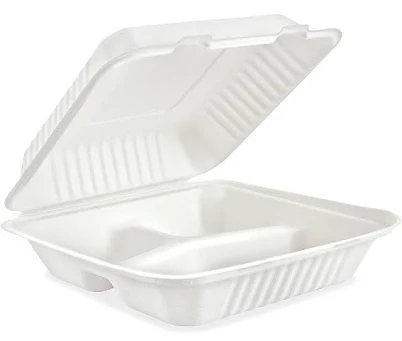
ULINE Compostable Hinged Containers
Avoid until the brand reveals what makes it grease-resistant.
These compostable containers lack disclosure about their grease-resistant coating, even though such coatings commonly use PFAS. Compostability and PFAS content are separate issues.
The better-graded swap
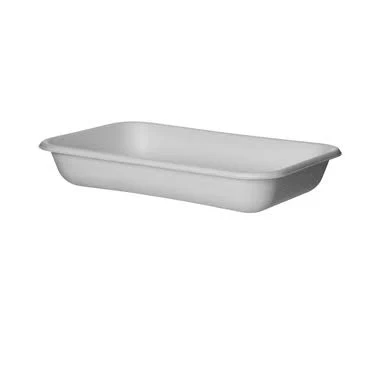
Eco-Products
Eco-Products WorldView Sugarcane Take-Out Containers
100/100 safety
Same rubric that flunked this product. The swap earned Excellent.
Still want this one anyway? Check the price on Amazon. We’d swap it.
Material
Molded fiber/cardboard with grease-resistant coating
Brand disclosure
Brand is silent on PFAS
Lab data
No public lab test
You may also be interested in
Top-graded picks in the categories readers replace first, every one scored on the same rubric.

- polypropylene filter housing, carbon/sediment cartridge
- We found no PFAS statement from the brand
- Bacterial growth in spent cartridges
3 hazards checked on this product, all on its full breakdown.

Aquasure
Premier Series 75 GPD Under Sink Reverse Osmosis Water Filtration System
- RO membrane, carbon filters, stainless steel housing
- We found no PFAS statement from the brand
- Bacterial and microbial growth in housing and filters
4 hazards checked on this product, all on its full breakdown.

Avocado
Vegan Mattress
- organic cotton, natural latex, coconut coir, recycled steel coils
- The brand calls it PFAS-free, which we have not verified
- Heavy metals
2 hazards checked on this product, all on its full breakdown.
What ULINE Compostable Hinged Containers is made of, ingredients and materials
These containers are molded fiber, a pressed-paper composite typically made from recycled cardboard or virgin wood pulp. The grease-resistant coating is the critical unknown, it could be PFAS-based fluorochemicals (most common in food packaging), silicone, wax, or plant-based alternatives. Molded fiber itself is compostable and not a material linked to PFAS, but the coating determines whether the product can hold fatty or oily foods without leaching into the contents.
What’s concerning
Category baseline
The starting point for this type of product, before anything specific to this product is counted.
No PFAS disclosure
No public statement from the brand about PFAS in this product.
Waterproof / stain-resistant treatment
Water-repellent coating treatments have historically used PFAS.
PFAS
Molded-fiber food packaging typically uses fluorochemical coatings for grease resistance. Without brand disclosure, this product almost certainly contains PFAS chemicals. Risk is elevated when containers hold fatty foods or are heated (microwave, steam table).
Source, ATSDR ↗Coating degradation and microparticle release
Molded fiber coatings can wear, crack, or shed particles over time, especially if flexed repeatedly or exposed to moisture and heat. Degraded coating increases both leaching and physical contamination risk into food.
Formaldehyde / VOCs
Industrial molded-fiber production sometimes uses formaldehyde-based binders or resins. Food-contact grades should have minimal residual formaldehyde, but no testing data for this product is publicly available. Risk is low at room temperature but not zero.
Source, ATSDR ↗Lack of transparency enabling informed choice
The brand's silence on coating composition is a documented gap in disclosure standards now common in the industry. This prevents consumers and retailers from assessing true safety and contradicts emerging sustainability claims.
Compostability claims without verification
The product is marketed as compostable, but if the grease-resistant coating is PFAS-based, industrial composting facilities may not break down fluorochemicals, creating false assurance and potential environmental persistence.
How is this PFAS grade calculated?
The brand's record and disclosure
Compose (distributed via ULINE) does not publicly disclose the chemistry of its grease-resistant coating on product pages or sustainability statements reviewed in public records. The brand has not committed to PFAS-free formulations or third-party testing certification for this line. Without transparency on coating composition, consumer trust and informed choice are undermined. This silence is a major red flag in an industry where competitors increasingly advertise PFAS-free status.
How it compares in its category
Molded-fiber hinged containers are inherently superior to plastic clamshells for food contact because they avoid BPA, phthalates, and microplastic leaching risks. However, many competitors (including some molded-fiber brands) now market PFAS-free or fully compostable coatings with transparent ingredient lists. ULINE Compose containers lack this market differentiation, placing them behind disclosed alternatives despite a lower price point. If sustainability and safety are priorities, brands with PFAS-free certification are preferable.
If you buy it
Do not use these containers for hot, oily, or fatty foods (baked goods with grease, fried items, fatty meats) until the coating is confirmed PFAS-free, as heat and lipids increase leaching risk. Short-term room-temperature use (sandwiches, dry bakery items, salads without dressing) carries lower hazard exposure. Store containers away from direct heat and sunlight to slow coating degradation. Request the company's coating safety data sheet before large orders; if they refuse, switch brands.
What is not known about PFAS in this product?
- Basis
- Model estimate, 45% confidence, not a lab result
- Lab test
- None on record for this exact product
- Brand statement
- Uline has made none
Formulations change between production runs, so check the current label. How we grade.
What are the PFAS-free alternatives to ULINE Compostable Hinged Containers?
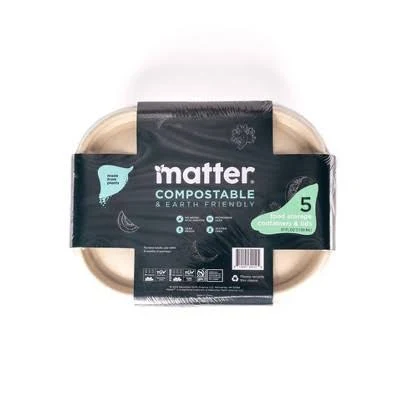
- Plant-based fiber pulp (compostable)
- A third party reports verifying it as PFAS-free
- Microbe/mold growth if stored damp
2 hazards checked on this product, all on its full breakdown.
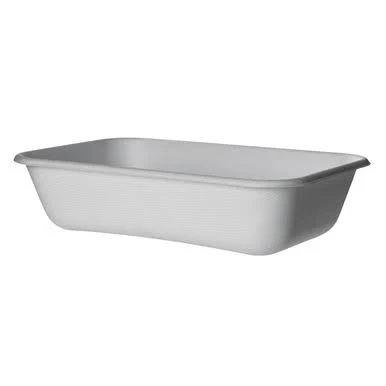
Eco-Products
Eco Products WorldView Compostable Take-Out Containers EP-SCRC32
- Plant-based fiber (compostable sugarcane bagasse)
- A third party reports verifying it as PFAS-free
- Bleaching agents and processing residues
3 hazards checked on this product, all on its full breakdown.
Eco-Products
WorldView Sugarcane Take-Out Containers
- Sugarcane bagasse (post-consumer fiber)
- A third party reports verifying it as PFAS-free
- Cellulose fiber degradation and food contact
2 hazards checked on this product, all on its full breakdown.
More food packaging grades
How we score, every product runs through the same public 0-100 rubric based on materials, coatings, brand disclosure, lab findings, and recalls. See the full methodology → Spotted a mistake? Report an error.