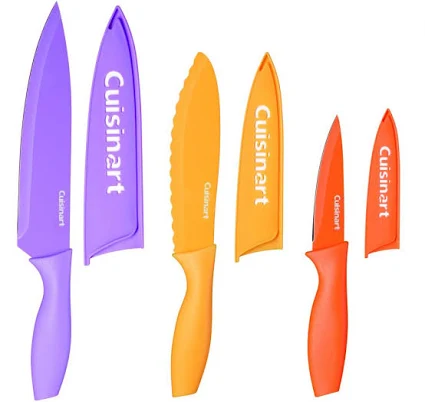
Cuisinart · Non-Stick Knife Sets
Cuisinart 6 Piece Nonstick Color Chef Knife Set, Is It Non-Toxic?
Skip until Cuisinart discloses nonstick coating chemistry or switches to PFAS-free alternatives.
Cuisinart doesn't disclose whether this nonstick-coated knife set uses Teflon-type coating, other Teflon-family coating, or PFAS-free options. Nonstick knife coatings migrate less than cookware, but transparency is absent.
Still want this one anyway? Check the price on Amazon. We’d swap it.
Material
Stainless steel blades with nonstick coating (type unspecified)
Lab data
No public lab test
You may also be interested in
Top-graded picks in the categories readers replace first, every one scored on the same rubric.

- polypropylene filter housing, carbon/sediment cartridge
- We found no PFAS statement from the brand
- Bacterial growth in spent cartridges
3 hazards checked on this product, all on its full breakdown.

Aquasure
Premier Series 75 GPD Under Sink Reverse Osmosis Water Filtration System
- RO membrane, carbon filters, stainless steel housing
- We found no PFAS statement from the brand
- Bacterial and microbial growth in housing and filters
4 hazards checked on this product, all on its full breakdown.

Avocado
Vegan Mattress
- organic cotton, natural latex, coconut coir, recycled steel coils
- The brand calls it PFAS-free, which we have not verified
- Heavy metals
2 hazards checked on this product, all on its full breakdown.
Is Cuisinart 6 Piece Nonstick Chef Knife Set non-toxic? What it is made of
This set features stainless steel blades paired with a proprietary nonstick coating applied to handles or blade surfaces. The blade material itself is stable and non-leaching, but the nonstick coating composition is not publicly specified by Cuisinart. Without disclosure of whether the coating uses Teflon-type coating, PFA, or alternative polymers, the specific thermal and degradation risks cannot be fully assessed. Nonstick coatings can degrade under high heat or abrasion, potentially releasing particles or volatile compounds.
What’s concerning
Category baseline
The starting point for this type of product, before anything specific to this product is counted.
No PFAS disclosure
No public statement from the brand about PFAS in this product.
Non-stick, chemistry undisclosed
Marketed as non-stick without stating the coating chemistry.
Nonstick coating thermal degradation (Teflon-type coating/PFA type unknown)
If the coating contains Teflon-type coating, temperatures above 500°F can release fumes; Cuisinart does not disclose coating type or thermal limits, making risk assessment speculative but plausible in kitchen use.
Coating particle shedding or flaking
Nonstick coatings on cutlery can degrade through handling, washing, or impact; no recall data exists for this specific model, but degradation is a known wear mechanism for such products.
Handle material leachates (if plastic or rubber handles present)
Knife handles may contain plastics or rubber additives; Cuisinart does not disclose handle composition, so BPA, phthalates, or other leachables cannot be ruled out, though direct contact risk is low.
Microplastic generation from coating wear
Over time, microscopic particles from worn nonstick coatings may enter food; frequency and quantity are unknown, but the risk is inherent to nonstick cutlery without a defined coating replacement schedule.
What’s reassuring
Heavy metals
Stainless steel blades themselves do not leach lead or cadmium under normal cutting conditions; no public data suggests contamination in Cuisinart's coating formulation.
Source, FDA ↗How is this PFAS grade calculated?
The brand's record and disclosure
Cuisinart has not published detailed material safety data or PFAS disclosure statements for this knife set or most of its cookware lines. The brand does not appear to have committed publicly to PFAS-free manufacturing or third-party certification (such as GreenGuard). This silence is typical of mid-market cookware brands that have not faced direct regulatory pressure or consumer campaigns on PFAS in cutlery. Without engagement from Cuisinart on coating chemistry, independent verification is unavailable.
How it compares in its category
Most budget and mid-tier nonstick knife sets use proprietary coatings similar to Cuisinart's, leaving PFAS status opaque across the category. Higher-end alternatives (e.g., ceramic-coated or uncoated stainless knife sets) offer greater transparency but higher cost. Some specialty brands now market explicitly PFAS-free handles or coatings, though knives remain a smaller focus than cookware. Cuisinart's lack of disclosure puts it in the majority but not the lower concern tier of the market.
If you buy it
Avoid sustained high heat (e.g., prolonged contact with hot grills or open flame); use for cutting only, not as serving utensils in hot dishes. Inspect the coating regularly for chips, peeling, or rough spots; replace the set if degradation becomes visible to prevent ingestion of coating fragments. Hand wash rather than machine wash to reduce abrasion and coating wear. Store in a dry location to prevent moisture-related corrosion or coating failure over time.
What is not known about PFAS in this product?
- Basis
- Model estimate, 35% confidence, not a lab result
- Lab test
- None on record for this exact product
- Brand statement
- Cuisinart has made a specific claim
Formulations change between production runs, so check the current label. How we grade.
What are the PFAS-free alternatives to Cuisinart 6 Piece Nonstick Color Chef Knife Set?
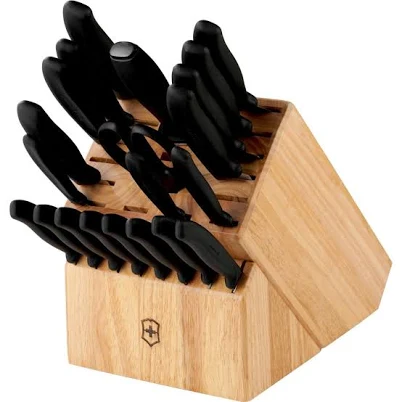
- Stainless steel blades; wood, plastic, or composite handles
- We found no PFAS statement from the brand
- Wood handle degradation and moisture damage
2 hazards checked on this product, all on its full breakdown.
Find an alternative on Amazon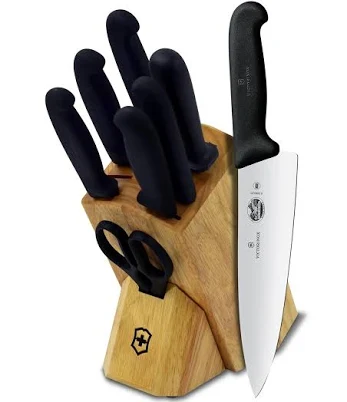
- Stainless steel blades, Fibrox composite handles
- We found no PFAS statement from the brand
- Polymer leaching (Fibrox composite)
3 hazards checked on this product, all on its full breakdown.
Find an alternative on Amazon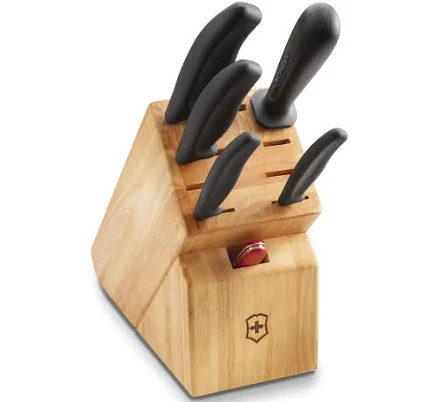
- Stainless steel blades, hardwood handles
- We found no PFAS statement from the brand
- Wood handle microbial contamination and moisture damage
2 hazards checked on this product, all on its full breakdown.
Find an alternative on AmazonMore non-stick knife sets grades
How we score, every product runs through the same public 0-100 rubric based on materials, coatings, brand disclosure, lab findings, and recalls. See the full methodology → Spotted a mistake? Report an error.