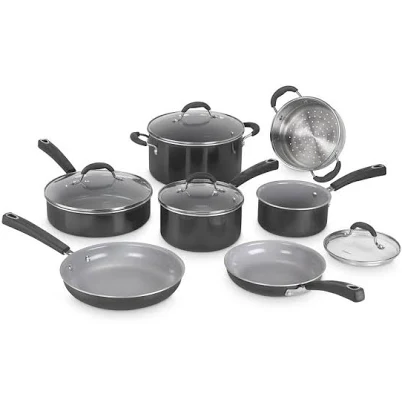
Cuisinart Ceramica XT Nonstick 11-Piece Cookware Set, Is It Non-Toxic?
Skip until Cuisinart discloses what's in the ceramic coating.
Cuisinart's Ceramica XT uses a ceramic nonstick coating but provides no disclosure about PFAS content. The term ceramic is vague, as many nonstick ceramics still contain fluorochemicals.
The better-graded swap
GreenPan
Lima Hard Anodized Ceramic Nonstick 10 Inch Frying Pan
100/100 safety
Same rubric that flunked this product. The swap earned Excellent.
Still want this one anyway? Check the price on Amazon. We’d swap it.
Material
Ceramic-based nonstick coating (composition unspecified by brand)
Lab data
No public lab test
You may also be interested in
Top-graded picks in the categories readers replace first, every one scored on the same rubric.

- polypropylene filter housing, carbon/sediment cartridge
- We found no PFAS statement from the brand
- Bacterial growth in spent cartridges
3 hazards checked on this product, all on its full breakdown.

Aquasure
Premier Series 75 GPD Under Sink Reverse Osmosis Water Filtration System
- RO membrane, carbon filters, stainless steel housing
- We found no PFAS statement from the brand
- Bacterial and microbial growth in housing and filters
4 hazards checked on this product, all on its full breakdown.

Avocado
Vegan Mattress
- organic cotton, natural latex, coconut coir, recycled steel coils
- The brand calls it PFAS-free, which we have not verified
- Heavy metals
2 hazards checked on this product, all on its full breakdown.
Is Cuisinart Ceramica XT Cookware Set non-toxic? What it is made of
Cuisinart does not publicly disclose the specific chemical composition of its Ceramica XT ceramic-based nonstick coating. Ceramic coatings marketed as Teflon-type coating-free typically use inorganic silicone-based or mineral oxide binders, but without ingredient transparency, you cannot verify whether PFAS or other fluorinated compounds are present as processing aids. The cookware body is hard-anodized aluminum, which can leach if the ceramic coating degrades or is scratched, exposing the underlying metal to acidic foods.
What’s concerning
Category baseline
The starting point for this type of product, before anything specific to this product is counted.
No PFAS disclosure
No public statement from the brand about PFAS in this product.
Non-stick, chemistry undisclosed
Marketed as non-stick without stating the coating chemistry.
Coating degradation and aluminum leaching
Ceramic coatings are inherently less durable than Teflon-type coating. As this Cuisinart coating wears, the underlying hard-anodized aluminum may contact acidic foods (tomatoes, vinegar, citrus), releasing aluminum into food at levels that depend on cooking time and food pH.
Teflon-type coating or fluorinated compound residues in ceramic formulation
Cuisinart's silence on ceramic coating composition leaves open the possibility that PFAS or other fluorinated processing aids are present. Many 'ceramic' coatings marketed as Teflon-type coating-free have been found to contain fluorinated compounds; independent testing of this specific product is not on public record.
Thermal degradation of ceramic coating at high heat
Generic ceramic cookware literature indicates that silicone-based ceramic coatings can begin to degrade above 400-450 degrees Fahrenheit. Cuisinart does not specify a maximum safe temperature for this line, raising questions about its thermal stability.
Microabrasion and coating particles shedding into food
With repeated use and utensil contact, ceramic coatings can shed microscopic particles. While no specific data on this Cuisinart line exists, ceramic cookware durability studies show visible degradation within 1-3 years for mid-range brands, potentially releasing particles at scale.
What’s reassuring
Lead
No recalls or test reports of lead or cadmium contamination in Cuisinart Ceramica XT cookware have been published. Ceramic cookware made in countries with strict regulations (US, EU) is unlikely to contain these, but disclosure would confirm this.
Source, ATSDR ↗How is this PFAS grade calculated?
The brand's record and disclosure
Cuisinart has not issued public statements about PFAS content in its ceramic coatings or committed to PFAS-free formulations. The brand has no known major safety recalls specifically tied to this product line as of available records. Cuisinart does not list third-party certifications (e.g., GreenGuard, NSF) for this cookware on marketing materials, limiting independent verification of safety claims.
How it compares in its category
Ceramic nonstick cookware sits between traditional Teflon-type coating (Teflon) and uncoated stainless steel. Unlike Teflon-type coating, ceramic coatings do not emit fumes at normal cooking temperatures, but they typically wear faster and may not perform as well over years of use. Competitors like GreenPan and Our Place disclose their ceramic formulations more openly, making comparison difficult for this Cuisinart line.
If you buy it
Use only wood, silicone, or plastic utensils; metal utensils will scratch the coating and accelerate aluminum leaching. Keep heat at medium or below; ceramic coatings degrade faster at high temperatures, shortening their lifespan. Hand wash to preserve the coating; dishwasher use is not recommended by most ceramic cookware makers. Replace the set or individual pans if the coating shows visible chips, flaking, or dark discoloration, which signal loss of integrity and potential leaching.
What is not known about PFAS in this product?
- Basis
- Model estimate, 40% confidence, not a lab result
- Lab test
- None on record for this exact product
- Brand statement
- Cuisinart has made a specific claim
Formulations change between production runs, so check the current label. How we grade.
What are the PFAS-free alternatives to Cuisinart Ceramica XT Nonstick 11-Piece Cookware Set?
- Ceramic nonstick coating
- The brand calls it PFAS-free, which we have not verified
- Aluminum leaching
3 hazards checked on this product, all on its full breakdown.
- ceramic-coated aluminum cookware
- We found no PFAS statement from the brand
- Aluminum leaching
3 hazards checked on this product, all on its full breakdown.
- ceramic nonstick coating (proprietary, PFAS-free)
- The brand calls it PFAS-free, which we have not verified
- Aluminum leaching (from core if coating fails)
3 hazards checked on this product, all on its full breakdown.
More ceramic cookware grades
How we score, every product runs through the same public 0-100 rubric based on materials, coatings, brand disclosure, lab findings, and recalls. See the full methodology → Spotted a mistake? Report an error.