Dart Container · Food Packaging
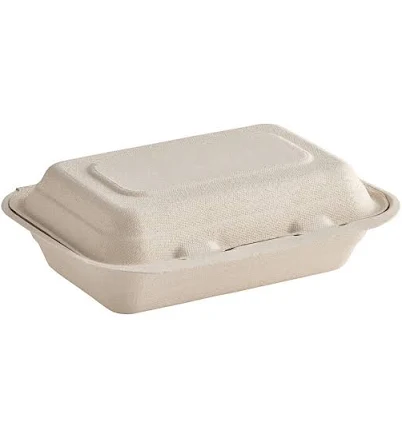
Dart Compostable Molded Fiber Hinged Trays ProPlanet Seal
Avoid unless Dart confirms the coating is PFAS-free.
Dart's eco-friendly molded fiber trays use an unspecified water-resistant coating. The brand won't say if it contains legacy PFAS or new alternatives.
The better-graded swap
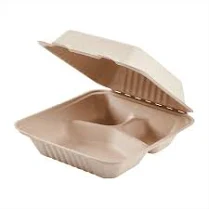
Karat
Karat Earth Pfas Free Compostable Bagasse Hinged Containers
95/100 safety
Same rubric that flunked this product. The swap earned Excellent.
Still want this one anyway? Check the price on Amazon. We’d swap it.
Material
molded fiber with unspecified water-resistant coating
Brand disclosure
Brand is silent on PFAS
Lab data
No public lab test
You may also be interested in
Top-graded picks in the categories readers replace first, every one scored on the same rubric.

- polypropylene filter housing, carbon/sediment cartridge
- We found no PFAS statement from the brand
- Bacterial growth in spent cartridges
3 hazards checked on this product, all on its full breakdown.

Aquasure
Premier Series 75 GPD Under Sink Reverse Osmosis Water Filtration System
- RO membrane, carbon filters, stainless steel housing
- We found no PFAS statement from the brand
- Bacterial and microbial growth in housing and filters
4 hazards checked on this product, all on its full breakdown.

Avocado
Vegan Mattress
- organic cotton, natural latex, coconut coir, recycled steel coils
- The brand calls it PFAS-free, which we have not verified
- Heavy metals
2 hazards checked on this product, all on its full breakdown.
What Dart Compostable Molded ProPlanet Seal is made of, ingredients and materials
Dart ProPlanet hinged trays are molded from virgin or recycled fiber (paper pulp) and treated with an undisclosed water-resistant coating to prevent grease and moisture penetration. The coating is the critical unknown, standard industry practice uses fluorochemical PFAS compounds (PFOA, PFOS alternatives) to achieve water and oil repellency on fiber-based food contact articles. Molded fiber itself is chemically stable and inert, but the coating integrity and composition directly affect safety during food contact, especially with fatty or hot foods.
What’s concerning
Category baseline
The starting point for this type of product, before anything specific to this product is counted.
No PFAS disclosure
No public statement from the brand about PFAS in this product.
Waterproof / stain-resistant treatment
Water-repellent coating treatments have historically used PFAS.
Coating leachables (fluorochemicals, unspecified plasticizers)
Water-resistant coatings on molded fiber commonly contain PFAS or other fluorochemicals; migration risk is low for cold foods but increases with heat, acidic foods, or coating degradation. Dart does not disclose coating type, so non-PFAS alternatives cannot be ruled in.
Microplastics
Repeated use, washing, or contact with abrasive foods may cause microscopic flaking of the water-resistant coating; if coating contains synthetic polymers or fluorochemicals, this poses ingestion risk. Integrity should be checked before each use.
Source, EPA ↗Degradation of coating under exposure conditions
Molded fiber coating durability is material-dependent and not standardized for food contact; coatings can degrade under UV light, high humidity, or thermal stress, potentially releasing coating components into food or onto food-contact surfaces.
Incomplete compostability if coating is synthetic
ProPlanet Seal claims compostability, but if the water-resistant coating contains PFAS or synthetic polymers, industrial composting will not break down the coating, leaving microplastics in compost. Verify coating composition to confirm full home/commercial compostability.
What’s reassuring
Formaldehyde / VOCs
Molded fiber manufacturing may use formaldehyde-based binders, but residual formaldehyde in food-contact fiber trays is typically below detection limits after drying and curing. No published recalls or studies document significant formaldehyde migration from this product type.
Source, ATSDR ↗How is this PFAS grade calculated?
The brand's record and disclosure
Dart Container has not made public commitments to eliminate PFAS from food-contact coatings on molded fiber products, and does not disclose coating chemistry on product labels or technical datasheets accessible to consumers. The ProPlanet Seal indicates sustainability focus (compostability claim), but compostability standards (BPI, EN 13432) do not regulate PFAS content or migration. Dart has faced no major recalls for molded fiber trays, but absence of disclosure is a red flag given industry prevalence of fluorochemical coatings in this category.
How it compares in its category
Molded fiber hinged trays are a common food-service choice competing with plastic clamshells (polystyrene, polypropylene) and aluminum. Unlike plastic, molded fiber avoids BPA and phthalate concerns, but PFAS in the coating is increasingly recognized as a category-wide issue. Competitors like Sabert and Huhtamaki also use fluorochemical coatings on fiber trays; some manufacturers now offer PFAS-free alternatives (e.g., silicone- or wax-based coatings), but these remain niche. Dart's silent stance on this issue is weaker than competitors who have begun disclosing or transitioning.
If you buy it
Use these trays for cold or ambient-temperature foods (salads, baked goods, deli items) to minimize coating stress and any potential migration. Avoid prolonged contact with fatty, acidic, or hot foods (above 160F), as heat and solvents can accelerate coating degradation and leaching. Do not microwave or expose to direct heat. Replace trays if coating shows visible cracking, peeling, or discoloration, as this indicates failure and loss of the water-resistance barrier. Contact Dart customer service to request coating documentation before bulk purchase.
What is not known about PFAS in this product?
- Basis
- Model estimate, 45% confidence, not a lab result
- Lab test
- None on record for this exact product
- Brand statement
- Dart Container has made none
Formulations change between production runs, so check the current label. How we grade.
What are the PFAS-free alternatives to Dart Compostable Molded Fiber Hinged Trays ProPlanet Seal?
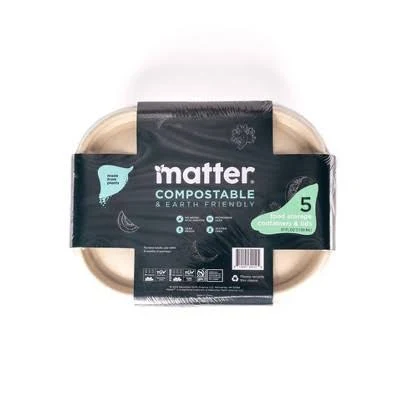
- Plant-based fiber pulp (compostable)
- A third party reports verifying it as PFAS-free
- Microbe/mold growth if stored damp
2 hazards checked on this product, all on its full breakdown.
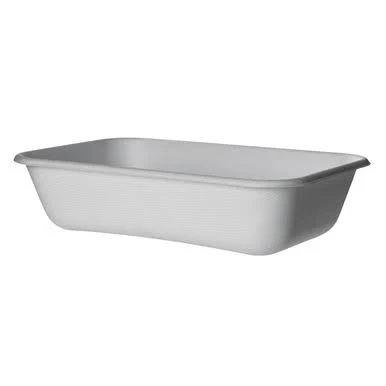
Eco-Products
Eco Products WorldView Compostable Take-Out Containers EP-SCRC32
- Plant-based fiber (compostable sugarcane bagasse)
- A third party reports verifying it as PFAS-free
- Bleaching agents and processing residues
3 hazards checked on this product, all on its full breakdown.
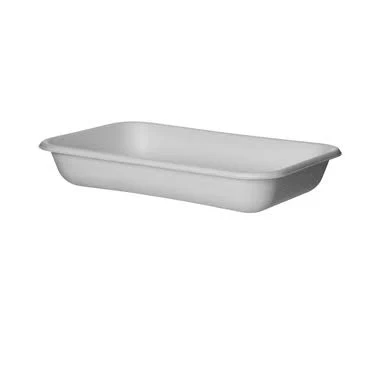
Eco-Products
WorldView Sugarcane Take-Out Containers
- Sugarcane bagasse (post-consumer fiber)
- A third party reports verifying it as PFAS-free
- Cellulose fiber degradation and food contact
2 hazards checked on this product, all on its full breakdown.
More food packaging grades
How we score, every product runs through the same public 0-100 rubric based on materials, coatings, brand disclosure, lab findings, and recalls. See the full methodology → Spotted a mistake? Report an error.