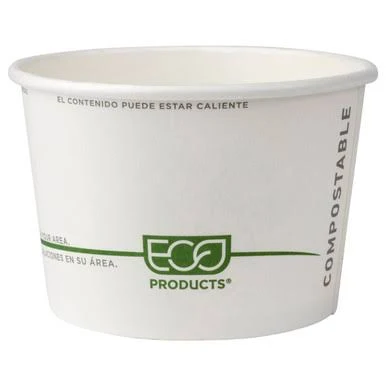
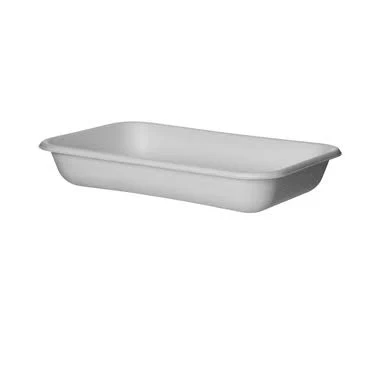
Eco-Products Evolution World 16 oz. Hot & Cold Food Container
Wait until the brand reveals coating details; undisclosed barriers on molded fiber raise PFAS concerns.
Evolution containers use molded fiber, which carries lower PFAS risk, but the liquid barrier coating stays secret. No PFAS claims or independent verification exists from the brand.
The better-graded swap
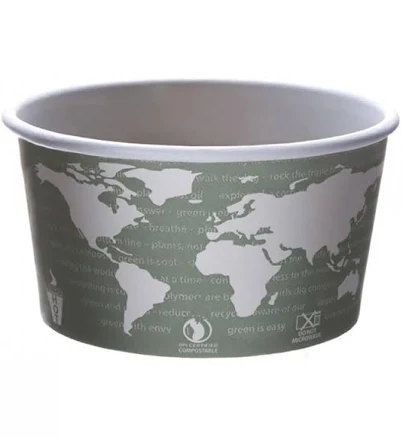
Eco-Products
Eco-Products 12 oz. World Art Compostable Food Containers 25-ct. pack
100/100 safety
Same rubric that flunked this product. The swap earned Excellent.
Still want this one anyway? Check the price on Amazon. We’d swap it.
Material
Molded fiber with liquid barrier coating (unspecified)
Brand disclosure
Brand is silent on PFAS
Lab data
No public lab test
You may also be interested in
Top-graded picks in the categories readers replace first, every one scored on the same rubric.

- polypropylene filter housing, carbon/sediment cartridge
- We found no PFAS statement from the brand
- Bacterial growth in spent cartridges
3 hazards checked on this product, all on its full breakdown.

Aquasure
Premier Series 75 GPD Under Sink Reverse Osmosis Water Filtration System
- RO membrane, carbon filters, stainless steel housing
- We found no PFAS statement from the brand
- Bacterial and microbial growth in housing and filters
4 hazards checked on this product, all on its full breakdown.

Avocado
Vegan Mattress
- organic cotton, natural latex, coconut coir, recycled steel coils
- The brand calls it PFAS-free, which we have not verified
- Heavy metals
2 hazards checked on this product, all on its full breakdown.
What Eco-Products Evolution Food Container is made of, ingredients and materials
This container is molded fiber (pressed wood pulp), which is naturally inert and compostable. However, molded fiber alone is porous and fails as a liquid barrier, so manufacturers apply a coating to repel liquids and heat. Eco-Products has not publicly disclosed the chemistry of their barrier coating on this model. Undisclosed coatings on food contact surfaces raise flags because PFAS compounds (used to create water and grease resistance) are the industry default, though not the only option.
What’s concerning
Category baseline
The starting point for this type of product, before anything specific to this product is counted.
No PFAS disclosure
No public statement from the brand about PFAS in this product.
Waterproof / stain-resistant treatment
Water-repellent coating treatments have historically used PFAS.
Coating migration (unspecified barrier chemistry)
The undisclosed liquid barrier coating on molded fiber may contain PFAS or other synthetic compounds. Without published test data or ingredient disclosure, migration into fatty or acidic foods cannot be ruled out, particularly if coating integrity degrades.
Formaldehyde / VOCs
Molded fiber manufacturing sometimes uses formaldehyde-based binders to hold pulp fibers together. Eco-Products has not publicly stated whether their formulation includes formaldehyde-free binders. Food contact exposure risk is low if binders are internal, but off-gassing during storage cannot be fully excluded without testing.
Source, ATSDR ↗Bacterial or mold growth in porous substrate
If the liquid barrier coating is compromised or absent in worn areas, the underlying porous fiber can retain moisture and become a vector for microbial growth, particularly if stored in humid conditions or reused without drying.
Coating delamination or flaking into food
Molded fiber coatings are susceptible to delamination with repeated handling, temperature fluctuation, or exposure to acidic foods. Flaking coating fragments could be ingested if the container is not inspected before each use.
What’s reassuring
Microplastics
No published reports of microplastic shedding from molded fiber containers. However, if the barrier coating is a synthetic plastic polymer (common in the category), physical degradation from use or composting could theoretically release particles, though this is not documented for this specific product.
Source, EPA ↗How is this PFAS grade calculated?
The brand's record and disclosure
Eco-Products markets itself as an environmentally focused brand and has been transparent about some sustainability practices, but has not issued public statements on PFAS use in their coated molded fiber line. The company has not published third-party test results or certifications (such as PFOA-free or PFAS-free claims) for this specific product. This silence is notable given that competitors in the sustainable packaging space have begun voluntarily disclosing or eliminating PFAS.
How it compares in its category
Molded fiber containers are increasingly popular as compostable alternatives to plastic clamshells and foam. Most commercial brands in this category use similar unspecified coatings. Few mainstream molded fiber manufacturers have published PFAS-free credentials; those that have (such as some specialty compostable packaging lines) tend to advertise this prominently. This product sits in the middle, it avoids single-use plastic but offers no transparency advantage over conventional options.
If you buy it
Restrict use to cold foods and beverages only; hot or fatty foods may accelerate coating migration. Do not microwave or expose to temperatures above 50 degrees Celsius. Replace containers if the interior coating shows signs of flaking, discoloration, or wear. Compost after single use according to your facility's specifications, as reuse may concentrate any coating residues. Contact Eco-Products directly and request coating composition and PFAS testing data before committing to bulk orders for food service.
What is not known about PFAS in this product?
- Basis
- Model estimate, 45% confidence, not a lab result
- Lab test
- None on record for this exact product
- Brand statement
- Eco-Products has made none
Formulations change between production runs, so check the current label. How we grade.
What are the PFAS-free alternatives to Eco-Products Evolution World 16 oz. Hot & Cold Food Container?
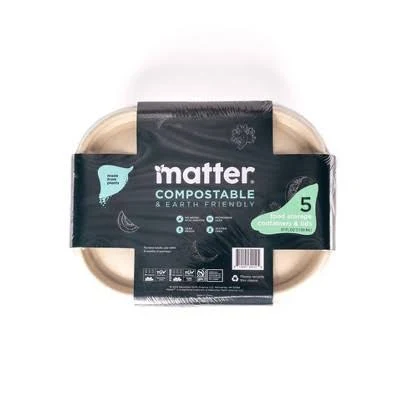
- Plant-based fiber pulp (compostable)
- A third party reports verifying it as PFAS-free
- Microbe/mold growth if stored damp
2 hazards checked on this product, all on its full breakdown.
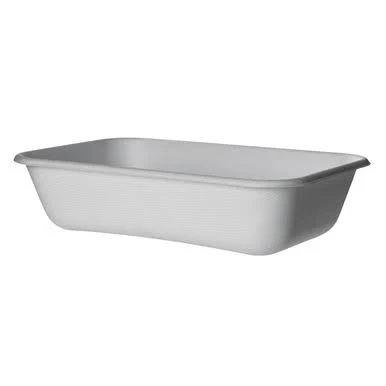
Eco-Products
Eco Products WorldView Compostable Take-Out Containers EP-SCRC32
- Plant-based fiber (compostable sugarcane bagasse)
- A third party reports verifying it as PFAS-free
- Bleaching agents and processing residues
3 hazards checked on this product, all on its full breakdown.
Eco-Products
WorldView Sugarcane Take-Out Containers
- Sugarcane bagasse (post-consumer fiber)
- A third party reports verifying it as PFAS-free
- Cellulose fiber degradation and food contact
2 hazards checked on this product, all on its full breakdown.
More food packaging grades
How we score, every product runs through the same public 0-100 rubric based on materials, coatings, brand disclosure, lab findings, and recalls. See the full methodology → Spotted a mistake? Report an error.