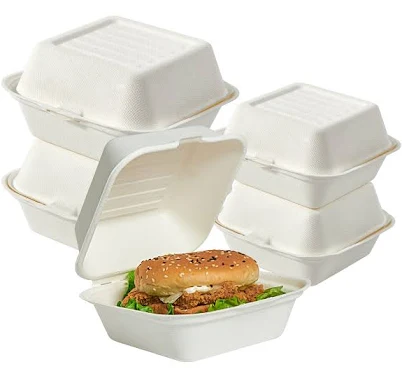
ECOLipak Clamshell Take Out Food Containers Disposable To Go Containers,To Go Boxes for Food Salad
Skip until coating source is disclosed, fiber containers often use PFAS barriers.
ECOLipak fiber clamshells lack public disclosure about coating composition or PFAS content. Grease-resistant fiber packaging historically relied on long-chain PFAS, though reformulations now exist.
The better-graded swap
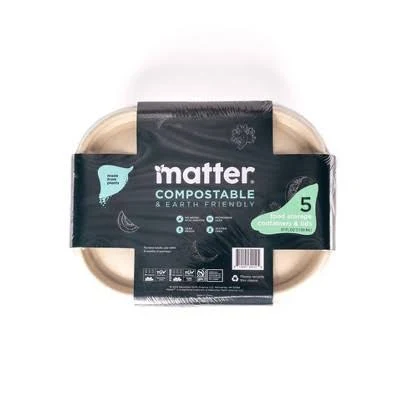
Matter
Matter Compostable Food Storage Container 5ct
100/100 safety
Same rubric that flunked this product. The swap earned Excellent.
Still want this one anyway? Check the price on Amazon. We’d swap it.
Material
Fiber-based clamshell with unspecified water/grease-resistant coating
Brand disclosure
Brand is silent on PFAS
Lab data
No public lab test
You may also be interested in
Top-graded picks in the categories readers replace first, every one scored on the same rubric.

- polypropylene filter housing, carbon/sediment cartridge
- We found no PFAS statement from the brand
- Bacterial growth in spent cartridges
3 hazards checked on this product, all on its full breakdown.

Aquasure
Premier Series 75 GPD Under Sink Reverse Osmosis Water Filtration System
- RO membrane, carbon filters, stainless steel housing
- We found no PFAS statement from the brand
- Bacterial and microbial growth in housing and filters
4 hazards checked on this product, all on its full breakdown.

Avocado
Vegan Mattress
- organic cotton, natural latex, coconut coir, recycled steel coils
- The brand calls it PFAS-free, which we have not verified
- Heavy metals
2 hazards checked on this product, all on its full breakdown.
What ECOLipak Clamshell Take Out Food Salad is made of, ingredients and materials
ECOLipak clamshells are molded fiber (typically recycled paper pulp) with an applied water and grease-resistant barrier coating. Fiber substrates themselves are low-hazard, but the coating formulation is critical, most commercial food-contact fiber packaging uses synthetic polymeric or wax-based barriers, many historically containing PFAS (PFAS "forever chemicals") as the most effective grease repellent. Without disclosure of the specific coating chemistry, the actual exposure risk cannot be assessed.
What’s concerning
No PFAS disclosure
No public statement from the brand about PFAS in this product.
Category baseline
The starting point for this type of product, before anything specific to this product is counted.
Waterproof / stain-resistant treatment
Water-repellent coating treatments have historically used PFAS.
PFAS
Fiber clamshells typically require synthetic fluorinated barriers for grease resistance; The brand's undisclosed coating chemistry and lack of PFAS-free certification make presence probable, though unconfirmed.
Source, ATSDR ↗Coating migration into fatty/hot foods
Applied polymer barriers on fiber are prone to breakdown under heat, acidity, and lipid contact; migration of coating oligomers or additives into food is documented as a category-wide concern, though specific quantitation for this product is unavailable.
Microplastics
Synthetic polymer coatings can shed particles over time, especially with mechanical stress or repeated use; molded-fiber containers typically are single-use, limiting this risk, but if reused, degradation becomes a concern.
Source, EPA ↗Bacterial or mold growth on stored containers
Fiber substrates are hygroscopic and can support microbial colonization if stored in damp conditions; this is a handling and storage issue rather than a manufacturing hazard, but relevant for food safety if containers are reused or stored improperly.
What’s reassuring
BPA & bisphenols
No public reports of BPA/BPS in fiber containers specifically. Fiber-based coatings typically use polyester or acrylic resins rather than epoxy (the primary BPA source), so this hazard is less likely than in plastic-lined alternatives, but coating formulation is not disclosed.
Source, FDA ↗How is this PFAS grade calculated?
The brand's record and disclosure
The brand markets itself as a sustainability-focused alternative to plastic clamshells but has not publicly disclosed coating formulations, PFAS-free certifications, or third-party testing for their fiber containers. No established recalls or regulatory warnings specific to this product exist on record. The brand's silence on coating sourcing is consistent with limited transparency in the molded-fiber industry, where coating suppliers often guard proprietary formulas and regulatory pressure on PFAS in food contact is still developing.
How it compares in its category
Fiber clamshells occupy a middle ground, they avoid the direct polymer contamination risk of polystyrene or PET clamshells, but their grease-barrier coatings introduce a distinct chemical concern. Most major food-service alternatives (polypropylene, molded cardboard, glass) either have better disclosure practices or use simpler, lower-PFAS-risk coatings. Some competitors (notably some European fiber suppliers) have voluntarily committed to PFAS-free barriers, making the brand's non-disclosure a relative weakness.
If you buy it
Avoid using these containers for hot, oily, or acidic foods, as heat and lipids can accelerate migration of coating additives into food. Do not microwave. Store dry and use within reasonable shelf life to minimize potential leachate accumulation. Monitor the brand's public disclosures for coating transparency; if the brand later confirms PFAS-free certification, reassess. For frequent food takeout use, prioritize containers from suppliers with published commitments to avoid PFAS-based or fluorine-based coatings.
What is not known about PFAS in this product?
- Basis
- Model estimate, 45% confidence, not a lab result
- Lab test
- None on record for this exact product
- Brand statement
- has made none
Formulations change between production runs, so check the current label. How we grade.
What are the PFAS-free alternatives to ECOLipak Clamshell Take Out Food Containers Disposable To Go Containers,To Go Boxes for Food Salad?
- Plant-based fiber pulp (compostable)
- A third party reports verifying it as PFAS-free
- Microbe/mold growth if stored damp
2 hazards checked on this product, all on its full breakdown.
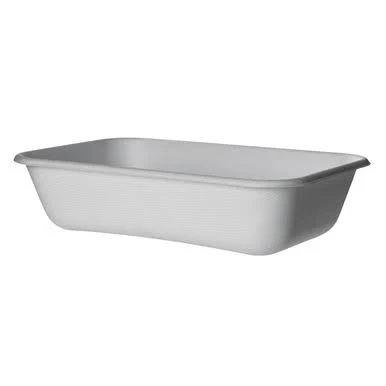
Eco-Products
Eco Products WorldView Compostable Take-Out Containers EP-SCRC32
- Plant-based fiber (compostable sugarcane bagasse)
- A third party reports verifying it as PFAS-free
- Bleaching agents and processing residues
3 hazards checked on this product, all on its full breakdown.
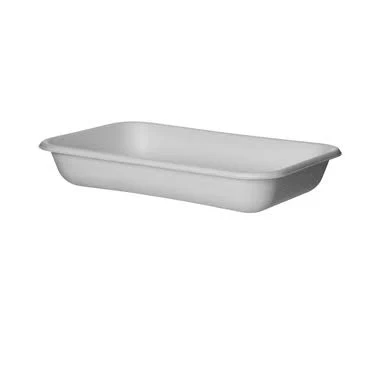
Eco-Products
WorldView Sugarcane Take-Out Containers
- Sugarcane bagasse (post-consumer fiber)
- A third party reports verifying it as PFAS-free
- Cellulose fiber degradation and food contact
2 hazards checked on this product, all on its full breakdown.
More food packaging grades
How we score, every product runs through the same public 0-100 rubric based on materials, coatings, brand disclosure, lab findings, and recalls. See the full methodology → Spotted a mistake? Report an error.