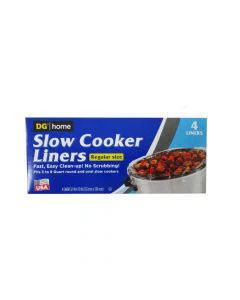
Better Valu · Slow Cooker Liners
Better Valu Slow Cooker Liners 4 Count
Skip; coating opaque and PFAS risk unconfirmed.
Great Value liners use nylon or plastic-coated material without disclosed coating composition or PFAS status. Nylon and plastic liners often contain nonstick or grease-resistant treatments with PFAS.
The better-graded swap
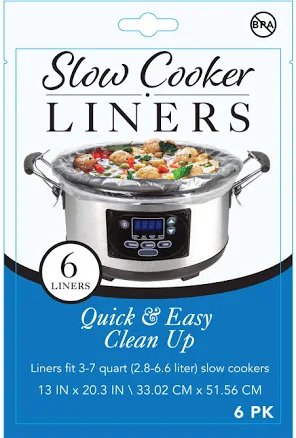
Slow Cooking Liners
90/100 safety
Same rubric that flunked this product. The swap earned Excellent.
Still want this one anyway? Check the price on Amazon. We’d swap it.
Material
Nylon or plastic-coated cooking liner; coating composition undisclosed
Brand disclosure
Brand is silent on PFAS
Lab data
No public lab test
You may also be interested in
Top-graded picks in the categories readers replace first, every one scored on the same rubric.

- polypropylene filter housing, carbon/sediment cartridge
- We found no PFAS statement from the brand
- Bacterial growth in spent cartridges
3 hazards checked on this product, all on its full breakdown.

Aquasure
Premier Series 75 GPD Under Sink Reverse Osmosis Water Filtration System
- RO membrane, carbon filters, stainless steel housing
- We found no PFAS statement from the brand
- Bacterial and microbial growth in housing and filters
4 hazards checked on this product, all on its full breakdown.

Avocado
Vegan Mattress
- organic cotton, natural latex, coconut coir, recycled steel coils
- The brand calls it PFAS-free, which we have not verified
- Heavy metals
2 hazards checked on this product, all on its full breakdown.
What Better Valu Slow Cooker Liners 4 Count is made of, ingredients and materials
Better Valu slow cooker liners are marketed as nylon or plastic-coated cooking liners, but the brand does not publicly disclose the specific coating material or adhesives used. Nylon itself is a polyamide that can shed microplastics when abraded or heated above ~120°C (250°F), particularly if the coating degrades. The opacity around coating composition means potential contaminants, such as plasticizers, slip agents, or adhesion promoters, cannot be assessed from publicly available information.
What’s concerning
Category baseline
The starting point for this type of product, before anything specific to this product is counted.
No PFAS disclosure
No public statement from the brand about PFAS in this product.
Non-stick, chemistry undisclosed
Marketed as non-stick without stating the coating chemistry.
Microplastic shedding from nylon under heat
Nylon liners, especially if coating is thin or damaged, can release microplastic particles into food when slow cooker reaches sustained temperatures above 120°C. No specific test data for this brand is publicly available.
Coating degradation and unknown leachates
The undisclosed coating composition means potential leaching of plasticizers, slip agents, or cross-linking chemicals is not ruled out. Repeated heating cycles degrade polymer coatings over time, increasing leaching risk.
Adhesive or slip-agent contamination
Nylon liners are typically bonded to backing material using adhesives and slip agents (silicones, waxes, or polymeric surfactants) whose safety profiles are not disclosed by Great Value. Migration into hot, fatty foods is plausible.
Structural failure and food contact with slow cooker surface
If the liner tears or adhesive fails during cooking, food contacts the slow cooker interior directly, which may be ceramic, stoneware, or metal with unknown glaze or coating composition.
What’s reassuring
Lack of third-party safety certification
No evidence of FDA compliance verification, NSF certification, or independent toxicology testing is publicly documented for this product line.
How is this PFAS grade calculated?
The brand's record and disclosure
Great Value (Walmart's private label) has a mixed transparency record. The brand rarely publishes detailed material specifications or third-party safety certifications for disposable liners. No public statements on PFAS use, BPA avoidance, or coating durability testing are on record for this product line. Walmart has made general sustainability pledges but has not issued category-specific safety disclosures for slow cooker liners.
How it compares in its category
Slow cooker liners are generally convenience products with inherent single-use waste concerns. Premium alternatives (e.g., Reynolds, Glad) provide slightly more transparency on material composition and often claim Teflon-type coating-free or PFOA-free formulations. Budget liners like this one typically lag in disclosure. Reusable silicone liners eliminate microplastic risk but require higher upfront cost and care.
If you buy it
Follow the manufacturer's temperature guidance closely; do not use above the stated heat limit, as nylon coating degradation accelerates at high temperatures. Inspect liners before and after use for tears, cloudiness, or adhesive failure. If the liner shows visible damage or strong plastic odor, discard it. Consider rotating to reusable alternatives if you use slow cookers frequently to reduce cumulative microplastic exposure.
What is not known about PFAS in this product?
- Basis
- Model estimate, 35% confidence, not a lab result
- Lab test
- None on record for this exact product
- Brand statement
- Better Valu has made none
Formulations change between production runs, so check the current label. How we grade.
What are the PFAS-free alternatives to Better Valu Slow Cooker Liners 4 Count?
Slow Cooking Liners
- Unbleached parchment paper
- The brand calls it PFAS-free, which we have not verified
- Thermal degradation and smoke release
2 hazards checked on this product, all on its full breakdown.
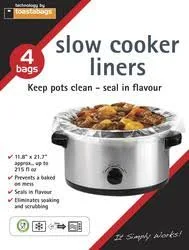
Slow Cooker Liners - 4 Pack
- Plastic (polyethylene or similar polymer liner)
- We found no PFAS statement from the brand
- Microplastic shedding during heating
2 hazards checked on this product, all on its full breakdown.
Find an alternative on Amazon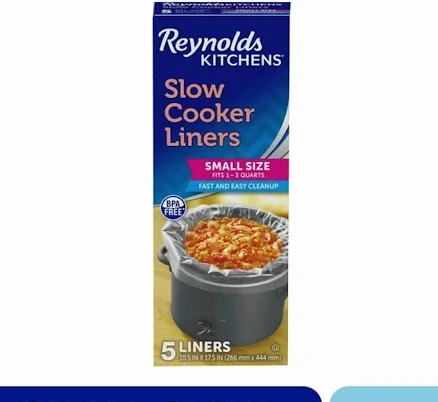
- polyethylene/plastic liner
- Polyethylene integrity failure (tearing, leaching)
3 hazards checked on this product, all on its full breakdown.
Find an alternative on AmazonMore slow cooker liners grades
How we score, every product runs through the same public 0-100 rubric based on materials, coatings, brand disclosure, lab findings, and recalls. See the full methodology → Spotted a mistake? Report an error.