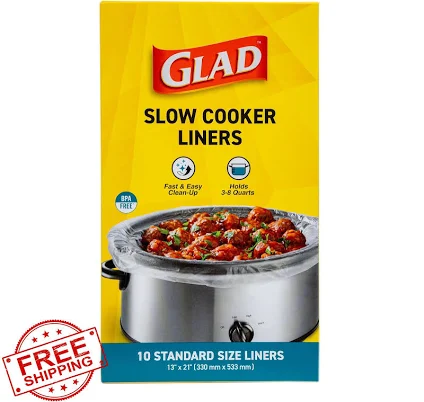
Glad Slow Cooker Liners
Skip; coating opaque and PFAS risk unaddressed.
Glad's disposable plastic liners have undisclosed coating composition and no PFAS statement. Many food-contact liners use fluorinated compounds for grease resistance.
The better-graded swap
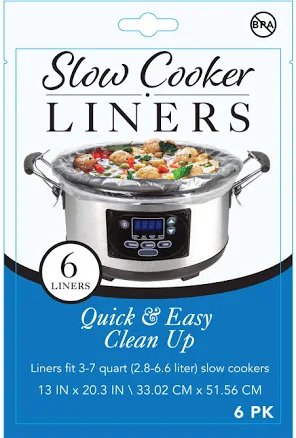
Slow Cooking Liners
90/100 safety
Same rubric that flunked this product. The swap earned Excellent.
Still want this one anyway? Check the price on Amazon. We’d swap it.
Material
Plastic liner (coating composition undisclosed)
Brand disclosure
Brand is silent on PFAS
Lab data
No public lab test
You may also be interested in
Top-graded picks in the categories readers replace first, every one scored on the same rubric.

- polypropylene filter housing, carbon/sediment cartridge
- We found no PFAS statement from the brand
- Bacterial growth in spent cartridges
3 hazards checked on this product, all on its full breakdown.

Aquasure
Premier Series 75 GPD Under Sink Reverse Osmosis Water Filtration System
- RO membrane, carbon filters, stainless steel housing
- We found no PFAS statement from the brand
- Bacterial and microbial growth in housing and filters
4 hazards checked on this product, all on its full breakdown.

Avocado
Vegan Mattress
- organic cotton, natural latex, coconut coir, recycled steel coils
- The brand calls it PFAS-free, which we have not verified
- Heavy metals
2 hazards checked on this product, all on its full breakdown.
What Glad Slow Cooker Liners is made of, ingredients and materials
Glad Slow Cooker Liners are plastic-based, but the company does not publicly disclose the specific resin type, coating formulation, or additives used. This opacity is a red flag because slow cookers generate prolonged heat (typically 170-280°F) that can accelerate leaching of plasticizers, stabilizers, or residual monomers into food. Without material specification, there is no way to verify whether the product contains alternatives to legacy plasticizers or whether any PFAS-based grease-repellent treatments are present.
What’s concerning
Category baseline
The starting point for this type of product, before anything specific to this product is counted.
No PFAS disclosure
No public statement from the brand about PFAS in this product.
Non-stick, chemistry undisclosed
Marketed as non-stick without stating the coating chemistry.
BPA & bisphenols
Slow cookers operate at sustained moderate heat (170-280°F) for 4-10 hours, conditions known to accelerate migration of plasticizers from undisclosed plastic formulations. Glad's refusal to specify resin type or additives prevents assessment of whether alternatives with lower concern profiles are used.
Source, FDA ↗Microplastics
Repeated heating and cooling cycles, combined with acidic foods (tomato-based stews, citrus), can degrade plastic liners over time. Degradation fragments may shed into food; the extent depends on resin quality and additives, which are not disclosed.
Source, EPA ↗Volatile organic compounds (VOCs) or off-gassing
New plastic liners may release VOCs during initial heating, particularly if the product contains residual monomers or processing aids. No information is publicly available on outgassing testing or limits for this specific product.
PFAS
Slow cooker liners marketed for non-stick, grease-resistant, or easy-release properties are candidates for PFAS-based water and oil repellent treatments. Glad has not denied or confirmed PFAS use, leaving this risk unresolved.
Source, ATSDR ↗What’s reassuring
Food contact approval and regulatory compliance
Glad does not publish FDA food contact substance compliance documentation for these liners. In the US, food-contact plastics are regulated, but manufacturers are not required to disclose full formulations, creating a transparency gap rather than proof of safety.
How is this PFAS grade calculated?
The brand's record and disclosure
Glad (SC Johnson company) has not published material safety data sheets or ingredient declarations for these liners, nor has the brand made public commitments to PFAS phase-out or third-party testing for this product line. SC Johnson has faced historical scrutiny over undisclosed chemicals in aerosols and cleaners, though the company has made some sustainability pledges in recent years. The silence on this specific product's composition is consistent with industry-wide opacity around single-use food-contact plastics.
How it compares in its category
Slow cooker liners as a category are convenience products with minimal regulatory scrutiny; many brands (including Glad, Reynolds, and store brands) do not disclose full material specs. Glass, stainless steel, or ceramic slow cooker inserts offer complete transparency and eliminate heat-induced leaching entirely. Reusable silicone liners exist but carry their own disclosure gaps; the trade-off for single-use liners is convenience at the cost of material mystery and landfill impact.
If you buy it
Do not exceed the manufacturer's recommended temperature (typically capped at 200-210°F for liners, below slow cooker maximum). Never use liners on high setting for extended periods, as sustained heat increases leaching risk. Replace liners if they show visible degradation, cloudiness, or sticking. Better practice, skip liners altogether and use a glass or stainless steel insert, or line with parchment paper (food-grade, unbleached) for easier cleanup without thermal or chemical risk.
What is not known about PFAS in this product?
- Basis
- Model estimate, 35% confidence, not a lab result
- Lab test
- None on record for this exact product
- Brand statement
- Glad has made none
Formulations change between production runs, so check the current label. How we grade.
What are the PFAS-free alternatives to Glad Slow Cooker Liners?
Slow Cooking Liners
- Unbleached parchment paper
- The brand calls it PFAS-free, which we have not verified
- Thermal degradation and smoke release
2 hazards checked on this product, all on its full breakdown.
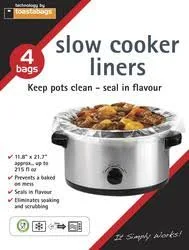
Slow Cooker Liners - 4 Pack
- Plastic (polyethylene or similar polymer liner)
- We found no PFAS statement from the brand
- Microplastic shedding during heating
2 hazards checked on this product, all on its full breakdown.
Find an alternative on Amazon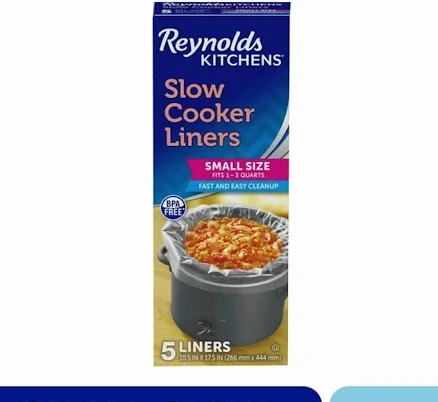
- polyethylene/plastic liner
- Polyethylene integrity failure (tearing, leaching)
3 hazards checked on this product, all on its full breakdown.
Find an alternative on AmazonMore slow cooker liners grades
How we score, every product runs through the same public 0-100 rubric based on materials, coatings, brand disclosure, lab findings, and recalls. See the full methodology → Spotted a mistake? Report an error.