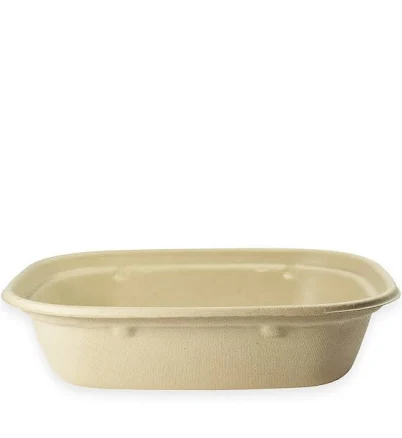
9 x 7 x 2.25 Fiber Container 400 per case
Avoid until explains the barrier coating materials.
Fiber food containers typically receive grease-resistant or waterproof coatings for food safety. The brand makes no public statement about what theirs contains.
The better-graded swap
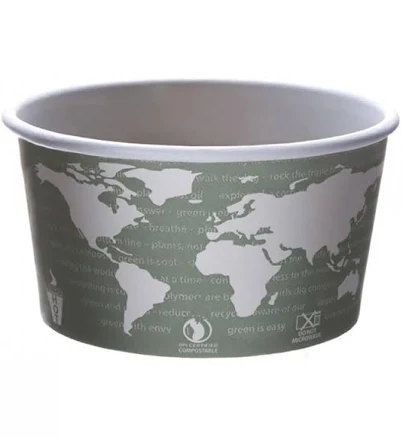
Eco-Products
Eco-Products 12 oz. World Art Compostable Food Containers 25-ct. pack
100/100 safety
Same rubric that flunked this product. The swap earned Excellent.
Still want this one anyway? Check the price on Amazon. We’d swap it.
Material
Fiber-based container (likely molded pulp or coated paperboard)
Brand disclosure
Brand is silent on PFAS
Lab data
No public lab test
You may also be interested in
Top-graded picks in the categories readers replace first, every one scored on the same rubric.

- polypropylene filter housing, carbon/sediment cartridge
- We found no PFAS statement from the brand
- Bacterial growth in spent cartridges
3 hazards checked on this product, all on its full breakdown.

Aquasure
Premier Series 75 GPD Under Sink Reverse Osmosis Water Filtration System
- RO membrane, carbon filters, stainless steel housing
- We found no PFAS statement from the brand
- Bacterial and microbial growth in housing and filters
4 hazards checked on this product, all on its full breakdown.

Avocado
Vegan Mattress
- organic cotton, natural latex, coconut coir, recycled steel coils
- The brand calls it PFAS-free, which we have not verified
- Heavy metals
2 hazards checked on this product, all on its full breakdown.
What 9 x 7 x 2.25 Fiber Container 400 per case is made of, ingredients and materials
This is a molded fiber or coated paperboard container, likely designed for hot or cold food service. The fiber substrate itself (recycled paper pulp) is stable and does not leach chemicals under normal use. The critical unknown is the barrier coating applied to the interior surface to resist moisture and grease. If that coating contains PFAS (fluorinated compounds for water and oil repellency), it poses the primary chemical risk; if it does not, the container presents minimal leaching hazard from the base material.
What’s concerning
Category baseline
The starting point for this type of product, before anything specific to this product is counted.
No PFAS disclosure
No public statement from the brand about PFAS in this product.
Waterproof / stain-resistant treatment
Water-repellent coating treatments have historically used PFAS.
PFAS
The brand has not disclosed whether the interior moisture and grease barrier contains fluorinated compounds. Molded fiber containers often use PFOA, PFOS, or other PFAS for water resistance; absence of a public statement is a strong indicator this product may contain them.
Source, ATSDR ↗BPA & bisphenols
Polyester-based or epoxy adhesives and some water-resistant resins in fiber containers may contain bisphenols. No public testing or declaration exists for this product to rule it out.
Source, FDA ↗Chlorine residues from bleaching or coating
Recycled fiber containers may retain chlorine or chlorinated by-products from paper processing. The brand does not publish process details, so residual chlorine levels are unknown but typically low in food-contact applications.
Formaldehyde / VOCs
Some molded fiber coatings use formaldehyde-releasing resins for durability. The brand has not disclosed use of formaldehyde-free or low-emission alternatives, so minimal exposure is likely but not guaranteed.
Source, ATSDR ↗What’s reassuring
Microplastic or fiber shedding
Fiber containers do not shed microplastics like synthetic polymers. If the coating is stable and not damaged, fiber and coating particles are unlikely to migrate into food under normal cold or room-temperature use.
How is this PFAS grade calculated?
The brand's record and disclosure
The brand has not publicly disclosed the chemical composition of barrier coatings in their fiber containers or committed to PFAS-free formulations. No certifications (compostability, food safety standards, or chemical safety audits) are established in public records for this specific product line. The brand's silence on PFAS is a red flag, as competitors increasingly publish coating specifications or pursue third-party verification. Without direct contact with the brand, you cannot verify whether the coating is PFAS-based.
How it compares in its category
Molded fiber containers are a growing alternative to polystyrene and plastic clamshells. They rank lower in chemical leaching risk than plastics if coatings are PFAS-free, but they rank higher in uncertainty when manufacturers do not disclose. Brands like Footprint and some regional suppliers have begun publishing coating-free or PFAS-free claims; The brand's silence puts it behind the transparency curve. The bulk purchase (400 per case) suggests commercial food service use, where PFAS exposure multiplied across customers increases the concern.
If you buy it
Do not use with hot or high-fat foods unless you confirm the coating is PFAS-free (contact directly). Cold foods and dry goods carry lower leaching risk. Avoid microwaving or heating the container. Replace containers after 1-2 years of storage use, as any coating can degrade. Request a safety data sheet (SDS) or material declaration from the supplier before large purchases; silence is grounds for substitution to a brand with published coating chemistry.
What is not known about PFAS in this product?
- Basis
- Model estimate, 45% confidence, not a lab result
- Lab test
- None on record for this exact product
- Brand statement
- has made none
Formulations change between production runs, so check the current label. How we grade.
What are the PFAS-free alternatives to 9 x 7 x 2.25 Fiber Container 400 per case?
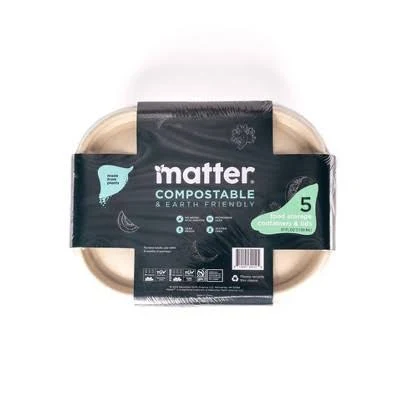
- Plant-based fiber pulp (compostable)
- A third party reports verifying it as PFAS-free
- Microbe/mold growth if stored damp
2 hazards checked on this product, all on its full breakdown.
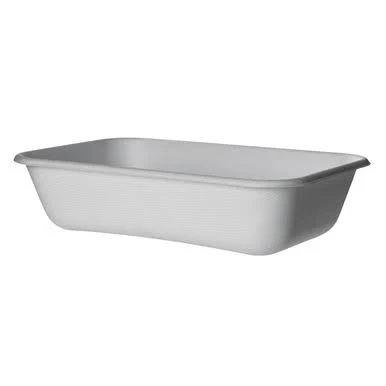
Eco-Products
Eco Products WorldView Compostable Take-Out Containers EP-SCRC32
- Plant-based fiber (compostable sugarcane bagasse)
- A third party reports verifying it as PFAS-free
- Bleaching agents and processing residues
3 hazards checked on this product, all on its full breakdown.
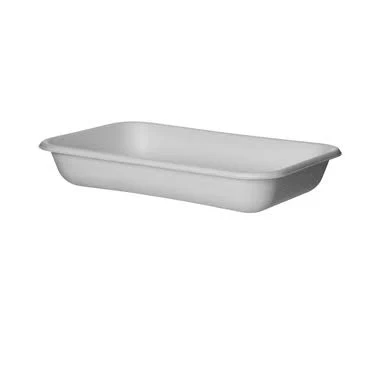
Eco-Products
WorldView Sugarcane Take-Out Containers
- Sugarcane bagasse (post-consumer fiber)
- A third party reports verifying it as PFAS-free
- Cellulose fiber degradation and food contact
2 hazards checked on this product, all on its full breakdown.
More food packaging grades
How we score, every product runs through the same public 0-100 rubric based on materials, coatings, brand disclosure, lab findings, and recalls. See the full methodology → Spotted a mistake? Report an error.