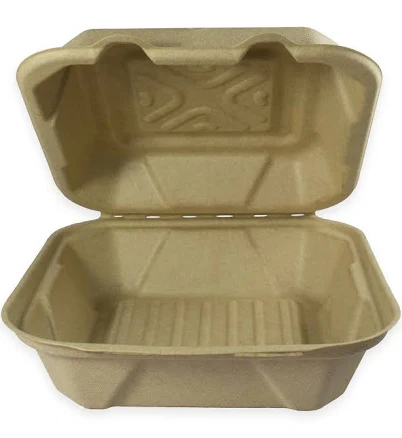
Tellus Compostable Clamshell
Avoid until coating chemistry and PFAS status are transparent.
Greensafe's plant-based clamshells don't disclose their moisture-barrier coating. Compostable food packaging frequently hides PFAS in grease-resistant treatments.
The better-graded swap
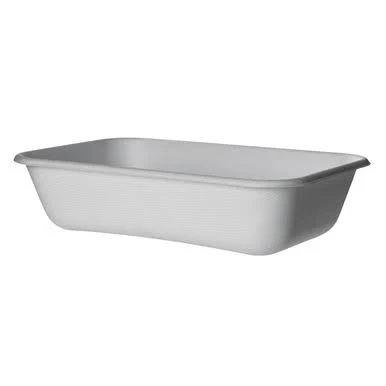
Eco-Products
Eco Products WorldView Compostable Take-Out Containers EP-SCRC32
100/100 safety
Same rubric that flunked this product. The swap earned Excellent.
Still want this one anyway? Check the price on Amazon. We’d swap it.
Material
Polylactic acid (PLA) or plant-based plastic blend with unknown coating/barrier
Brand disclosure
Brand is silent on PFAS
Lab data
No public lab test
You may also be interested in
Top-graded picks in the categories readers replace first, every one scored on the same rubric.

- polypropylene filter housing, carbon/sediment cartridge
- We found no PFAS statement from the brand
- Bacterial growth in spent cartridges
3 hazards checked on this product, all on its full breakdown.

Aquasure
Premier Series 75 GPD Under Sink Reverse Osmosis Water Filtration System
- RO membrane, carbon filters, stainless steel housing
- We found no PFAS statement from the brand
- Bacterial and microbial growth in housing and filters
4 hazards checked on this product, all on its full breakdown.

Avocado
Vegan Mattress
- organic cotton, natural latex, coconut coir, recycled steel coils
- The brand calls it PFAS-free, which we have not verified
- Heavy metals
2 hazards checked on this product, all on its full breakdown.
What Tellus Compostable Clamshell is made of, ingredients and materials
Tellus clamshells are stated as PLA or plant-based plastic blend, which is inherently free of BPA and most traditional plastics hazards when uncoated. However, the product description omits the barrier coating chemistry, which is critical, many compostable clamshells use fluorinated coatings (PFAS-containing) or other proprietary sealants to achieve grease and moisture resistance required for food contact. Without transparent disclosure of this coating, the material's safety profile cannot be assessed. PLA itself is considered low-hazard for ambient-temperature food, but degrades and can leach additives if repeatedly heated or microwaved.
What’s concerning
Category baseline
The starting point for this type of product, before anything specific to this product is counted.
No PFAS disclosure
No public statement from the brand about PFAS in this product.
Waterproof / stain-resistant treatment
Water-repellent coating treatments have historically used PFAS.
PFAS
Fluorinated coatings are standard in compostable clamshells for grease resistance. Greensafe does not disclose coating chemistry or PFAS testing results. PFAS (graded separately as Poor, 25/100) is the primary concern for this product class.
Source, ATSDR ↗Microplastics
PLA fragments under UV light, heat, or repeated mechanical stress (folding, stacking). Fragments small enough to enter food are theoretically possible if clamshells are reused excessively or stored poorly. Commercial compostable environments break down PLA reliably; home storage or misuse does not.
Source, EPA ↗Migration of PLA additives and degradation products
PLA formulations often include nucleating agents, plasticizers, or UV stabilizers to improve performance. Heating above 60°C or prolonged contact with fatty or acidic foods can accelerate leaching. Greensafe does not publish additive lists for Tellus, making migration risk assessment impossible.
Undisclosed coatings or processing residues
Compostable clamshells require barrier treatments to achieve food-contact performance. Greensafe's refusal to disclose coating chemistry leaves this product in a category of unknown risk; responsible competitors now publish these details routinely.
What’s reassuring
BPA & bisphenols
PLA does not inherently contain BPA or phthalates and does not require them for flexibility. No reports of BPA/phthalate presence in Tellus clamshells; this hazard is not a concern for plant-based plastics unless additives are undisclosed.
Source, FDA ↗How is this PFAS grade calculated?
The brand's record and disclosure
Greensafe has maintained silence on PFAS presence or absence in this product line, which is a red flag in an era when major food-packaging competitors (Footprint, Notpla, World Centric) now publish PFAS test results or PFAS-free certifications. No public recalls, certifications (e.g., BPI compostability, FDA clearance details), or third-party testing results for Tellus are documented in available safety databases. The brand's lack of proactive transparency on a known industry concern suggests either negligence or reliance on undisclosed fluorinated barriers.
How it compares in its category
Compostable clamshells have become a crowded market, competitors like World Centric and Notpla explicitly test and publish PFAS-free or PFAS-low certifications. Standard polystyrene (PS) foam clamshells are not a material linked to PFAS but are not compostable. Tellus occupies the middle ground of a compostable claim without the transparency that increasingly defines the responsible segment. For cold, short-term food contact (salads, takeout, bakery), PLA clamshells pose lower chemical migration risk than PS; heating or fatty foods are higher-risk.
If you buy it
Use only for cold or ambient-temperature food; do not microwave or place in direct sunlight, as PLA becomes brittle and can fragment or leach additives at elevated temperatures (above 60°C). Replace after 2-3 uses or if cracks, cloudiness, or discoloration appear, as degradation accelerates leaching. Store in a cool, dark place away from oils and acidic foods, which can degrade PLA faster. Before purchase, request the product's PFAS test results or barrier-coating ingredient list from Greensafe; if they refuse, this product cannot be recommended for households prioritizing chemical safety.
What is not known about PFAS in this product?
- Basis
- Model estimate, 35% confidence, not a lab result
- Lab test
- None on record for this exact product
- Brand statement
- Tellus has made none
Formulations change between production runs, so check the current label. How we grade.
What are the PFAS-free alternatives to Tellus Compostable Clamshell?
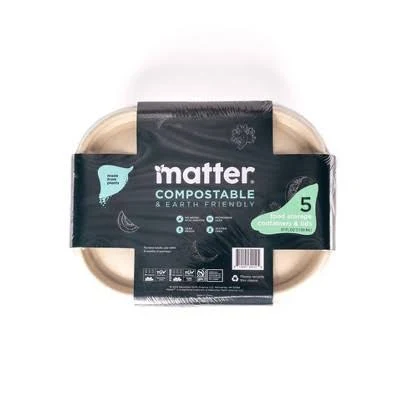
- Plant-based fiber pulp (compostable)
- A third party reports verifying it as PFAS-free
- Microbe/mold growth if stored damp
2 hazards checked on this product, all on its full breakdown.
Eco-Products
Eco Products WorldView Compostable Take-Out Containers EP-SCRC32
- Plant-based fiber (compostable sugarcane bagasse)
- A third party reports verifying it as PFAS-free
- Bleaching agents and processing residues
3 hazards checked on this product, all on its full breakdown.
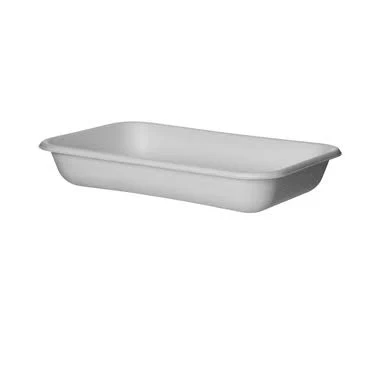
Eco-Products
WorldView Sugarcane Take-Out Containers
- Sugarcane bagasse (post-consumer fiber)
- A third party reports verifying it as PFAS-free
- Cellulose fiber degradation and food contact
2 hazards checked on this product, all on its full breakdown.
More food packaging grades
How we score, every product runs through the same public 0-100 rubric based on materials, coatings, brand disclosure, lab findings, and recalls. See the full methodology → Spotted a mistake? Report an error.