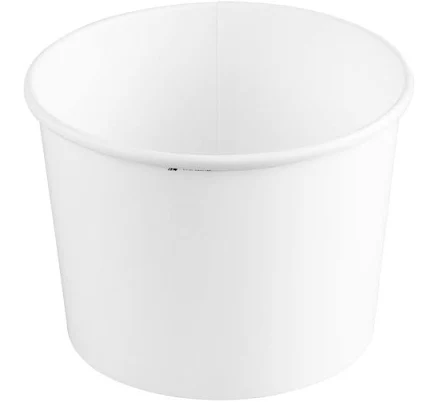
250/Case 64 oz. Double Poly White Paper Food Cup
Wait for Huhtamaki to disclose coating chemistry. Food-contact PFAS risk is documented.
This double-poly paper cup has water and grease-resistant coating from an undisclosed formula. Industry-wide, such coatings historically used PFAS or their replacements.
The better-graded swap
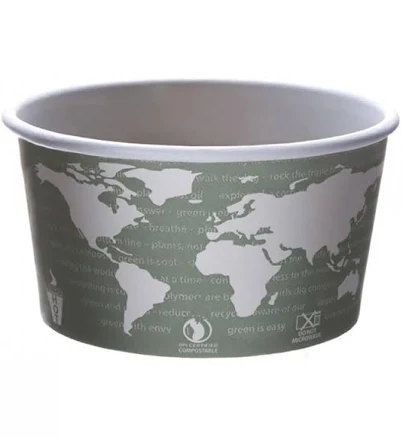
Eco-Products
Eco-Products 12 oz. World Art Compostable Food Containers 25-ct. pack
100/100 safety
Same rubric that flunked this product. The swap earned Excellent.
Still want this one anyway? Check the price on Amazon. We’d swap it.
Material
double-poly white paper with water/grease-resistant coating (unspecified)
Brand disclosure
Brand is silent on PFAS
Lab data
No public lab test
You may also be interested in
Top-graded picks in the categories readers replace first, every one scored on the same rubric.

- polypropylene filter housing, carbon/sediment cartridge
- We found no PFAS statement from the brand
- Bacterial growth in spent cartridges
3 hazards checked on this product, all on its full breakdown.

Aquasure
Premier Series 75 GPD Under Sink Reverse Osmosis Water Filtration System
- RO membrane, carbon filters, stainless steel housing
- We found no PFAS statement from the brand
- Bacterial and microbial growth in housing and filters
4 hazards checked on this product, all on its full breakdown.

Avocado
Vegan Mattress
- organic cotton, natural latex, coconut coir, recycled steel coils
- The brand calls it PFAS-free, which we have not verified
- Heavy metals
2 hazards checked on this product, all on its full breakdown.
What 250/Case 64 oz. Double Poly Paper Food Cup is made of, ingredients and materials
This product is a laminated paper cup with an inner and outer poly layer (likely polyethylene) plus an unspecified water and grease-resistant coating. Double-poly construction is standard for hot and cold beverage containment, but the coating chemistry is the critical unknown, manufacturers typically use fluorinated compounds (PFAS) or, less commonly, silicone or wax-based alternatives to repel moisture. Huhtamaki has not publicly disclosed which chemistry is used in this line, making the contamination pathway opaque.
What’s concerning
Category baseline
The starting point for this type of product, before anything specific to this product is counted.
No PFAS disclosure
No public statement from the brand about PFAS in this product.
Waterproof / stain-resistant treatment
Water-repellent coating treatments have historically used PFAS.
PFAS
Double-poly food cups almost universally employ fluorinated coatings (PFOA, PFOS, or newer analogs) to achieve grease and moisture resistance. Huhtamaki's silence on this ingredient is consistent with industry practice but does not rule out PFAS; migration to food is greatest with hot, fatty, or acidic contents. Graded separately per your framework.
Source, ATSDR ↗Microplastics
Repeated use, heat, or physical wear can fragment the polyethylene layers. Single-use design limits exposure, but reuse (e.g., refilling) increases risk. Migration into food is low for dry goods but possible with hot beverages over time.
Source, EPA ↗Coating migration via heat or acidic food contact
Hot beverages and acidic foods (coffee, citrus juice) can accelerate leaching of coating components, including unreacted monomers or additives. The paper layer itself does not present lead or cadmium risk, but coating additives are not publicly disclosed.
What’s reassuring
BPA & bisphenols
No public recalls or warnings specific to this Huhtamaki product line. Polyethylene-based poly coatings rarely contain BPA/BPS, but adhesives bonding the layers are not detailed in available specs.
Source, FDA ↗Ink or bleach residues in paper substrate
White paper cups may use optical brighteners or food-grade inks, but no specific contamination reports exist for Huhtamaki's commodity lines. FDA food-contact paper rules limit residues, but independent testing is not routine for single-use foodservice ware.
How is this PFAS grade calculated?
The brand's record and disclosure
Huhtamaki, a Finnish packaging manufacturer, has not issued public statements on PFAS phase-out timelines or coating alternatives for food-service ware. The company does not list detailed material safety data for its commodity cup lines on consumer-facing channels. No recalls or safety violations specific to this product have been documented in public databases, but the silence on coating composition reflects an industry-wide lack of transparency that regulators and advocacy groups have flagged as a gap.
How it compares in its category
Double-poly white paper cups are the market standard for food service; Huhtamaki holds significant market share. Competitor brands (e.g., Dart, Solo) have similarly undisclosed coatings. A small number of providers (e.g., some certified compostable cup makers) explicitly avoid fluorinated coatings, though at higher cost and with trade-offs in grease resistance. For institutional or high-volume foodservice, this product's cost and performance are typical; for home or low-frequency use, alternatives exist but are harder to source at scale.
If you buy it
Use for intended purposes only, cold or hot beverages (not prolonged contact with fatty foods). Do not microwave or heat liquids in the cup; heat can accelerate leaching of coating residues. Replace cups if the interior surface shows visible wear, flaking, or discoloration. Store in a cool, dry place; exposure to direct sunlight or high humidity can degrade the poly layer over time. For institutional buyers, request material safety data sheets (MSDS) from the supplier and ask explicitly whether the water-resistant coating contains PFAS compounds.
What is not known about PFAS in this product?
- Basis
- Model estimate, 42% confidence, not a lab result
- Lab test
- None on record for this exact product
- Brand statement
- Huhtamaki has made none
Formulations change between production runs, so check the current label. How we grade.
What are the PFAS-free alternatives to 250/Case 64 oz. Double Poly White Paper Food Cup?
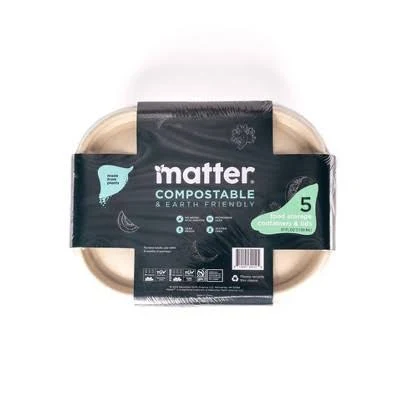
- Plant-based fiber pulp (compostable)
- A third party reports verifying it as PFAS-free
- Microbe/mold growth if stored damp
2 hazards checked on this product, all on its full breakdown.
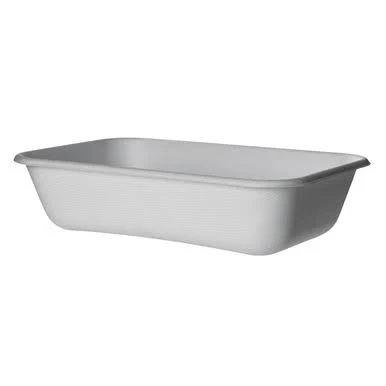
Eco-Products
Eco Products WorldView Compostable Take-Out Containers EP-SCRC32
- Plant-based fiber (compostable sugarcane bagasse)
- A third party reports verifying it as PFAS-free
- Bleaching agents and processing residues
3 hazards checked on this product, all on its full breakdown.
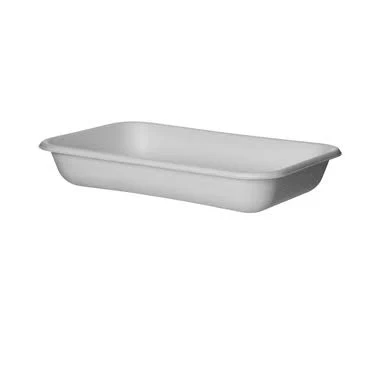
Eco-Products
WorldView Sugarcane Take-Out Containers
- Sugarcane bagasse (post-consumer fiber)
- A third party reports verifying it as PFAS-free
- Cellulose fiber degradation and food contact
2 hazards checked on this product, all on its full breakdown.
More food packaging grades
How we score, every product runs through the same public 0-100 rubric based on materials, coatings, brand disclosure, lab findings, and recalls. See the full methodology → Spotted a mistake? Report an error.