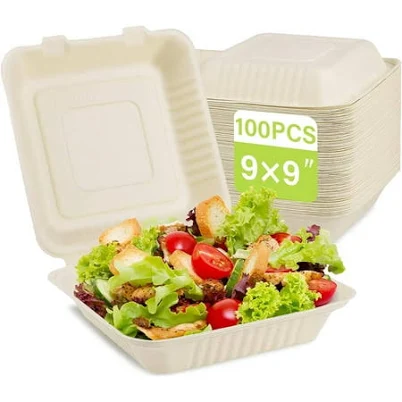
100-pack Compostable Disposable Sugarcane Fiber Take-Out Containers
Skip unless the manufacturer reveals coating composition and PFAS status.
The brand's sugarcane containers claim compostability but don't disclose what grease-resistant coating is used. Food packaging coatings commonly contain fluorinated compounds.
The better-graded swap
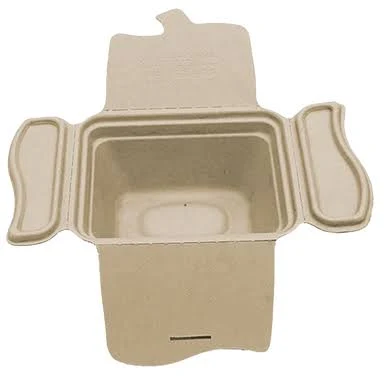
World Centric
World Centric Compostable Fiber Compost-A-Pak Containers
95/100 safety
Same rubric that flunked this product. The swap earned Excellent.
Still want this one anyway? Check the price on Amazon. We’d swap it.
Material
Sugarcane fiber (bagasse) with undisclosed grease/moisture-resistant coating
Brand disclosure
Brand is silent on PFAS
Lab data
No public lab test
You may also be interested in
Top-graded picks in the categories readers replace first, every one scored on the same rubric.

- polypropylene filter housing, carbon/sediment cartridge
- We found no PFAS statement from the brand
- Bacterial growth in spent cartridges
3 hazards checked on this product, all on its full breakdown.

Aquasure
Premier Series 75 GPD Under Sink Reverse Osmosis Water Filtration System
- RO membrane, carbon filters, stainless steel housing
- We found no PFAS statement from the brand
- Bacterial and microbial growth in housing and filters
4 hazards checked on this product, all on its full breakdown.

Avocado
Vegan Mattress
- organic cotton, natural latex, coconut coir, recycled steel coils
- The brand calls it PFAS-free, which we have not verified
- Heavy metals
2 hazards checked on this product, all on its full breakdown.
What 100-pack Compostable Disposable Containers is made of, ingredients and materials
These containers are molded from bagasse, the fibrous residue left after sugarcane processing, which is inherently lower-toxicity and compostable. The hazard lies entirely in the coating applied to make the container grease and moisture resistant. The brand does not publicly disclose the chemistry of this coating, which is the critical gap, such coatings commonly use PFAS (PFAS "forever chemicals") or other fluorinated compounds to achieve water and oil repellency on porous fiber. Without transparent disclosure, you cannot verify whether the coating is PFAS-free.
What’s concerning
Category baseline
The starting point for this type of product, before anything specific to this product is counted.
No PFAS disclosure
No public statement from the brand about PFAS in this product.
Waterproof / stain-resistant treatment
Water-repellent coating treatments have historically used PFAS.
PFAS
Grease-resistant coatings on bagasse typically rely on fluorinated compounds; The brand's refusal to disclose coating identity strongly suggests PFAS presence. Newer fluorine-based replacements (such as GenX or other emerging chemicals) carry toxicological uncertainty, though brands may market them as not containing legacy PFAS compounds.
Source, ATSDR ↗Coating leaching into food
Hot or fatty foods can accelerate migration of coating components (including PFAS and co-solvents) into food, particularly if the coating is not fully cured or bonded. Risk scales with temperature, fat content of food, and coating thickness.
Microplastics
If the coating is polymer-based (common for water resistance), mechanical wear, UV exposure, or microbial breakdown in composting environments could shed microscopic particles. Direct ingestion risk is low during normal use but increases if containers are reused improperly.
Source, EPA ↗Bacterial growth from moisture retention
Bagasse fiber is hygroscopic and can retain moisture in crevices; if containers are stored damp or reused improperly, bacterial or mold colonization is plausible, particularly if the coating is compromised. This is a storage and reuse issue, not a manufacturing defect.
What’s reassuring
Heavy metals
No public record of heavy-metal contamination in bagasse containers; however, undisclosed coating composition means this cannot be ruled out without independent testing or manufacturer disclosure.
Source, FDA ↗How is this PFAS grade calculated?
The brand's record and disclosure
The brand markets heavily on compostability and sustainability messaging but has not published detailed material safety data sheets or coating specifications for this product line. The brand has received no formal PFAS-related recalls or public safety actions on record, but their silence on coating composition is itself a red flag in an industry where competitors increasingly disclose PFAS avoidance. No third-party certifications (such as FDA food-contact approval or specific PFAS-free claims) appear publicly linked to this product.
How it compares in its category
Sugarcane bagasse containers occupy a middle ground, better than virgin plastic (lower microplastic risk) and greener than foam, but less established than molded-fiber products from companies with transparent coating disclosures. Competitors like Footprint and some Kraft-based molded-fiber suppliers have begun publishing coating transparency; The brand's lack of equivalent detail puts it behind the safety-disclosure curve. Compostability alone does not eliminate food-contact toxicity risk during use.
If you buy it
Contact directly and request written confirmation that the coating is PFAS-free before purchase. Do not use for hot or oily foods (>140°F / 60°C) unless assured the coating is thermally stable and non-leaching. Inspect containers for visible wear, discoloration, or flaking before each use; discard if coating appears degraded. Store in cool, dry conditions away from prolonged sunlight, as UV exposure can compromise fiber integrity and accelerate coating breakdown.
What is not known about PFAS in this product?
- Basis
- Model estimate, 45% confidence, not a lab result
- Lab test
- None on record for this exact product
- Brand statement
- has made none
Formulations change between production runs, so check the current label. How we grade.
What are the PFAS-free alternatives to 100-pack Compostable Disposable Sugarcane Fiber Take-Out Containers?
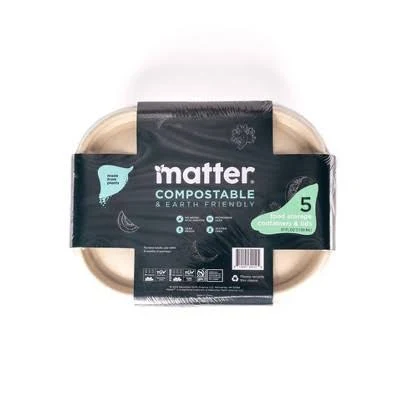
- Plant-based fiber pulp (compostable)
- A third party reports verifying it as PFAS-free
- Microbe/mold growth if stored damp
2 hazards checked on this product, all on its full breakdown.
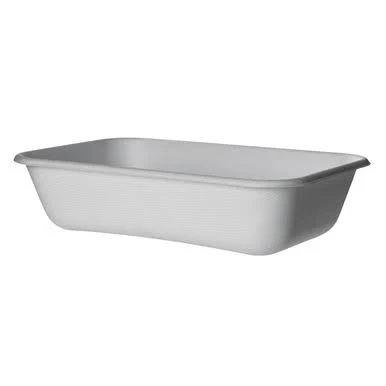
Eco-Products
Eco Products WorldView Compostable Take-Out Containers EP-SCRC32
- Plant-based fiber (compostable sugarcane bagasse)
- A third party reports verifying it as PFAS-free
- Bleaching agents and processing residues
3 hazards checked on this product, all on its full breakdown.
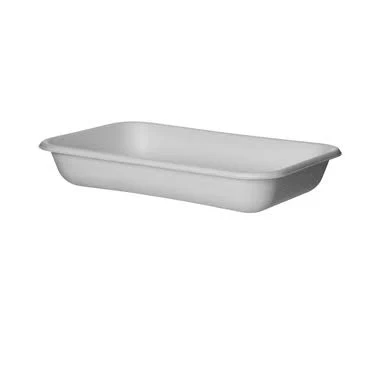
Eco-Products
WorldView Sugarcane Take-Out Containers
- Sugarcane bagasse (post-consumer fiber)
- A third party reports verifying it as PFAS-free
- Cellulose fiber degradation and food contact
2 hazards checked on this product, all on its full breakdown.
More food packaging grades
How we score, every product runs through the same public 0-100 rubric based on materials, coatings, brand disclosure, lab findings, and recalls. See the full methodology → Spotted a mistake? Report an error.