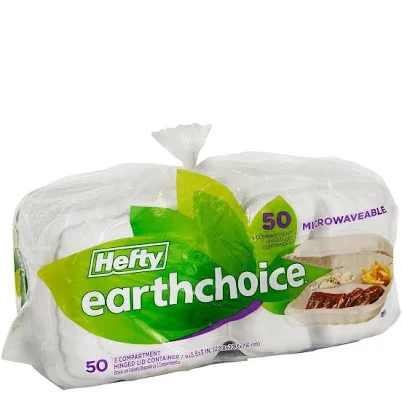
Hefty Earthchoice 3-Compartment Hinged Lid Containers, 9', 50 ct.
Skip until coating chemistry is revealed; grease-resistant food containers often contain PFAS.
Hefty Earthchoice hinged containers are polypropylene with an unspecified grease-resistant coating. The brand provides no transparency on whether this coating uses PFAS or alternatives.
The better-graded swap
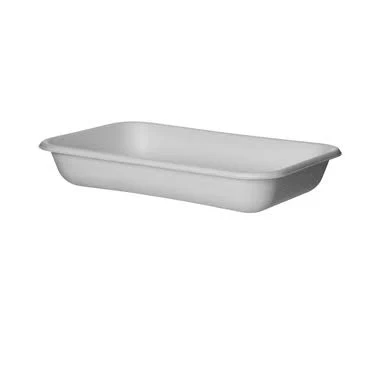
Eco-Products
Eco-Products WorldView Sugarcane Take-Out Containers
100/100 safety
Same rubric that flunked this product. The swap earned Excellent.
Still want this one anyway? Check the price on Amazon. We’d swap it.
Material
Polypropylene (PP) with grease-resistant coating
Brand disclosure
Brand is silent on PFAS
Lab data
No public lab test
You may also be interested in
Top-graded picks in the categories readers replace first, every one scored on the same rubric.

- polypropylene filter housing, carbon/sediment cartridge
- We found no PFAS statement from the brand
- Bacterial growth in spent cartridges
3 hazards checked on this product, all on its full breakdown.

Aquasure
Premier Series 75 GPD Under Sink Reverse Osmosis Water Filtration System
- RO membrane, carbon filters, stainless steel housing
- We found no PFAS statement from the brand
- Bacterial and microbial growth in housing and filters
4 hazards checked on this product, all on its full breakdown.

Avocado
Vegan Mattress
- organic cotton, natural latex, coconut coir, recycled steel coils
- The brand calls it PFAS-free, which we have not verified
- Heavy metals
2 hazards checked on this product, all on its full breakdown.
What Hefty Earthchoice 3-Compartment Hinged ct. is made of, ingredients and materials
These containers are polypropylene (PP, #5 plastic), a commodity polymer with a good safety record at food-contact temperatures below 100°C. Hefty Earthchoice has added a grease-resistant coating to the interior surface, which is where PFAS concern enters, the chemistry of that coating is not publicly disclosed. Polypropylene itself does not leach BPA, BPS, or phthalates under normal food storage conditions, but the coating formulation is the unknown variable.
What’s concerning
Category baseline
The starting point for this type of product, before anything specific to this product is counted.
No PFAS disclosure
No public statement from the brand about PFAS in this product.
Waterproof / stain-resistant treatment
Water-repellent coating treatments have historically used PFAS.
PFAS
Polypropylene alone does not require grease resistance; this coating is the functional layer. If it contains siloxanes, waxes, or other surfactants instead of PFAS, migration risk at hot temperatures remains possible but is typically lower than with fluorinated alternatives. No public material safety data sheet is available for the Hefty Earthchoice formulation.
Source, ATSDR ↗Microplastics
If containers are microwaved or exposed to heat above the polymer glass transition (around 100-110°C for PP), the coating may degrade or flake into food. The compartment dividers and thin walls of hinged-lid trays are prone to warping and stress-cracking at elevated temperatures, accelerating degradation.
Source, EPA ↗Coating adhesion and durability
Consumer reviews and foodservice feedback consistently note that grease-resistant coatings on budget-tier hinged-lid containers can peel or wear within 30-50 uses, especially if washed in commercial dishwashers or with abrasive scrubbing. Once coating integrity is compromised, the container's safety profile changes and replacement is warranted.
What’s reassuring
BPA & bisphenols
Polypropylene (#5) formulations used in food contact do not require BPA, BPS, or phthalate plasticizers by design; these are associated with other plastics (PVC, polycarbonate, PET). The PP resin itself in this product is not a source of concern on this hazard class.
Source, FDA ↗Leaching from recycled PP content (if present)
Hefty Earthchoice branding often includes post-consumer recycled resin, which is regulated and tested for food contact. If this product contains recycled PP, it is still required to meet FDA food-contact standards; however, recycled material sourcing transparency is not detailed on the package or brand website.
How is this PFAS grade calculated?
The brand's record and disclosure
Hefty (owned by Pactiv Evergreen) has not published transparency data on PFAS use in grease-resistant coatings across its product line. The 'Earthchoice' branding suggests sustainability focus, but no independent certification (e.g., from NSF, SCS, or GFSI partners) is listed for PFAS-free status on retail sites. Notpla's involvement as a distributor does not clarify coating sourcing. Absence of disclosure is a red flag for products marketed to environmentally conscious buyers.
How it compares in its category
Hinged-lid compartment trays in PP are industry standard for foodservice and meal prep. Most competitors in this category (Dart, Solo, Pactiv Direct) use similar grease-resistant coatings without public PFAS guarantees. Containers explicitly marketed as PFAS-free (e.g., some Footprint or RePurpose branded lines) are less common and typically cost 20-40% more. This product sits in the mid-market tier without differentiation on chemical safety.
If you buy it
Restrict use to cold and room-temperature foods (salads, sandwiches, baked goods) where the grease-resistant coating is least likely to transfer into food. Do not microwave, place in hot ovens, or fill with foods above 60°C. Replace containers after 50-100 uses or if the coating becomes visibly worn, scratched, or discolored. Store in a cool, dry place; do not leave filled containers in direct sunlight for extended periods.
What is not known about PFAS in this product?
- Basis
- Model estimate, 45% confidence, not a lab result
- Lab test
- None on record for this exact product
- Brand statement
- Hefty has made none
Formulations change between production runs, so check the current label. How we grade.
What are the PFAS-free alternatives to Hefty Earthchoice 3-Compartment Hinged Lid Containers, 9', 50 ct.?
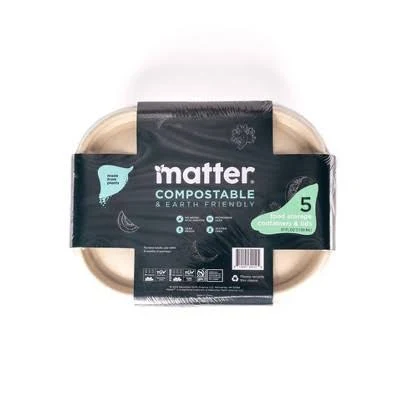
- Plant-based fiber pulp (compostable)
- A third party reports verifying it as PFAS-free
- Microbe/mold growth if stored damp
2 hazards checked on this product, all on its full breakdown.
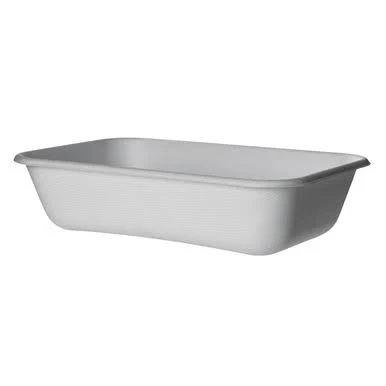
Eco-Products
Eco Products WorldView Compostable Take-Out Containers EP-SCRC32
- Plant-based fiber (compostable sugarcane bagasse)
- A third party reports verifying it as PFAS-free
- Bleaching agents and processing residues
3 hazards checked on this product, all on its full breakdown.
Eco-Products
WorldView Sugarcane Take-Out Containers
- Sugarcane bagasse (post-consumer fiber)
- A third party reports verifying it as PFAS-free
- Cellulose fiber degradation and food contact
2 hazards checked on this product, all on its full breakdown.
More food packaging grades
How we score, every product runs through the same public 0-100 rubric based on materials, coatings, brand disclosure, lab findings, and recalls. See the full methodology → Spotted a mistake? Report an error.