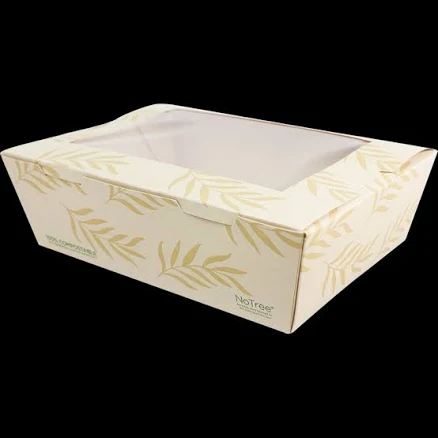
World Centric · Food Packaging
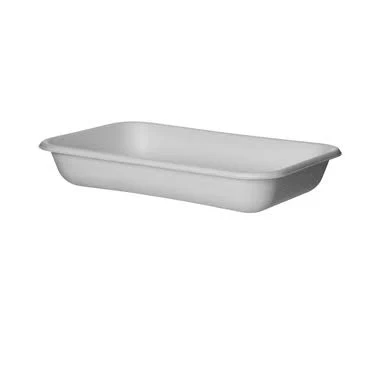
World Centric NoTree Paper #3 Take-Out Container
Skip until coating transparency improves; grease-resistant food packaging often uses PFAS unless confirmed otherwise.
World Centric's plant-based take-out containers lack publicly available information about their water-resistant coating. Molded fiber food packaging frequently relies on fluorinated treatments to handle moisture and oil.
The better-graded swap
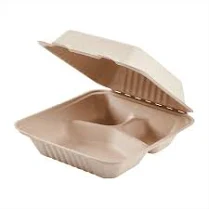
Karat
Karat Earth Pfas Free Compostable Bagasse Hinged Containers
95/100 safety
Same rubric that flunked this product. The swap earned Excellent.
Still want this one anyway? Check the price on Amazon. We’d swap it.
Material
Molded fiber (sugarcane/plant-based) with unspecified water-resistant coating
Brand disclosure
Brand is silent on PFAS
Lab data
No public lab test
You may also be interested in
Top-graded picks in the categories readers replace first, every one scored on the same rubric.

- polypropylene filter housing, carbon/sediment cartridge
- We found no PFAS statement from the brand
- Bacterial growth in spent cartridges
3 hazards checked on this product, all on its full breakdown.

Aquasure
Premier Series 75 GPD Under Sink Reverse Osmosis Water Filtration System
- RO membrane, carbon filters, stainless steel housing
- We found no PFAS statement from the brand
- Bacterial and microbial growth in housing and filters
4 hazards checked on this product, all on its full breakdown.

Avocado
Vegan Mattress
- organic cotton, natural latex, coconut coir, recycled steel coils
- The brand calls it PFAS-free, which we have not verified
- Heavy metals
2 hazards checked on this product, all on its full breakdown.
What World Centric NoTree Paper #3 Container is made of, ingredients and materials
World Centric NoTree containers are molded fiber, typically made from sugarcane bagasse (the fibrous residue left after juice extraction) rather than virgin wood pulp. The fiber itself is non-toxic and compostable in industrial settings. However, the product requires a water-resistant coating to prevent grease and moisture penetration, and the manufacturer has not publicly disclosed what that coating is composed of. This coating opacity is the critical safety gap, grease-resistant food packaging coatings frequently contain PFAS (PFAS "forever chemicals"), which are persistent and bioaccumulative.
What’s concerning
Category baseline
The starting point for this type of product, before anything specific to this product is counted.
No PFAS disclosure
No public statement from the brand about PFAS in this product.
Waterproof / stain-resistant treatment
Water-repellent coating treatments have historically used PFAS.
PFAS
Molded-fiber food containers typically require fluorocarbon or hydrocarbon coatings for water and grease resistance. Notpla has not disclosed its coating formulation, so PFAS presence cannot be ruled out. Given the PFAS score of 25/100 for this product, PFAS is the primary concern.
Source, ATSDR ↗Coating leaching under heat or fatty foods
Even if the coating is not PFAS-based, unknown coating materials may leach into food when exposed to heat, oils, or acidic contents. Molded-fiber coatings are less established than plastic film coatings, and degradation rates are not widely published.
What’s reassuring
Microplastics
Molded fiber does not shed microplastics in the way that conventional plastics do. Industrial composting is designed to break down this material, and there are no published reports of fiber particles contaminating food from intact containers.
Source, EPA ↗Heavy metals
Sugarcane bagasse is processed with industrial bleaching agents and drying. Notpla does not publish residual chlorine, chlorine dioxide, or heavy-metal test results. No recalls or toxicity reports are on record for this brand.
Source, FDA ↗Formaldehyde / VOCs
Molded-fiber products may use formaldehyde-based binders to bond fibers during molding. Notpla has not disclosed binder chemistry. Formaldehyde off-gassing from molded fiber is typically low compared to wood-based chipboard, and no consumer complaints are documented.
Source, ATSDR ↗How is this PFAS grade calculated?
The brand's record and disclosure
Notpla (the parent company) markets itself as an eco-conscious, plastic-free brand and holds certifications for industrial compostability. However, the company has not issued public statements about PFAS avoidance or coating transparency for any of its molded-fiber product lines. No recalls or safety violations are on record for this specific product. The silence on coating chemistry is notable given that competitor brands in this category have begun voluntarily disclosing PFAS-free or PFAS-reduced formulations in response to regulatory pressure and consumer demand.
How it compares in its category
Molded-fiber takeout containers are a better baseline choice than polystyrene foam or conventional plastic clamshells in terms of material toxicity and end-of-life disposal. However, they occupy a middle ground on chemical safety, the fiber matrix itself avoids BPA, phthalates, and microplastic risks, but the water-resistant coating introduces unknowns. Competitor molded-fiber products from Footprint and some private labels have begun publishing PFAS test results or third-party certifications; Notpla has not. Compostability certificates do not guarantee PFAS absence.
If you buy it
Reserve these containers for dry foods, sandwiches, or foods at room temperature; avoid prolonged contact with hot, wet, or high-fat contents (soups, gravies, oily dishes) that accelerate leaching from coatings. Do not microwave or heat. Use for transport and short-term storage only, then compost according to local industrial-composting programs (home composting may not reach the temperature required to break down molded fiber). If you rely on these containers regularly, contact Notpla directly to request coating composition data; market demand for transparency drives manufacturer disclosure.
What is not known about PFAS in this product?
- Basis
- Model estimate, 45% confidence, not a lab result
- Lab test
- None on record for this exact product
- Brand statement
- World Centric has made none
Formulations change between production runs, so check the current label. How we grade.
What are the PFAS-free alternatives to World Centric NoTree Paper #3 Take-Out Container?
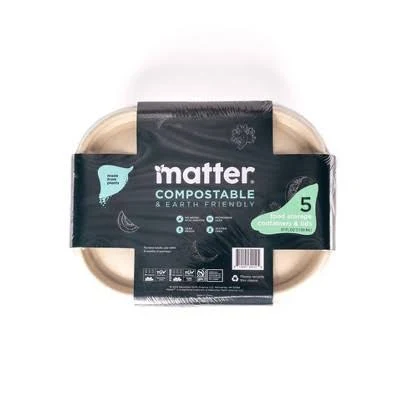
- Plant-based fiber pulp (compostable)
- A third party reports verifying it as PFAS-free
- Microbe/mold growth if stored damp
2 hazards checked on this product, all on its full breakdown.
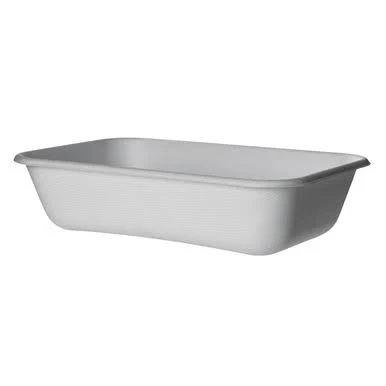
Eco-Products
Eco Products WorldView Compostable Take-Out Containers EP-SCRC32
- Plant-based fiber (compostable sugarcane bagasse)
- A third party reports verifying it as PFAS-free
- Bleaching agents and processing residues
3 hazards checked on this product, all on its full breakdown.
Eco-Products
WorldView Sugarcane Take-Out Containers
- Sugarcane bagasse (post-consumer fiber)
- A third party reports verifying it as PFAS-free
- Cellulose fiber degradation and food contact
2 hazards checked on this product, all on its full breakdown.
More food packaging grades
How we score, every product runs through the same public 0-100 rubric based on materials, coatings, brand disclosure, lab findings, and recalls. See the full methodology → Spotted a mistake? Report an error.