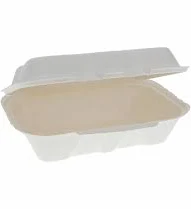
Pactiv Earthchoice Bagasse Compostable Hinged Lid Container
Wait for Pactiv to disclose coating chemistry. Bagasse plus grease-resistance likely means PFAS.
Pactiv Earthchoice bagasse containers use compostable base material but an undisclosed grease-resistant coating. Food-contact coatings claiming water and grease repellency commonly use PFAS.
The better-graded swap
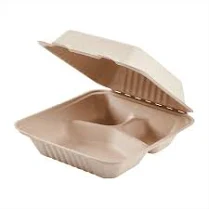
Karat
Karat Earth Pfas Free Compostable Bagasse Hinged Containers
95/100 safety
Same rubric that flunked this product. The swap earned Excellent.
Still want this one anyway? Check the price on Amazon. We’d swap it.
Material
Bagasse (sugarcane fiber) with unspecified grease-resistant coating
Brand disclosure
Brand is silent on PFAS
Lab data
No public lab test
You may also be interested in
Top-graded picks in the categories readers replace first, every one scored on the same rubric.

- polypropylene filter housing, carbon/sediment cartridge
- We found no PFAS statement from the brand
- Bacterial growth in spent cartridges
3 hazards checked on this product, all on its full breakdown.

Aquasure
Premier Series 75 GPD Under Sink Reverse Osmosis Water Filtration System
- RO membrane, carbon filters, stainless steel housing
- We found no PFAS statement from the brand
- Bacterial and microbial growth in housing and filters
4 hazards checked on this product, all on its full breakdown.

Avocado
Vegan Mattress
- organic cotton, natural latex, coconut coir, recycled steel coils
- The brand calls it PFAS-free, which we have not verified
- Heavy metals
2 hazards checked on this product, all on its full breakdown.
What Pactiv Earthchoice Bagasse Lid Container is made of, ingredients and materials
Pactiv Earthchoice containers are molded from bagasse, a fibrous residue left after sugarcane juice extraction. Bagasse itself is inert cellulose-based material with no established leaching hazards at normal serving temperatures. However, the 'grease-resistant coating' applied to the interior surface is chemically unspecified by Pactiv and is the primary concern; food-contact grease barriers typically use fluorinated compounds (PFAS) to repel oils, fats, and water.
What’s concerning
Category baseline
The starting point for this type of product, before anything specific to this product is counted.
No PFAS disclosure
No public statement from the brand about PFAS in this product.
Waterproof / stain-resistant treatment
Water-repellent coating treatments have historically used PFAS.
PFAS
Unspecified coating formulation on interior surface almost certainly contains fluorinated compounds to achieve water- and grease resistance; Pactiv's silence on chemistry is a red flag matching industry standard practice.
Source, ATSDR ↗Fiber degradation and microparticle release
Bagasse is porous and can shed fine particles if coating degrades or container is scratched; risk is low for typical single-use serving but increases with reheating or abrasion.
Migration of coating components at elevated temperature
If containers are microwaved or filled with very hot food (above 140°F / 60°C), unidentified coating additives could migrate into oily or fatty food; grease accelerates permeation of coating plasticizers and surfactants.
Incomplete biodegradation in landfill or compost
Bagasse is certified compostable, but fluorinated coatings do not fully degrade in industrial composting and can persist as microcontaminants; if misrouted to landfill, both fiber and coating remain indefinitely.
What’s reassuring
BPA & bisphenols
Bagasse molding may use formaldehyde-based binders or phenolic resins in the substrate; Pactiv has not disclosed binder chemistry, but typical food-contact bagasse items do not trigger documented leaching concerns under normal use.
Source, FDA ↗How is this PFAS grade calculated?
The brand's record and disclosure
The brand has not publicly disclosed the chemistry of its grease-resistant coatings on compostable containers as of available records. The company markets these products as 'sustainable' and 'compostable' but remains silent on per- and polyfluoroalkyl substance (PFAS) content, which is standard across most conventional foodservice packaging. No major recalls or regulatory warnings specifically targeting this product line have been documented.
How it compares in its category
Bagasse containers occupy a middle ground in compostable foodservice packaging. They avoid the Teflon-type coating/PFA coating issues of some traditional polystyrene foam, but because they are designed to hold greasy foods, they typically receive fluorinated water- and oil-repellent treatments similar to competitor products (Footprint, World Centric, Vegware). Uncoated fiber containers exist but perform poorly with oily foods and are rarely used for mixed-use items like hinged-lid takeout containers.
If you buy it
Use for room-temperature or moderately warm foods (below 120°F / 49°C) to minimize any coating migration risk. Avoid extended storage of fatty, acidic, or salty foods in these containers, as these conditions can stress polymer coatings. Do not microwave or expose to direct heat. Compost responsibly only in facilities that accept fiber-based compostables; standard curbside programs may not process bagasse efficiently, and if it ends up in landfill, the coating remains indefinitely.
What is not known about PFAS in this product?
- Basis
- Model estimate, 45% confidence, not a lab result
- Lab test
- None on record for this exact product
- Brand statement
- has made none
Formulations change between production runs, so check the current label. How we grade.
What are the PFAS-free alternatives to Pactiv Earthchoice Bagasse Compostable Hinged Lid Container?
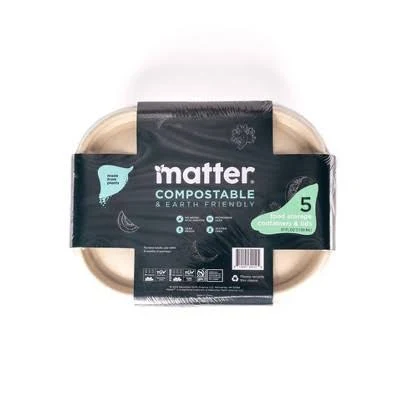
- Plant-based fiber pulp (compostable)
- A third party reports verifying it as PFAS-free
- Microbe/mold growth if stored damp
2 hazards checked on this product, all on its full breakdown.
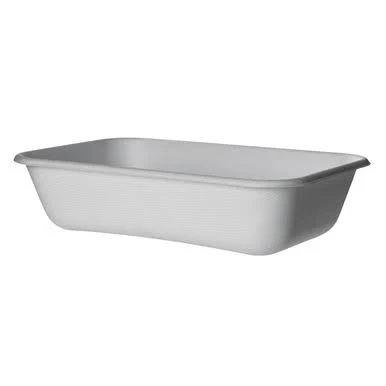
Eco-Products
Eco Products WorldView Compostable Take-Out Containers EP-SCRC32
- Plant-based fiber (compostable sugarcane bagasse)
- A third party reports verifying it as PFAS-free
- Bleaching agents and processing residues
3 hazards checked on this product, all on its full breakdown.
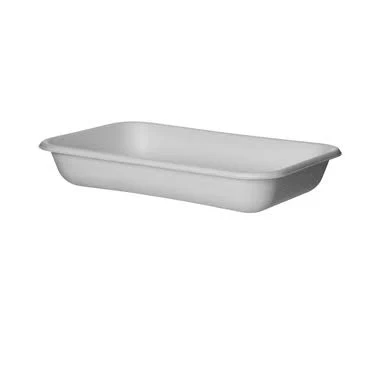
Eco-Products
WorldView Sugarcane Take-Out Containers
- Sugarcane bagasse (post-consumer fiber)
- A third party reports verifying it as PFAS-free
- Cellulose fiber degradation and food contact
2 hazards checked on this product, all on its full breakdown.
More food packaging grades
How we score, every product runs through the same public 0-100 rubric based on materials, coatings, brand disclosure, lab findings, and recalls. See the full methodology → Spotted a mistake? Report an error.