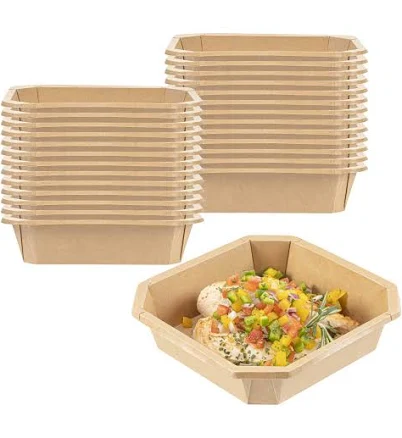
Sustain 41 oz Octagonal Kraft Paper Take Out Container
Skip; grease-resistant coating likely contains PFAS without disclosure.
Kraft takeout containers commonly rely on PFAS-based grease barriers. The brand has not revealed what coating was used or its PFAS content.
The better-graded swap
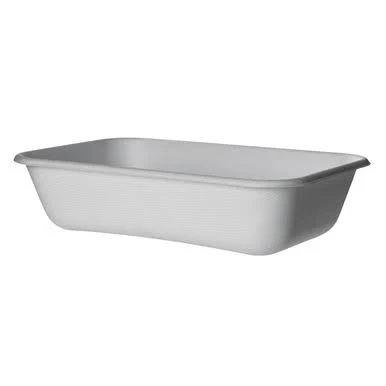
Eco-Products
Eco Products WorldView Compostable Take-Out Containers EP-SCRC32
100/100 safety
Same rubric that flunked this product. The swap earned Excellent.
Still want this one anyway? Check the price on Amazon. We’d swap it.
Material
kraft paper with unspecified grease-resistant coating
Brand disclosure
Brand is silent on PFAS
Lab data
No public lab test
You may also be interested in
Top-graded picks in the categories readers replace first, every one scored on the same rubric.

- polypropylene filter housing, carbon/sediment cartridge
- We found no PFAS statement from the brand
- Bacterial growth in spent cartridges
3 hazards checked on this product, all on its full breakdown.

Aquasure
Premier Series 75 GPD Under Sink Reverse Osmosis Water Filtration System
- RO membrane, carbon filters, stainless steel housing
- We found no PFAS statement from the brand
- Bacterial and microbial growth in housing and filters
4 hazards checked on this product, all on its full breakdown.

Avocado
Vegan Mattress
- organic cotton, natural latex, coconut coir, recycled steel coils
- The brand calls it PFAS-free, which we have not verified
- Heavy metals
2 hazards checked on this product, all on its full breakdown.
What Sustain 41 oz Octagonal Out Container is made of, ingredients and materials
This is a kraft paper board container with an unspecified grease-resistant coating on the interior surface. Kraft paper itself is minimally processed wood fiber and poses no direct chemical hazard. The coating is the concern, grease resistance in food packaging almost always requires synthetic water- and oil-repellent chemistry, historically PFAS-based. Without public disclosure of the coating chemistry, the presumption of PFAS is high, though Panera has not confirmed the specific formulation.
What’s concerning
Category baseline
The starting point for this type of product, before anything specific to this product is counted.
No PFAS disclosure
No public statement from the brand about PFAS in this product.
Waterproof / stain-resistant treatment
Water-repellent coating treatments have historically used PFAS.
Grease-resistant coating composition (unknown chemistry)
Unspecified coating on interior surface is almost certainly a synthetic fluorochemical or wax blend. Without disclosure, PFAS presence cannot be ruled out and should be presumed likely based on industry standard practice for grease barrier coatings.
Coating migration to fatty foods
High-fat foods (meat, cheese, oils) can increase leaching of coating compounds into food. Risk is highest with hot, oily foods in contact for extended periods, though a single meal use typically poses low migration risk.
What’s reassuring
Bleaching residues or inorganic contaminants
No specific recalls or documented issues with bleaching chemicals in Panera containers. Kraft paper may contain trace chlorine or optical brighteners; these are not independently flagged as hazardous in food-contact kraft at regulatory levels.
Microplastic shedding from coating
Kraft paper fiber itself does not shed microplastics. Polymer coatings could theoretically fragment; no studies document this risk specific to food service paper containers in normal use.
Formaldehyde / VOCs
Standard food-service kraft containers use non-formaldehyde starch or synthetic adhesives compliant with FDA food-contact rules. No formaldehyde hazard is established for this product class.
Source, ATSDR ↗How is this PFAS grade calculated?
The brand's record and disclosure
The brand has not published a public commitment to PFAS-free packaging or disclosed coating chemistry for its containers. The brand operates as a subsidiary of JAB Holding and has not signed PFAS phase-out pledges or provided third-party test data. This silence is typical of large food service operators, but it reflects a lack of transparency around a chemical class increasingly restricted by regulators.
How it compares in its category
Kraft paper containers dominate disposable food service; most major chains use similar grease-coated designs without disclosure. Competitors like Chipotle and McDonald's have similarly opaque coating practices. Some smaller operators and certification-focused brands (e.g., Footprint, BioMimicry) now use disclosed non-PFAS coatings or natural alternatives like cellulose-based barriers, but these remain less common in mainstream fast casual.
If you buy it
Assume the container will contact food once or twice under normal restaurant use. If you are concerned about PFAS exposure, request alternative packaging (paper without coating, if available) or ask the restaurant directly about coating chemistry. Do not heat or microwave the container; high temperature may accelerate migration. Do not reuse containers for storage at home. For occasional use, risk is low in absolute terms; cumulative exposure becomes relevant only with repeated high-frequency consumption from coated containers.
What is not known about PFAS in this product?
- Basis
- Model estimate, 35% confidence, not a lab result
- Lab test
- None on record for this exact product
- Brand statement
- has made none
Formulations change between production runs, so check the current label. How we grade.
What are the PFAS-free alternatives to Sustain 41 oz Octagonal Kraft Paper Take Out Container?
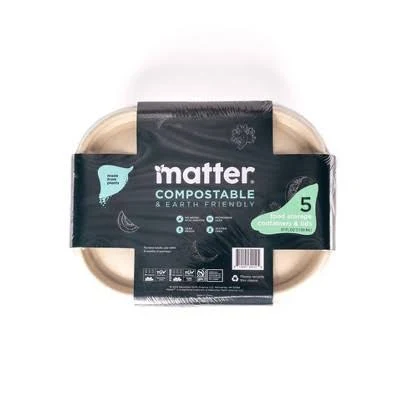
- Plant-based fiber pulp (compostable)
- A third party reports verifying it as PFAS-free
- Microbe/mold growth if stored damp
2 hazards checked on this product, all on its full breakdown.
Eco-Products
Eco Products WorldView Compostable Take-Out Containers EP-SCRC32
- Plant-based fiber (compostable sugarcane bagasse)
- A third party reports verifying it as PFAS-free
- Bleaching agents and processing residues
3 hazards checked on this product, all on its full breakdown.
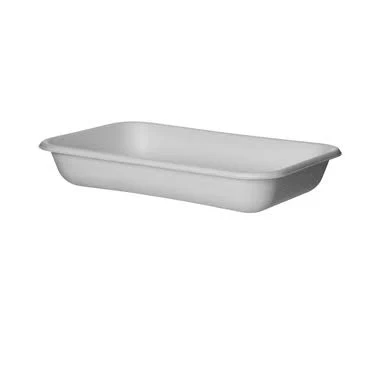
Eco-Products
WorldView Sugarcane Take-Out Containers
- Sugarcane bagasse (post-consumer fiber)
- A third party reports verifying it as PFAS-free
- Cellulose fiber degradation and food contact
2 hazards checked on this product, all on its full breakdown.
More food packaging grades
How we score, every product runs through the same public 0-100 rubric based on materials, coatings, brand disclosure, lab findings, and recalls. See the full methodology → Spotted a mistake? Report an error.