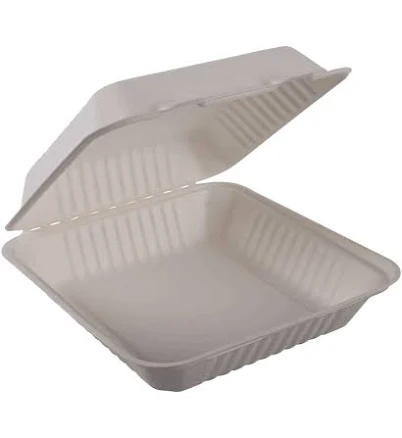
Tree-less Molded Fiber Compostable Hinged Container
Avoid until the manufacturer reveals coating chemistry.
Molded fiber containers are compostable but often coated with PFAS-based barriers for water and grease protection. This brand provides no coating disclosure or PFAS verification.
The better-graded swap
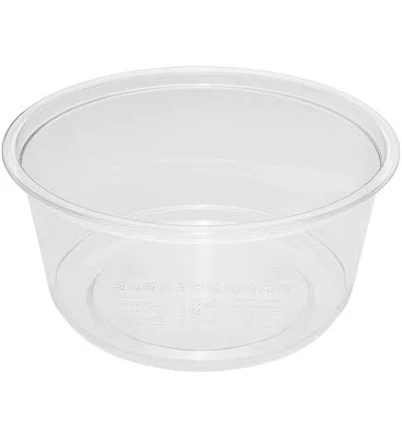
Karat
Karat Earth Eco-Friendly PLA Round Deli Container
100/100 safety
Same rubric that flunked this product. The swap earned Excellent.
Still want this one anyway? Check the price on Amazon. We’d swap it.
Material
molded fiber (likely wood/agricultural pulp) with undisclosed water/grease-resistant coating
Brand disclosure
Brand is silent on PFAS
Lab data
No public lab test
You may also be interested in
Top-graded picks in the categories readers replace first, every one scored on the same rubric.

- polypropylene filter housing, carbon/sediment cartridge
- We found no PFAS statement from the brand
- Bacterial growth in spent cartridges
3 hazards checked on this product, all on its full breakdown.

Aquasure
Premier Series 75 GPD Under Sink Reverse Osmosis Water Filtration System
- RO membrane, carbon filters, stainless steel housing
- We found no PFAS statement from the brand
- Bacterial and microbial growth in housing and filters
4 hazards checked on this product, all on its full breakdown.

Avocado
Vegan Mattress
- organic cotton, natural latex, coconut coir, recycled steel coils
- The brand calls it PFAS-free, which we have not verified
- Heavy metals
2 hazards checked on this product, all on its full breakdown.
What Tree-less Molded Fiber Hinged Container is made of, ingredients and materials
The brand's hinged container is molded fiber, a compressed pulp product typically made from recycled paper, cardboard, or agricultural residue. The manufacturer has applied an undisclosed water and grease-resistant coating, which is where chemical concern arises. Molded fiber itself is compostable and contains no inherent heavy metals or synthetic polymers, but the coating's chemistry and whether it contains PFAS or other persistent chemicals remains unknown. This opacity is the primary safety gap.
What’s concerning
Category baseline
The starting point for this type of product, before anything specific to this product is counted.
No PFAS disclosure
No public statement from the brand about PFAS in this product.
Waterproof / stain-resistant treatment
Water-repellent coating treatments have historically used PFAS.
Undisclosed water-repellent coating composition
Molded fiber grease barriers commonly contain PFAS or fluorinated compounds, but the brand has not disclosed its specific formulation. Without testing data or certification, presence cannot be ruled out; this is why PFAS grade is 'Poor (25/100)'.
Microplastics
If the coating is synthetic or contains microparticulate additives, heating or physical stress (bending, wrinkling) could release fragments into food. Risk is higher if the coating begins to flake or peel with age or temperature exposure.
Source, EPA ↗Leaching of coating chemicals with fatty or hot foods
Even non-PFAS fluorinated or polymeric coatings can leach into oily foods or when exposed to heat above 60-70°C. Molded fiber provides no barrier once the coating degrades, unlike plastic films.
Bacterial or mold growth if stored damp
Molded fiber is hygroscopic and can absorb moisture. If containers are not dried fully after washing or stored in humid conditions, microbial growth may occur before use, especially if reused.
What’s reassuring
Pulp contamination with printing inks or recycled residues
Molded fiber made from recycled content can occasionally harbor trace heavy metals or ink pigments from prior use. The brand does not specify fiber source or screening; no recalls or testing reports are publicly available for this brand.
How is this PFAS grade calculated?
The brand's record and disclosure
The brand has not publicly disclosed the identity or safety profile of its grease-resistant coating. No third-party certifications (such as Cradle to Cradle, OK Compost Industrial, or certification from NSF or similar bodies) are on record for this product. The brand's silence on coating chemistry despite selling a compostable product raises a red flag for due diligence. Without certification or published testing data, consumers cannot verify whether the coating is PFAS-free or contains legacy flame retardants.
How it compares in its category
Molded fiber containers are among the least chemically complex food-contact options and are widely endorsed as a compostable alternative to plastic clamshells. However, many molded fiber manufacturers have historically used PFOA or PFAS-based water-repellent treatments, and the market has not uniformly transitioned to disclosed alternatives. The brand's specific coating is uncharacterized, placing it in a middle zone, better than untested plastics, but worse than brands that have published PFAS-free or fluorine-free certification (e.g., some suppliers certified by certifiers requiring full coating disclosure).
If you buy it
Use only for cold or ambient-temperature foods (salads, baked goods, takeout items not held above 60°C). Do not microwave, fill with hot liquids, or store fatty foods for extended periods, as heat and lipids can accelerate any leaching from the coating. Replace the container every 6-12 months or once it shows visible wear, staining, or softening of the rim. If your region has industrial composting infrastructure, these containers will break down within 90 days; verify your facility accepts molded fiber before composting.
What is not known about PFAS in this product?
- Basis
- Model estimate, 45% confidence, not a lab result
- Lab test
- None on record for this exact product
- Brand statement
- has made none
Formulations change between production runs, so check the current label. How we grade.
What are the PFAS-free alternatives to Tree-less Molded Fiber Compostable Hinged Container?
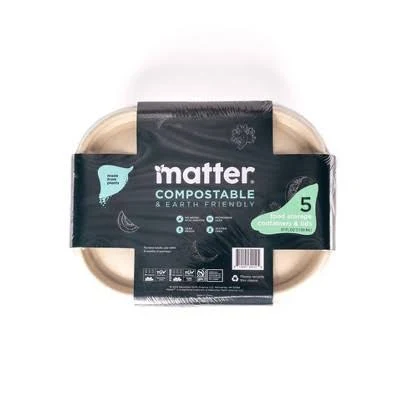
- Plant-based fiber pulp (compostable)
- A third party reports verifying it as PFAS-free
- Microbe/mold growth if stored damp
2 hazards checked on this product, all on its full breakdown.
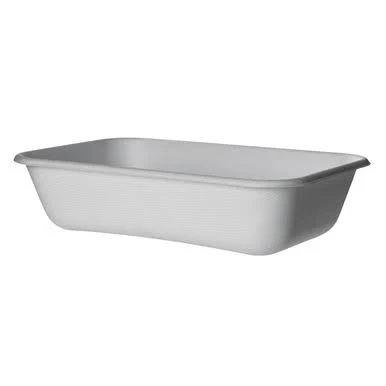
Eco-Products
Eco Products WorldView Compostable Take-Out Containers EP-SCRC32
- Plant-based fiber (compostable sugarcane bagasse)
- A third party reports verifying it as PFAS-free
- Bleaching agents and processing residues
3 hazards checked on this product, all on its full breakdown.
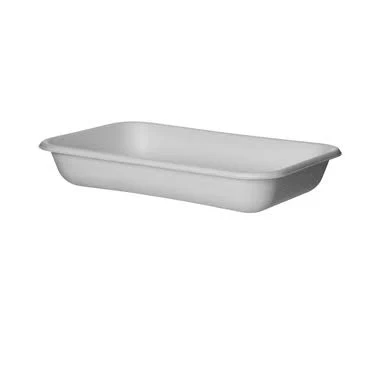
Eco-Products
WorldView Sugarcane Take-Out Containers
- Sugarcane bagasse (post-consumer fiber)
- A third party reports verifying it as PFAS-free
- Cellulose fiber degradation and food contact
2 hazards checked on this product, all on its full breakdown.
More food packaging grades
How we score, every product runs through the same public 0-100 rubric based on materials, coatings, brand disclosure, lab findings, and recalls. See the full methodology → Spotted a mistake? Report an error.