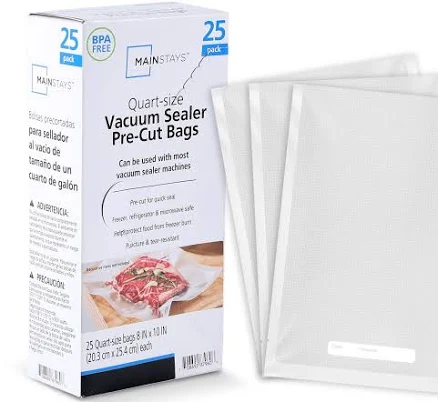
Mainstays Quart Vacuum Sealer Bags
Vacuum sealer bags likely contain PFAS for grease resistance.
Vacuum sealer bags receive water and grease-resistant coatings typically based on PFAS. The manufacturer has not disclosed PFAS absence or specific ingredients.
The better-graded swap
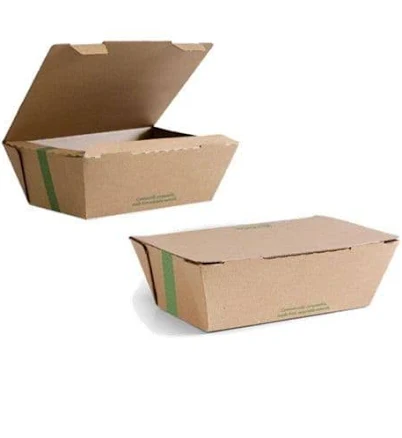
Vegware
Vegware Compostable Microflute Takeaway Box
100/100 safety
Same rubric that flunked this product. The swap earned Excellent.
Still want this one anyway? Check the price on Amazon. We’d swap it.
Material
Polyethylene with heat-seal coating, grease-resistant treatment
Brand disclosure
Brand is silent on PFAS
Lab data
No public lab test
You may also be interested in
Top-graded picks in the categories readers replace first, every one scored on the same rubric.

- polypropylene filter housing, carbon/sediment cartridge
- We found no PFAS statement from the brand
- Bacterial growth in spent cartridges
3 hazards checked on this product, all on its full breakdown.

Aquasure
Premier Series 75 GPD Under Sink Reverse Osmosis Water Filtration System
- RO membrane, carbon filters, stainless steel housing
- We found no PFAS statement from the brand
- Bacterial and microbial growth in housing and filters
4 hazards checked on this product, all on its full breakdown.

Avocado
Vegan Mattress
- organic cotton, natural latex, coconut coir, recycled steel coils
- The brand calls it PFAS-free, which we have not verified
- Heavy metals
2 hazards checked on this product, all on its full breakdown.
What Mainstays Quart Vacuum Sealer Bags is made of, ingredients and materials
Mainstays Quart Vacuum Sealer Bags are polyethylene (PE) film with a heat-activated seal coating and grease-resistant surface treatment. The grease resistance in vacuum-seal bags typically relies on fluorinated compounds (PFAS) to repel oils and fats during storage. PE itself is generally food-safe and chemically stable at room temperature, but the seal coating and any chemical treatments are the primary exposure points during heating or prolonged contact with fatty foods.
What’s concerning
Category baseline
The starting point for this type of product, before anything specific to this product is counted.
No PFAS disclosure
No public statement from the brand about PFAS in this product.
Waterproof / stain-resistant treatment
Water-repellent coating treatments have historically used PFAS.
PFAS
Grease-resistant vacuum-seal bags almost universally use PFAS compounds; Mainstays bags are not marketed as PFAS-free, and the brand has not disclosed coating chemistry. (PFAS graded separately at 25/100.)
Source, ATSDR ↗Polyethylene leaching under heat
PE film is stable at room and refrigeration temperatures but can soften and potentially leach oligomers or residual monomers if exposed to temperatures above 140-160F. Vacuum-sealing hot foods or use in high-heat applications increases this risk marginally.
Microplastics
If bags are reused, stored at high temperatures, or exposed to sharp objects, seal failure and fragmentation can occur, risking small PE particles in stored food. Single-use is recommended.
Source, EPA ↗Mold or bacterial colonization if seal fails
A compromised seal defeats the vacuum function; moisture and oxygen ingress can promote mold growth, especially in fatty or protein-rich foods. This is a mechanical failure risk, not a chemical one.
What’s reassuring
BPA & bisphenols
No evidence that Mainstays vacuum-seal bags use BPA or BPS in the heat-seal layer; modern PE-based heat seals typically do not require these compounds. Not a known concern for this product category unless coating resin is explicitly disclosed.
Source, FDA ↗How is this PFAS grade calculated?
The brand's record and disclosure
Mainstays is a Walmart house brand; no published PFAS transparency statement, third-party certifications, or chemical disclosure policy has been located. The parent company (Walmart) has made no specific commitments regarding PFAS phase-out in private-label food packaging. No recalls or safety investigations specific to these bags have been reported to the FDA or CPSC.
How it compares in its category
Vacuum-seal bags across brands typically rely on PFAS for grease and moisture resistance; this is an industry standard rather than a Mainstays-specific issue. Premium alternatives (e.g., certified compostable or PFAS-free marketed bags) exist but are less common and more expensive. Most conventional vacuum-seal bags, including store brands, lack independent testing or disclosure of fluorinated coatings.
If you buy it
Store bags at room temperature away from direct heat or sunlight; avoid using in boiling water or high-heat sous vide (above 160F/70C) where coating migration risk increases. Replace bags if seals degrade, show cloudiness, or develop punctures. Wash hands after handling; do not reuse bags. For fatty or oily foods, consider shorter storage times (under 6 months) to minimize coating contact duration.
What is not known about PFAS in this product?
- Basis
- Model estimate, 45% confidence, not a lab result
- Lab test
- None on record for this exact product
- Brand statement
- Mainstays has made none
Formulations change between production runs, so check the current label. How we grade.
What are the PFAS-free alternatives to Mainstays Quart Vacuum Sealer Bags?
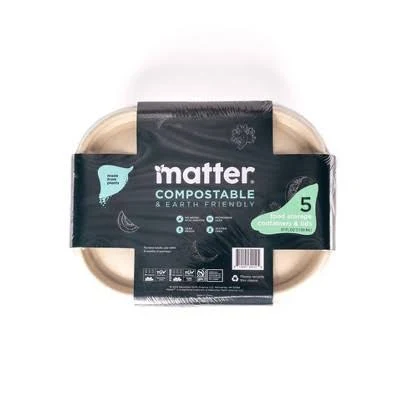
- Plant-based fiber pulp (compostable)
- A third party reports verifying it as PFAS-free
- Microbe/mold growth if stored damp
2 hazards checked on this product, all on its full breakdown.
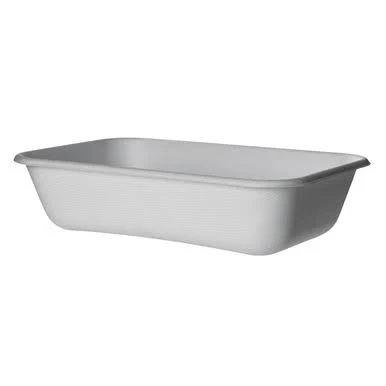
Eco-Products
Eco Products WorldView Compostable Take-Out Containers EP-SCRC32
- Plant-based fiber (compostable sugarcane bagasse)
- A third party reports verifying it as PFAS-free
- Bleaching agents and processing residues
3 hazards checked on this product, all on its full breakdown.
Eco-Products
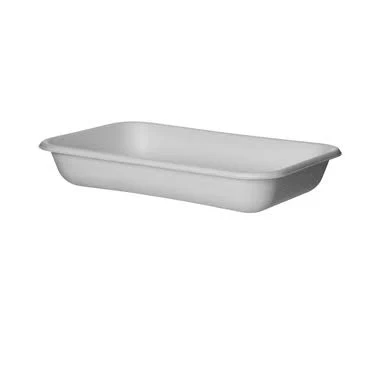
WorldView Sugarcane Take-Out Containers
- Sugarcane bagasse (post-consumer fiber)
- A third party reports verifying it as PFAS-free
- Cellulose fiber degradation and food contact
2 hazards checked on this product, all on its full breakdown.
More food packaging grades
How we score, every product runs through the same public 0-100 rubric based on materials, coatings, brand disclosure, lab findings, and recalls. See the full methodology → Spotted a mistake? Report an error.