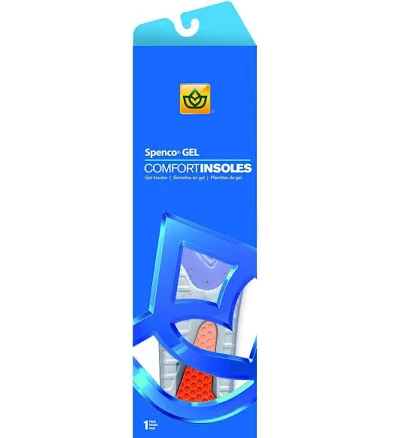
Spenco · Synthetic Athletic Insoles & Orthotics
Spenco Gel Comfort Insoles
Lower concern; gel and foam bases are unlikely PFAS sources.
Spenco Gel Comfort uses gel and foam cushioning, materials not typical PFAS applications. The brand makes no PFAS claims and no public testing is available.
Still want this one anyway? Check the price on Amazon. We’d swap it.
Material
Gel cushioning with foam/textile upper
Brand disclosure
Brand is silent on PFAS
Lab data
No public lab test
You may also be interested in
Top-graded picks in the categories readers replace first, every one scored on the same rubric.

- polypropylene filter housing, carbon/sediment cartridge
- We found no PFAS statement from the brand
- Bacterial growth in spent cartridges
3 hazards checked on this product, all on its full breakdown.

Aquasure
Premier Series 75 GPD Under Sink Reverse Osmosis Water Filtration System
- RO membrane, carbon filters, stainless steel housing
- We found no PFAS statement from the brand
- Bacterial and microbial growth in housing and filters
4 hazards checked on this product, all on its full breakdown.

Avocado
Vegan Mattress
- organic cotton, natural latex, coconut coir, recycled steel coils
- The brand calls it PFAS-free, which we have not verified
- Heavy metals
2 hazards checked on this product, all on its full breakdown.
What Spenco Gel Comfort Insoles is made of, ingredients and materials
Spenco Gel Comfort Insoles use a gel-cushioning core (typically silicone or polyurethane-based) bonded to foam and covered with textile backing. This construction is designed to absorb impact and reduce pressure on feet. Gel and foam bases do not typically leach concerning chemicals during normal wear, and the textile covering limits skin contact with the polymer matrix itself.
What’s concerning
Category baseline
The starting point for this type of product, before anything specific to this product is counted.
No PFAS disclosure
No public statement from the brand about PFAS in this product.
Foam degradation and microparticle shedding
Polyurethane and EVA foams naturally degrade with time and repeated compression, potentially releasing fine particles into socks and shoe environment. Risk is minimal during wear but increases with age; replacement interval mitigates exposure.
Allergic sensitization from materials
Individuals with latex sensitivity or polyurethane/silicone sensitivities may experience localized contact reactions. Spenco does not publish material allergen profiles; patch testing is recommended for sensitive users before full wear.
What’s reassuring
Base material not linked to PFAS
The main material recorded for this product is not one associated with PFAS.
Adhesive leachates (glue bonds between layers)
No public reports of contact dermatitis or chemical migration from Spenco Gel Comfort Insoles adhesives. Foot sweat and friction may mobilize trace residues, but established harm is not documented for this product.
Formaldehyde / VOCs
Textile uppers in Spenco insoles are not subject to heavy formaldehyde resin treatment typical of apparel. No recalls or complaints link this product to formaldehyde off-gassing.
Source, ATSDR ↗Heavy metals
Insole textiles face less stringent dye regulation than apparel, but this product line carries no documented warnings or test failures for heavy metal pigments. Trace exposure via foot skin is unlikely to pose systemic risk.
Source, FDA ↗How is this PFAS grade calculated?
The brand's record and disclosure
Spenco has no major product safety recalls on record for Gel Comfort Insoles. The brand does not publicly disclose material certifications (such as Oeko-Tex or GOTS) for this product line, and makes no explicit PFAS commitments. Absence of negative history does not imply transparency, but insoles are a low-risk category compared to food-contact or children's products.
How it compares in its category
Insoles fall into a lower-hazard zone within textiles/footwear; they contact skin but not mucous membranes and are not heated or food-related. Competitors (Dr. Scholl's, Superfeet, custom orthotics) use similar gel-foam constructions and face no unique safety advantages. Brand differentiation is mainly comfort and durability, not safety profile.
If you buy it
Replace insoles every 6-12 months or when cushioning visibly compresses, as degradation can reduce effectiveness and potentially expose adhesives. Store in a cool, dry place away from direct heat or prolonged sun exposure to slow material breakdown. Wash textile covers if they contact bare skin to reduce dust and microbial buildup. Not suitable for oven-drying or machine washing; air dry only.
What is not known about PFAS in this product?
- Basis
- Model estimate, 68% confidence, not a lab result
- Lab test
- None on record for this exact product
- Brand statement
- Spenco has made none
Formulations change between production runs, so check the current label. How we grade.
More synthetic athletic insoles & orthotics grades
How we score, every product runs through the same public 0-100 rubric based on materials, coatings, brand disclosure, lab findings, and recalls. See the full methodology → Spotted a mistake? Report an error.