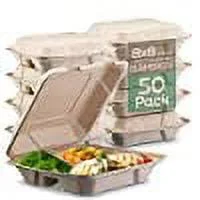
100% Compostable Clamshell Take Out Food Containers
Avoid until PFAS status is disclosed; compostable clamshells often use fluorinated coatings.
Compostable clamshells marketed as '100% compostable' typically rely on grease and moisture-resistant coatings that may contain PFAS. The brand provides no coating disclosure or PFAS-free confirmation with third-party backing.
The better-graded swap
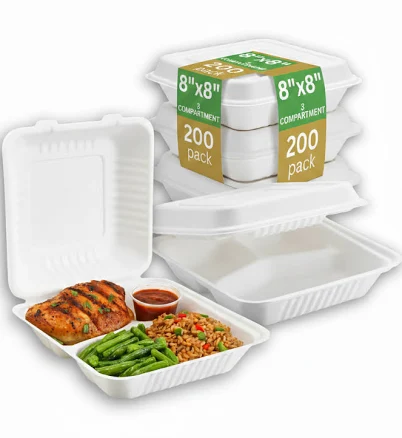
Bagasse
Bagasse Hinged Container 3-Compartment, PFAS Free 200pc
95/100 safety
Same rubric that flunked this product. The swap earned Excellent.
Still want this one anyway? Check the price on Amazon. We’d swap it.
Material
Plant-based compostable resin (likely PLA or PBAT blend) with unknown moisture/grease barrier coating
Brand disclosure
Brand is silent on PFAS
Lab data
No public lab test
You may also be interested in
Top-graded picks in the categories readers replace first, every one scored on the same rubric.

- polypropylene filter housing, carbon/sediment cartridge
- We found no PFAS statement from the brand
- Bacterial growth in spent cartridges
3 hazards checked on this product, all on its full breakdown.

Aquasure
Premier Series 75 GPD Under Sink Reverse Osmosis Water Filtration System
- RO membrane, carbon filters, stainless steel housing
- We found no PFAS statement from the brand
- Bacterial and microbial growth in housing and filters
4 hazards checked on this product, all on its full breakdown.

Avocado
Vegan Mattress
- organic cotton, natural latex, coconut coir, recycled steel coils
- The brand calls it PFAS-free, which we have not verified
- Heavy metals
2 hazards checked on this product, all on its full breakdown.
What 100% Compostable Clamshell Food Containers is made of, ingredients and materials
The brand's clamshells are stated as 100% compostable resin, almost certainly polylactic acid (PLA) or polybutylene adipate terephthalate (PBAT) or a blend. These bioplastics break down in industrial composting (>140F, high humidity) but not in home compost or landfills. The real concern is the moisture and grease barrier coating applied to the resin, which is not disclosed on packaging. Most compostable food containers use fluorinated polymer coatings (aqueous film-forming foams, or AFFF derivatives) to repel liquids, and these coatings often contain PFAS compounds that can leach into fatty or acidic foods.
What’s concerning
Category baseline
The starting point for this type of product, before anything specific to this product is counted.
Vague safety claims only
Uses vague language ("eco-friendly", "clean") without a specific PFAS statement.
Waterproof / stain-resistant treatment
Water-repellent coating treatments have historically used PFAS.
PFAS
Unconfirmed by brand. Fluorinated coatings are standard in compostable food packaging to meet grease/moisture resistance; The brand's coating is undisclosed, and the company has not stated PFAS-free status, making fluorinated compounds probable.
Source, ATSDR ↗Monomer and oligomer leaching from PLA/PBAT resin
Lactic acid oligomers from PLA and adipic acid/butanediol compounds from PBAT can migrate into fatty or acidic foods, especially when heated. Individual exposure levels are typically low in single-use scenarios but cumulative in frequent foodservice use.
Microplastic degradation in non-composted environments
If containers are landfilled or littered instead of industrial composted, PLA and PBAT fragment into microplastics over 5-20 years rather than fully biodegrading. These fragments may reach waterways and food chains, though direct human exposure from a single container is minimal.
Inadequate composability claims without certification
Labeling as 100% compostable does not guarantee the finished container meets industrial composting standards (EN 13432, ASTM D6868) if coatings or additives are not tested. Without third-party certification, compostability claims are self-reported and unverified.
What’s reassuring
BPA & bisphenols
Printed labels and container seams sometimes use epoxy-based adhesives or BPA-containing inks, but no reports of BPA detection in containers have been published. Risk is lower than with polycarbonate or recycled plastics but not ruled out without disclosure.
Source, FDA ↗How is this PFAS grade calculated?
The brand's record and disclosure
The brand, a fresh produce distributor, has not published public statements on PFAS use or testing in their food packaging. No third-party certifications (such as OK Compost Industrial, Cradle to Cradle, or PFAS-free verification) are advertised on available product information. The company's silent stance on coating chemistry is a red flag in an industry where compostable alternatives without known PFAS links have existed since the mid-2010s but remain optional rather than standard.
How it compares in its category
Compostable clamshells sit between conventional polystyrene foam (which leaches styrene and BPA in some formulations) and newer PFAS-free compostable options (e.g., containers certified by the Sustainable Packaging Coalition or explicitly PFAS-tested). The brand's product appears to use mid-tier compostable resin without premium PFAS-free or safety-certified coatings. Competitors offering transparent coating disclosure or third-party testing exist but are less common in foodservice supply chains.
If you buy it
Use these containers only for dry or room-temperature foods; avoid direct contact with hot, fatty, or acidic items (e.g., hot soups, oily takeout, vinegar-based dressings) until coating composition is confirmed, as heat and lipids accelerate leaching of barrier compounds. Do not microwave or heat in the container. If your area has a certified industrial composting facility accepting compostable packaging, dispose of containers there within 2-3 months of purchase (PBAT and PLA degrade rapidly in proper conditions). If no composting is available, treat as landfill waste and request the brand disclose coating PFAS status before repeat purchase.
What is not known about PFAS in this product?
- Basis
- Model estimate, 45% confidence, not a lab result
- Lab test
- None on record for this exact product
- Brand statement
- has made none
Formulations change between production runs, so check the current label. How we grade.
What are the PFAS-free alternatives to 100% Compostable Clamshell Take Out Food Containers?
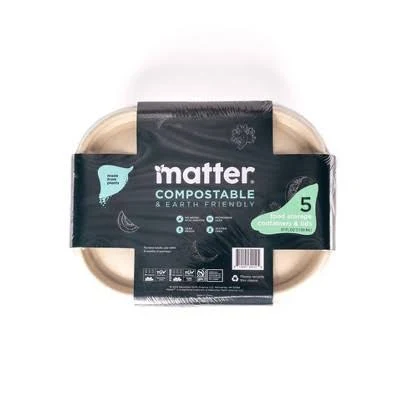
- Plant-based fiber pulp (compostable)
- A third party reports verifying it as PFAS-free
- Microbe/mold growth if stored damp
2 hazards checked on this product, all on its full breakdown.
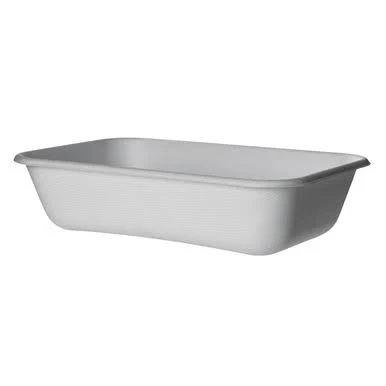
Eco-Products
Eco Products WorldView Compostable Take-Out Containers EP-SCRC32
- Plant-based fiber (compostable sugarcane bagasse)
- A third party reports verifying it as PFAS-free
- Bleaching agents and processing residues
3 hazards checked on this product, all on its full breakdown.
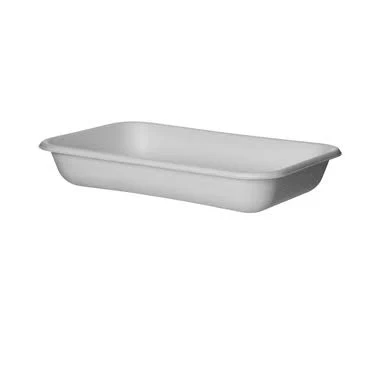
Eco-Products
WorldView Sugarcane Take-Out Containers
- Sugarcane bagasse (post-consumer fiber)
- A third party reports verifying it as PFAS-free
- Cellulose fiber degradation and food contact
2 hazards checked on this product, all on its full breakdown.
More food packaging grades
How we score, every product runs through the same public 0-100 rubric based on materials, coatings, brand disclosure, lab findings, and recalls. See the full methodology → Spotted a mistake? Report an error.