By PFAS Authority · Updated October 4, 2026
Top grades to buy
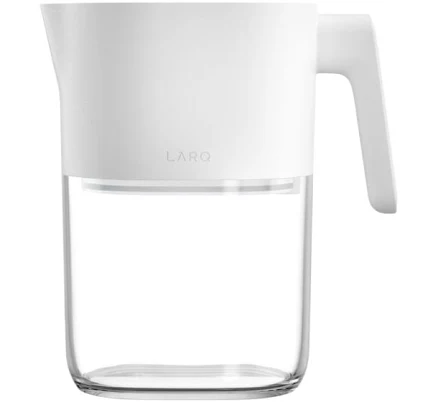
LARQ
Pitcher
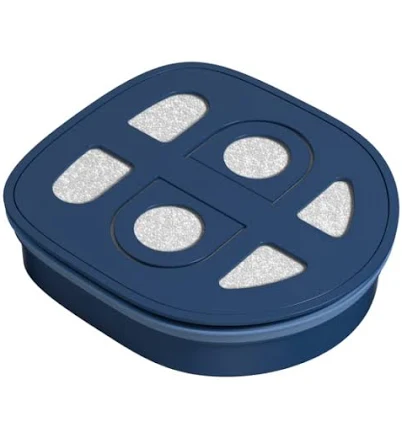
LARQ
PureVis Pitcher
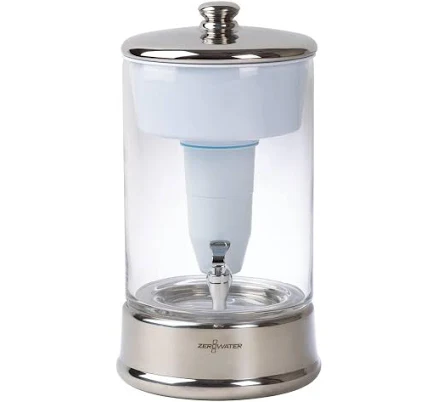
ZeroWater
40-Cup Glass Water Filter Dispenser
Model-based grades, not lab tests. We flunk more than we pass. How grading works
PFAS in Countertop Filters, Which Brands Grade Best and Worst
Based on available materials and data in our database, two countertop filters currently top the field, the LARQ LARQ PureVis Pitcher and the ZeroWater ZeroWater 40-Cup Glass Water Filter Dispenser, both carrying our model-based estimate of 100 out of 100 and an overall grade of Excellent. No product in the countertop filter category we track currently grades below Excellent, which is itself useful information, the brands that publish enough material and construction detail to be scored tend to cluster at the top, while many lower-disclosure competitors never get scored at all because they do not publish enough information to evaluate.
That distinction matters more than it sounds. A high grade in our system is not a laboratory certification that a product contains zero PFAS. It is a model-based estimate built from publicly available materials disclosures, housing composition, filter media descriptions, and brand statements. Several products below carry scores of 95 rather than 100 for reasons that are often about documentation gaps rather than confirmed PFAS content. This guide walks through every graded countertop filter in our database, flags the handful of construction details that separate a 100 from a 95, and explains what to look for, and avoid, if a product you are considering is not on this list at all. For a full side-by-side tool, use our product finder.
| Product | PFAS Grade (Score) | Verdict |
|---|---|---|
| LARQ LARQ PureVis Pitcher | Excellent (100/100) | Top-scoring pitcher, no evidence of PFAS found in reviewed sources |
| ZeroWater 40-Cup Glass Dispenser | Excellent (100/100) | Glass construction helps; top-scoring dispenser |
| LARQ LARQ Pitcher | Excellent (100/100) | Matches flagship PureVis model on materials |
| ZeroWater 32 Cup Ready-Read Dispenser | Excellent (95/100) | Strong, minor disclosure gap vs. glass model |
| Culligan ZeroWater Technology 22-Cup Dispenser | Excellent (95/100) | Co-branded unit, solid but not top tier |
| LARQ Pitcher Filter Essential Filter | Excellent (95/100) | Replacement filter cartridge, strong score |
| PUR XL 44-Cup Dispenser | Excellent (95/100) | Large-capacity option, consistently strong |
| PUR Plus 30 Cup Dispenser | Excellent (95/100) | Reliable mid-size pick |
| Culligan MaxClear Gravity Countertop System | Excellent (95/100) | Gravity-fed, no electrical parts |
| Culligan MaxClear 3 Gallon Gravity System | Excellent (95/100) | Larger-capacity gravity option |
| Culligan Venture Countertop System | Excellent (95/100) | Compact faucet-adjacent unit |
| Brita Hub Compact Countertop Device | Excellent (95/100) | Smaller footprint, consistent scoring |
| Brita UltraMax Filtered Dispenser | Excellent (95/100) | High-capacity dispenser, strong score |
| Brita Hub Countertop Water Filter System | Excellent (95/100) | Full-size hub model, strong score |
LARQ, the top-of-category cluster
LARQ has three products in our database, and all three grade Excellent, with two reaching the maximum 100/100 model-based estimate. The LARQ PureVis Pitcher and the LARQ Pitcher share the top score, while the LARQ Pitcher Filter Essential Filter, the replacement cartridge sold separately, comes in at 95/100.
Materials and brand claims. LARQ states that its pitchers use BPA-free materials and highlights its PureVis UV-C self-cleaning technology as a point of differentiation from standard carbon pitchers. These are brand-stated claims; we have not independently verified them through third-party lab testing, and our grade reflects a materials and disclosure review rather than a chemical assay of the finished product.
Pros. Consistently top-scoring across the LARQ lineup based on available materials and data. UV-C self-cleaning is a feature not found in most competitors. No evidence of PFAS found in reviewed sources for the pitcher bodies.
Cons. Premium price point relative to standard pitchers. The replacement filter scores slightly lower than the pitcher itself, a reminder that filter cartridges and housings are scored and should be evaluated separately from the vessel.
ZeroWater, strongest when the reservoir is glass
ZeroWater has three entries, and the pattern here is instructive. The ZeroWater 40-Cup Glass Water Filter Dispenser hits the maximum 100/100 score, while the plastic-reservoir 32 Cup Ready-Read Dispenser and the co-branded Culligan ZeroWater Technology 22-Cup Dispenser both land at 95/100.
Materials and brand claims. ZeroWater markets its 5-stage filtration as removing "virtually all dissolved solids," measured via the included TDS meter. That claim is about total dissolved solids, not a PFAS-specific certification, and should not be read as a PFAS removal guarantee. The glass dispenser's higher score in our model reflects, in part, that glass contact surfaces generally carry fewer open questions about fluoropolymer coatings or additive plastics than comparable plastic reservoirs.
Pros. The glass model gives buyers who want to minimize plastic water contact the highest-scoring option in the category. All three ZeroWater units reviewed here reach Excellent. Widely available replacement filters.
Cons. The plastic-bodied dispensers, while still Excellent, do not reach the ceiling score, which traces back to additional unresolved materials questions in our review rather than a confirmed finding of PFAS. TDS reduction claims are not a direct proxy for PFAS performance.
PUR, consistent mid-pack performer
Both PUR products in our database, the PUR XL 44-Cup Water Filter Dispenser and the PUR Plus 30 Cup Dispenser, score identically at 95/100, Excellent.
Materials and brand claims. PUR states its filters are certified to reduce lead and certain other contaminants under NSF/ANSI standards. Those third-party certifications, where they exist, apply to specific contaminants tested under specific protocols; they are not a blanket PFAS-free claim, and buyers should check the specific NSF standard number against the specific contaminant they care about rather than assume broad coverage.
Pros. Large capacity options suit bigger households. Consistent scoring across both reviewed models. Genuine PUR filter cartridges included with the XL model.
Cons. Neither model reaches the 100/100 ceiling achieved by top LARQ and ZeroWater products, based on our materials review. Plastic reservoir construction throughout the line.
Culligan, three gravity and countertop systems, all Excellent
Culligan's MaxClear Technology Gravity Countertop System MaxClear 3 Gallon Gravity System, and Venture Countertop Water Filter System all land at 95/100, Excellent.
Materials and brand claims. Culligan markets its MaxClear line around gravity filtration with no electricity or plumbing required, and promotes multi-stage carbon filtration. These remain brand-stated performance claims about filtration speed and contaminant categories rather than independently verified PFAS-specific results in the sources we reviewed.
Pros. No electrical components reduces one category of material inputs to evaluate. Gravity-fed systems are portable and plumbing-free. All three models score identically, suggesting consistent manufacturing and disclosure across the line.
Cons. None of the three reach the top 100 score achieved by select LARQ and ZeroWater products. Gravity filtration is generally slower than pump or dispenser-style systems, a tradeoff unrelated to PFAS but relevant to daily use.
Brita, three countertop and dispenser models, all Excellent
The Brita Hub Compact Countertop Water Filtration Device Brita UltraMax Filtered Water Dispenser, and Brita Hub Countertop Water Filter System all grade Excellent at 95/100.
Materials and brand claims. Brita states its filters are tested and certified to NSF/ANSI 42 and 53 standards for specific contaminants such as chlorine taste and odor, and in some cartridges, lead. As with PUR, these certifications are contaminant-specific and should not be read as a general PFAS-free assurance unless the specific standard and substance are named on the certification.
Pros. Consistent 95/100 scoring across the full reviewed Hub and UltraMax lineup. Brita is one of the most widely available brands, which matters for ongoing filter replacement access. Compact and full-size options cover different kitchen footprints.
Cons. No Brita model in our database currently reaches the 100/100 ceiling. As with every brand on this list, the score is a model-based estimate from materials and public disclosure, not a direct laboratory PFAS test of the finished product.
What to avoid
Every product listed above grades Excellent, which says as much about who publishes enough information to be scored as it does about the category overall. If a countertop filter you are considering is not in our database, treat that absence as a flag to investigate, not an automatic red mark. Based on available materials and data across the category generally, here is what tends to correlate with lower confidence.
- Vague marketing with no materials disclosure. "100% safe" or "removes all contaminants" language with no cited standard, no NSF number, and no materials breakdown is a weaker signal than brands that publish specific test standards and housing composition.
- Fluoropolymer-sealed gaskets or O-rings with no alternative noted. Some filter housings use PTFE-based seals. A brand that discloses this upfront is more useful to evaluate than one that is silent on seal materials.
- "PFAS-free" claims with no verification path. A brand-stated claim of PFAS-free is not the same as a third-party verified result. Ask whether the claim is backed by an independent lab report you can actually view, not just a marketing page.
- No stated filter media or carbon source. Activated carbon quality and sourcing vary, and filters that do not disclose carbon type or stage count are harder to evaluate for PFAS-specific reduction performance.
- Unbranded or marketplace-only listings with no manufacturer page. These are frequently the products that never make it into databases like ours because there is nothing public to evaluate.
If you are also evaluating PFAS exposure risk beyond drinking water, related categories worth checking include cookware carpets and rugs, and waterproof boots, all common sources of fluorinated chemical treatments in the home. For whole-home filtration rather than a single countertop unit, see our whole-house filters roundup.
Our pick
Based on available materials and data, the LARQ LARQ PureVis Pitcher and the ZeroWater 40-Cup Glass Water Filter Dispenser are the two strongest options currently in our database, each earning a 100/100 model-based estimate and an Excellent grade. The LARQ Pitcher is a close third at the same ceiling score. None of this means these products are certified PFAS-free; it means that, of everything we have reviewed, these three show the fewest open questions in materials and disclosure. If you prefer a larger-capacity household dispenser rather than a pitcher, the PUR XL 44-Cup Dispenser, the Brita UltraMax, and the full Culligan MaxClear line all sit one tier below at 95/100, still Excellent, and remain reasonable choices. Whichever you choose, pair the countertop unit with a filter replacement schedule you actually follow, since an expired cartridge undermines any materials advantage the housing itself might offer. Compare these and other options directly in our product finder.
Frequently asked questions
Does an Excellent grade mean a countertop filter is guaranteed PFAS-free?
No. An Excellent grade in our system reflects a model-based estimate built from publicly available materials disclosures and brand documentation, not a laboratory assay of the finished product. We describe these results as lower concern or as showing no evidence of PFAS found in reviewed sources, never as a guarantee of being PFAS-free.
Why do some filters from the same brand score 100 and others score 95?
Score differences within a brand's lineup, such as between the ZeroWater glass dispenser and its plastic-reservoir siblings, usually trace back to construction material differences or gaps in public disclosure for a specific model rather than a confirmed PFAS finding in the lower-scoring unit. Each product is evaluated individually based on its own published materials.
Can PFAS exposure from a water filter actually affect my health?
Some research has found associations between certain PFAS compounds and health outcomes, but association is not the same as causation, and individual exposure risk depends on many factors including water source, filter maintenance, and overall exposure across other product categories. Choosing a higher-graded filter based on available materials and data is a reasonable precaution, not a guaranteed health outcome.
Now check your own stuff
See every product we’ve graded in this category, best-graded first.
Get the graded list, free.
The products we score each week, and the best-graded alternative in every category.
No spam. Unsubscribe anytime.