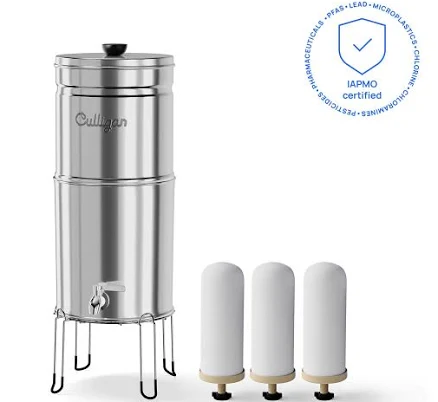
Culligan with MaxClear Technology 3 gallon gravity water filter system
Low risk. Typical gravity design, no public PFAS transparency offered.
This gravity filter uses carbon and ion-exchange media, not typically associated with intentional PFAS use. Culligan doesn't disclose PFAS testing or sourcing standards.
We flunk more products than we pass. This one earned its grade. How we grade
Material
Plastic housing, carbon/ion-exchange filter media
Lab data
No public lab test
You may also be interested in
Top-graded picks in the categories readers replace first, every one scored on the same rubric.

- polypropylene filter housing, carbon/sediment cartridge
- We found no PFAS statement from the brand
- Bacterial growth in spent cartridges
3 hazards checked on this product, all on its full breakdown.

Aquasure
Premier Series 75 GPD Under Sink Reverse Osmosis Water Filtration System
- RO membrane, carbon filters, stainless steel housing
- We found no PFAS statement from the brand
- Bacterial and microbial growth in housing and filters
4 hazards checked on this product, all on its full breakdown.

Avocado
Vegan Mattress
- organic cotton, natural latex, coconut coir, recycled steel coils
- The brand calls it PFAS-free, which we have not verified
- Heavy metals
2 hazards checked on this product, all on its full breakdown.
What Culligan with MaxClear filter system is made of, ingredients and materials
The MaxClear system uses a plastic reservoir (likely polycarbonate or food-grade polyethylene) paired with activated carbon and ion-exchange resin filter media. Gravity filters avoid heat and pressure stress that can accelerate plastic breakdown, so leaching risk from the housing is lower than in heated systems. The filter media itself is inert and designed to capture contaminants rather than release them; activated carbon does not off-gas volatile compounds under normal use.
What’s concerning
No PFAS disclosure
No public statement from the brand about PFAS in this product.
Bacterial and mold growth in reservoir
Gravity filters create standing water conditions that can favor algae, mold, and biofilm if not maintained or stored in sunlight. This is a use-related risk, not a manufacturing defect. Regular filter replacement and cool, dark storage minimize this hazard.
Filter media saturation and contaminant breakthrough
If filters are not replaced on schedule, saturation can occur, and contaminants (including some microbes) may pass through untreated. This is a maintenance issue, not a material defect; adherence to replacement intervals mitigates it.
What’s reassuring
Base material not linked to PFAS
The main material recorded for this product is not one associated with PFAS.
BPA & bisphenols
No documented leachate incidents reported for this product or Culligan gravity filters. Food-grade plastics used in gravity systems generally resist leaching under cold-water conditions. However, Culligan does not publicly disclose polymer type or independent testing, so confirmation is limited to absence of complaint records.
Source, FDA ↗Activated carbon dust or particulates in filtered water
Quality gravity filters use properly sized and sealed carbon media that does not shed into water. No recalls or complaints on record for Culligan MaxClear for particulate contamination. Dust risk is low if filters are not cracked or loose.
Heavy metals
Gravity filter housings are not subject to regulatory testing for lead or cadmium like ceramic or glazed cookware. No contamination reports exist for this product. Standard food-grade plastic and activated carbon do not contain these metals under normal manufacturing.
Source, FDA ↗How is this PFAS grade calculated?
The brand's record and disclosure
Culligan is a large, established water treatment company with decades of market presence but limited public transparency on specific material sourcing or third-party testing disclosures for this gravity model. No major recalls, contamination incidents, or legal actions tied to this product line are on record. The brand does not prominently disclose PFAS removal claims or testing on their consumer gravity filters, which is notable given PFAS contamination in drinking water is now widespread.
How it compares in its category
Gravity filters have lower concern in the water-filter category because they avoid electrical components, heating elements, and pump pressure that can stress plastics or promote bacterial growth in stagnant water. This Culligan model sits in the mainstream middle, similar design to Brita and generic gravity pitchers, but larger capacity and marketed filter technology. Competing brands rarely disclose more material safety data; this is a category-wide gap, not a Culligan-specific weakness.
If you buy it
Replace filters every 2-3 months (or per instructions) to prevent algae and bacterial biofilm buildup in the reservoir. Avoid leaving it in direct sunlight, which can degrade the plastic and promote microbial growth. Do not store or filter hot water; gravity filters are designed for cold or room-temperature tap water only. Clean the housing with mild soap and water monthly; inspect for cracks or clouding, which signals material degradation.
What is not known about PFAS in this product?
- Basis
- Model estimate, 65% confidence, not a lab result
- Lab test
- None on record for this exact product
- Brand statement
- Culligan has made a specific claim
Formulations change between production runs, so check the current label. How we grade.
What are the PFAS-free alternatives to Culligan with MaxClear Technology 3 gallon gravity water filter system?
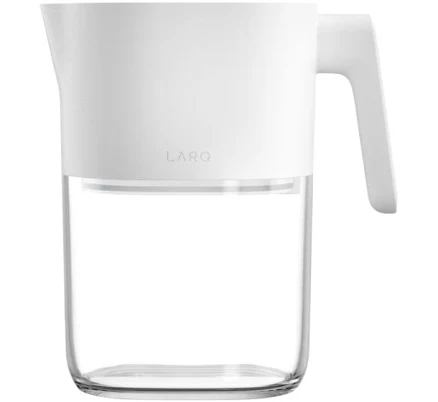
- borosilicate glass pitcher, replaceable activated carbon filter
- Bacterial growth in filter housing if unmaintained
4 hazards checked on this product, all on its full breakdown.
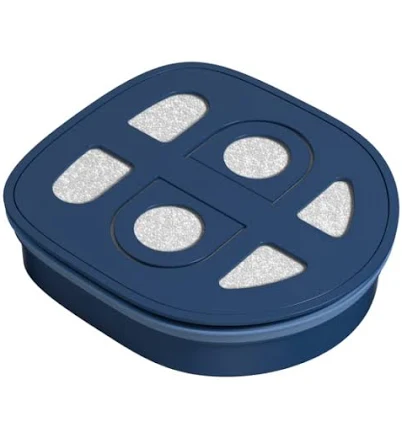
- Borosilicate glass pitcher, activated carbon filter cartridge
- Bacterial growth in filter cartridge
4 hazards checked on this product, all on its full breakdown.
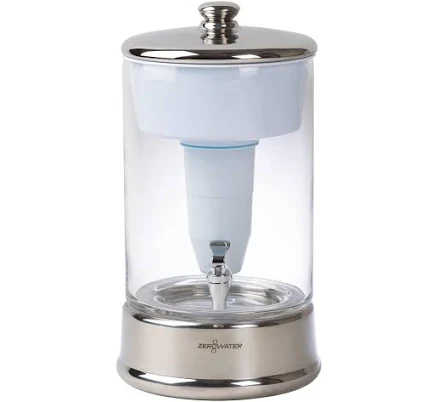
- borosilicate glass, plastic pitcher housing, ion-exchange resin cartridge
- Ion-exchange resin cartridge composition opacity
3 hazards checked on this product, all on its full breakdown.
More countertop filters grades
How we score, every product runs through the same public 0-100 rubric based on materials, coatings, brand disclosure, lab findings, and recalls. See the full methodology → Spotted a mistake? Report an error.