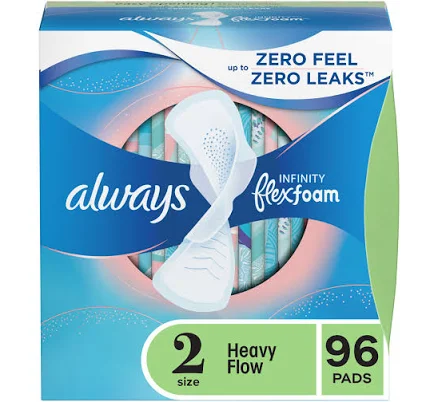
Always Infinity Pads
Skip unless Always discloses waterproof coating chemistry or independent testing.
Waterproof backing prevents leaks but composition is undisclosed. No third-party testing or PFAS-free claims exist for this product line.
The better-graded swap
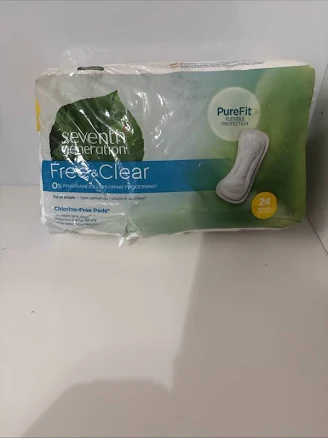
Seventh Generation
Seventh Generation Chlorine Free Maxi Pads
100/100 safety
Same rubric that flunked this product. The swap earned Excellent.
Still want this one anyway? Check the price on Amazon. We’d swap it.
Material
Nonwoven absorbent core with polymer layers; waterproof backing composition not disclosed
Lab data
No public lab test
You may also be interested in
Top-graded picks in the categories readers replace first, every one scored on the same rubric.

- polypropylene filter housing, carbon/sediment cartridge
- We found no PFAS statement from the brand
- Bacterial growth in spent cartridges
3 hazards checked on this product, all on its full breakdown.

Aquasure
Premier Series 75 GPD Under Sink Reverse Osmosis Water Filtration System
- RO membrane, carbon filters, stainless steel housing
- We found no PFAS statement from the brand
- Bacterial and microbial growth in housing and filters
4 hazards checked on this product, all on its full breakdown.

Avocado
Vegan Mattress
- organic cotton, natural latex, coconut coir, recycled steel coils
- The brand calls it PFAS-free, which we have not verified
- Heavy metals
2 hazards checked on this product, all on its full breakdown.
What Always Infinity Pads is made of, ingredients and materials
Always Infinity pads use a nonwoven absorbent core (typically polypropylene and wood pulp) and polymer layers designed to absorb and lock fluid. The waterproof backing composition is not disclosed by the brand, which is the primary concern, waterproof layers in period pads commonly use PFAS-based water-repellent coatings to prevent leakage. The nonwoven and absorbent layers themselves are not inherent hazards, but the opaque backing formula prevents independent safety assessment.
What’s concerning
Category baseline
The starting point for this type of product, before anything specific to this product is counted.
No PFAS disclosure
No public statement from the brand about PFAS in this product.
Waterproof / stain-resistant treatment
Water-repellent coating treatments have historically used PFAS.
PFAS
Waterproof layers in period pads often use perfluorinated compounds (e.g., Teflon-type coating or polyfluoroalkyl polymers) to repel fluids. Always does not disclose backing chemistry, so PFAS presence cannot be ruled out. Independent testing has found PFAS in unnamed period pad samples, indicating industry-wide exposure risk.
Source, ATSDR ↗Skin sensitization or contact dermatitis from undisclosed additives
Nonwoven and polymer layers may contain residual monomers, dyes, or processing chemicals. No specific allergen incidents have been documented for Always Infinity, but the lack of ingredient transparency makes individual sensitivity assessment difficult. Users with known sensitivities to synthetic polymers or acrylates should seek products with full chemical disclosure.
Microplastic shedding from nonwoven layers
Polypropylene nonwoven fabrics can degrade and release microfibers, particularly at material edges. Period pads are in direct contact with sensitive mucous membranes for hours; microfiber inhalation or ingestion is theoretically possible but has not been quantified in menstrual product use. Washing hands after application and changing pads on schedule reduces contact duration.
What’s reassuring
Formaldehyde / VOCs
No public recalls or reports of formaldehyde in Always Infinity pads. Synthetic polymer layers do not typically require formaldehyde-based resins in their manufacture, unlike textiles treated with wrinkle-resistance finishes. The absence of disclosed testing does not confirm absence of residuals.
Source, ATSDR ↗Heavy metals
Wood pulp and polypropylene absorbents are not typical vectors for lead or cadmium contamination if sourced from regulated suppliers. No specific testing data or incidents exist for Always Infinity. The undisclosed waterproof backing is a higher concern for chemical contamination than the absorbent core itself.
Source, FDA ↗How is this PFAS grade calculated?
The brand's record and disclosure
Procter & Gamble (Always' parent company) has not published ingredient lists or waterproof coating chemistry for this product line. The brand maintains silence on PFAS presence despite growing industry scrutiny and regulatory pressure on menstrual products. P&G has faced criticism for lack of transparency on PFAS in other consumer goods but has not committed to phasing out PFAS in period pads. No formal product recalls or toxicity claims have been documented for Always Infinity pads specifically.
How it compares in its category
Many mainstream period pad brands (Tampax, Kotex, Playtex) similarly withhold waterproof backing chemistry. Smaller brands like Rael, Cora, and Seventh Generation have published PFAS-free or more transparent formulations as a market differentiator. Independent testing by non-profit groups (e.g., Chem Collective) has detected PFAS in unnamed period pads but has not published brand-specific results for Always products. Cost-wise, Always Infinity is mid-market, so cost alone does not justify the disclosure gap.
If you buy it
Store in a cool, dry place away from direct sunlight; exposure to heat does not trigger leaching from nonwoven or polymer absorbers. Replace every 4-8 hours depending on flow; wearing for extended periods increases skin contact time but does not amplify hazard from PFAS if present. If you experience irritation, redness, or allergic reactions, discontinue and switch to a brand with published ingredient lists. Consider writing to P&G requesting full waterproof coating disclosure to support consumer pressure for transparency.
What is not known about PFAS in this product?
- Basis
- Model estimate, 35% confidence, not a lab result
- Lab test
- None on record for this exact product
- Brand statement
- Always has made a specific claim
Formulations change between production runs, so check the current label. How we grade.
What are the PFAS-free alternatives to Always Infinity Pads?
- organic cotton, wood pulp
- The brand calls it PFAS-free, which we have not verified
- Fragrance allergen content
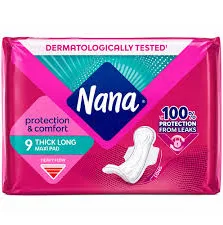
- cellulose, cotton blend, absorbent core
- We found no PFAS statement from the brand
- Bleach residues and processing chemicals in cellulose
3 hazards checked on this product, all on its full breakdown.
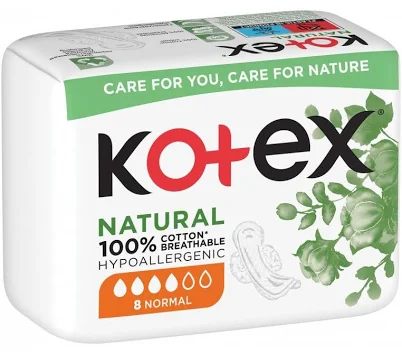
- Cotton, wood pulp absorbent core, plastic backing
- Pesticide residue
2 hazards checked on this product, all on its full breakdown.
More period pads grades
How we score, every product runs through the same public 0-100 rubric based on materials, coatings, brand disclosure, lab findings, and recalls. See the full methodology → Spotted a mistake? Report an error.