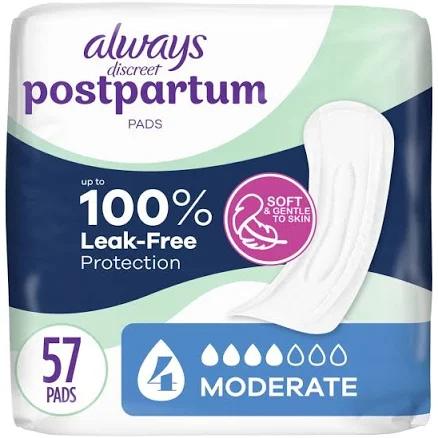
Always Discreet · Incontinence Pads & Protection
Always Discreet Postpartum Incontinence Pads
Wait or contact Procter & Gamble. Waterproof incontinence pads commonly use PFAS.
Postpartum pads need waterproof barriers to stop leakage, historically achieved with fluorinated compounds (PFAS). Always Discreet won't disclose barrier layer composition or confirm PFAS-free status. Procter & Gamble hasn't published third-party PFAS testing.
The better-graded swap
Lille
LILLE Suprem Form Maxi 2920ml
70/100 safety
Same rubric that flunked this product. The swap earned Good.
Still want this one anyway? Check the price on Amazon. We’d swap it.
Material
Nonwoven layers with waterproof/moisture-barrier coating (unspecified chemistry)
Brand disclosure
Brand is silent on PFAS
Lab data
No public lab test
What Always Discreet Postpartum Incontinence is made of, ingredients and materials
Always Discreet Postpartum pads use nonwoven synthetic layers (likely polypropylene or polyethylene) bonded with a waterproof moisture barrier. The brand does not publicly disclose the chemistry of this barrier coating, which is the critical weak point, incontinence pad waterproofing commonly relies on PFAS (PFAS "forever chemicals") to repel liquids at the fiber level. Without transparency, you cannot verify whether this product uses legacy PFAS, newer alternatives, or non-fluorinated methods.
What’s concerning
Category baseline
The starting point for this type of product, before anything specific to this product is counted.
No PFAS disclosure
No public statement from the brand about PFAS in this product.
Waterproof / stain-resistant treatment
Water-repellent coating treatments have historically used PFAS.
PFAS
Unspecified waterproof barrier coating in incontinence pads is a known application for PFAS. No public disclosure from Always Discreet rules out its use; confirmed as poor-score PFAS transparency. Direct skin contact during extended wear amplifies exposure concern.
Source, ATSDR ↗Skin irritation from synthetic nonwovens and adhesives
Nonwoven polypropylene and synthetic adhesives used in incontinence pads can cause contact dermatitis or mechanical irritation in sensitive postpartum skin. Always Discreet includes acrylate-based adhesives; no documented allergen alerts, but individual sensitivity is common in this product class.
Fragrance allergens
Always Discreet Postpartum pads are fragranced (scent-added variant exists). Fragrance compounds can trigger dermatitis, especially in postpartum vulvar and perineal tissues that may be compromised by delivery trauma or stitches. Fragrance-free versions are available within the Always Discreet line.
Sodium polyacrylate superabsorbent polymer (SAP) skin contact
SAP is standard in incontinence pads for liquid absorption. Direct prolonged contact or microparticle leakage is not documented to cause harm at typical use levels, but vulvar application on sensitive postpartum skin is a consideration. No recalls or widespread adverse reports on file for Always Discreet specifically.
What’s reassuring
Microplastics
Nonwoven synthetic fibers can shed microparticles during use or handling. No study-confirmed exposure risk from incontinence pads worn as intended, but shedding is mechanically plausible. Environmental release from disposal is more established than human health risk.
Source, EPA ↗The full breakdown
The brand's record and disclosure
Procter & Gamble (Always Discreet's parent company) has not published a PFAS-elimination roadmap or ingredient disclosure specific to incontinence pads. The brand maintains silence on waterproof coating chemistry across its product line. P&G has faced scrutiny for PFAS use in other consumer products and has not voluntarily committed to fluorine-free alternatives for this category. Contacting the company directly is the only way to obtain specific coating information.
How it compares in its category
Most disposable incontinence pads on the market use PFAS-containing backsheets or barrier coatings because PFAS are exceptionally effective at liquid repulsion. Competitors like Tena and Depend face identical transparency gaps. A handful of smaller brands (e.g., Naty, some cloth pad makers) market PFAS-free or plant-based waterproofing, but these are less widely available and more expensive. Always Discreet is mainstream and affordable, making it a common default choice; the trade-off is chemical opacity.
If you buy it
Use as directed without modification; do not incinerate pads, as PFAS fumes may release during combustion if present. Store in a cool, dry place; extended heat exposure is not typical for incontinence pads and poses no known additional risk. Replace pads promptly after use to minimize skin contact time with moisture and any leachables. If concerned about PFAS exposure, request a Safety Data Sheet (SDS) or ingredient list from P&G before purchase, or consider brands with explicit fluorine-free claims.
What we don’t know
- Basis
- Model estimate, 45% confidence, not a lab result
- Lab test
- None on record for this exact product
- Brand statement
- Always Discreet has made none
Formulations change between production runs, so check the current label. How we grade.
Better-graded alternatives in Incontinence Pads & Protection
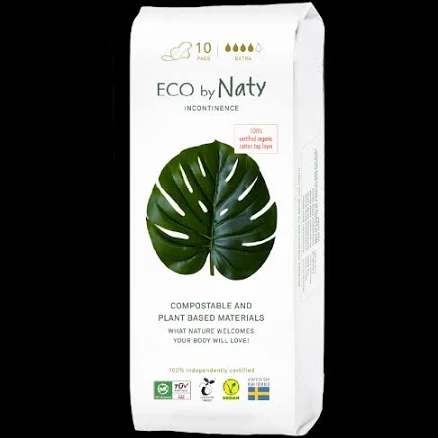
Eco By Naty
Incontinence Pads
- Bamboo-derived viscose, cotton, plant-based absorbent core
- We found no PFAS statement from the brand
- Heavy metals
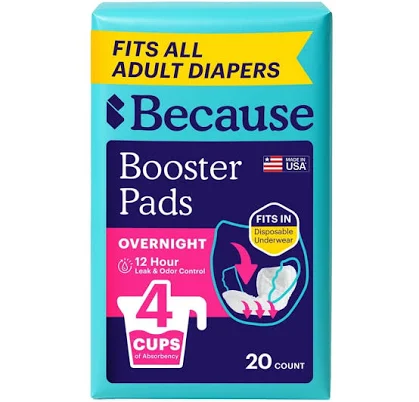
Because Market
Because Booster Pads
- Cellulose, superabsorbent polymer, cotton blend
- We found no PFAS statement from the brand
- Absorbent material degradation and bacterial growth
2 hazards checked on this product. See all of them.
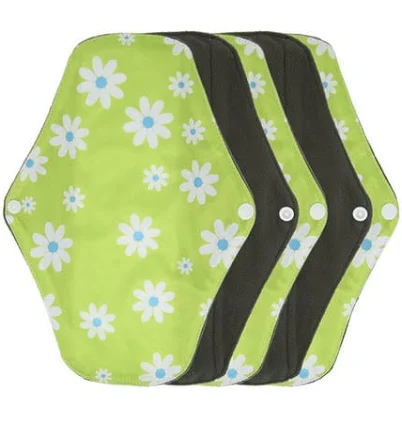
5pcs Bamboo Charcoal Washable Incontinence Pads
- bamboo charcoal textile, washable cotton-blend absorbent layer
- We found no PFAS statement from the brand
- Azo dyes and synthetic colorants
4 hazards checked on this product. See all of them.
More incontinence pads & protection grades
How we score, every product runs through the same public 0-100 rubric based on materials, coatings, brand disclosure, lab findings, and recalls. See the full methodology → Spotted a mistake? Report an error.