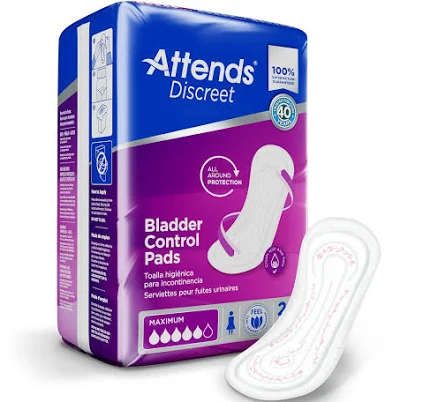
Attends · Incontinence Pads & Protection
Attends Discreet Bladder Control Pad Moderate Absorbency Female Disposable Case of 200
Unknown waterproof backing; manufacturer won't address PFAS.
Attends stays silent on PFAS and what waterproofs these pads. Disposable incontinence products routinely use polymer backings that may contain PFAS, but brand won't specify.
The better-graded swap
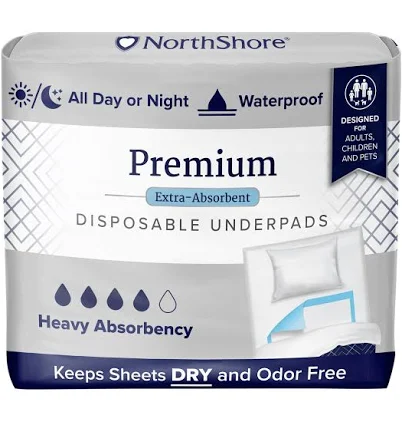
Northshore
NorthShore Premium 36
70/100 safety
Same rubric that flunked this product. The swap earned Good.
Still want this one anyway? Check the price on Amazon. We’d swap it.
Material
Cellulose, polymer absorbent core, waterproof backing
Brand disclosure
Brand is silent on PFAS
Lab data
No public lab test
What Attends Discreet Bladder Control Pad is made of, ingredients and materials
Attends Discreet pads use a cellulose-based absorbent core (common in incontinence products) paired with a polymer superabsorbent material to lock moisture, topped with a waterproof backing layer. Cellulose itself is a natural polymer and poses minimal direct chemical hazard; the polymer core (typically sodium polyacrylate) is not systemically absorbed through intact skin. The critical unknown is the waterproof backing, which manufacturers often treat with water-resistant coatings or films that may contain PFAS compounds to achieve durability and fluid repellency, though Attends has not disclosed their formulation publicly.
What’s concerning
Category baseline
The starting point for this type of product, before anything specific to this product is counted.
No PFAS disclosure
No public statement from the brand about PFAS in this product.
Waterproof / stain-resistant treatment
Water-repellent coating treatments have historically used PFAS.
PFAS
The waterproof polymer film backing is the likely source of PFAS if present; Attends has not disclosed their coating chemistry. PFAS was historically used in breathable waterproof fabrics and films to achieve fluid repellency without bulk.
Source, ATSDR ↗Microbial contamination if product stored improperly
Incontinence pads stored in high-humidity or warm environments can support bacterial or fungal growth on the cellulose and polymer matrix. This is a storage/use issue, not a manufacturing defect, but relevant to safety in practice.
What’s reassuring
Skin irritation from polymer absorbent core contact
Sodium polyacrylate (typical superabsorbent polymer in this category) is generally non-toxic and not systemically absorbed; isolated cases of contact dermatitis are rare and typically linked to product sensitivity or prolonged moisture trapping rather than the polymer itself.
Adhesive or fragrance allergens
No documented fragrance or adhesive sensitivity complaints are on public record for Attends incontinence pads; the product is typically unscented. Any adhesive used is minimal and confined to the backing edges.
Cellulose core degradation and leakage over extended shelf storage
Cellulose fibers can absorb ambient moisture and degrade under prolonged heat or humidity, reducing absorbency; this affects performance rather than direct safety but can lead to skin maceration if pads are less effective.
The full breakdown
The brand's record and disclosure
Attends (Hengan International, a major Asian manufacturer) maintains minimal public transparency on chemical composition or PFAS use in their product lines. No third-party certifications (e.g., Oeko-Tex, Cradle to Cradle, STANDARD 100) are advertised for this product line. No documented recalls or substantiated safety controversies specific to Attends incontinence pads are on public record, but the lack of proactive disclosure on PFAS and backing materials reflects a below-average transparency posture compared to competitors like Kotex or Depend who have made limited public commitments.
How it compares in its category
Disposable incontinence pads as a category carry uniform waterproofing challenges; nearly all use polymer backing films to prevent leakage, and PFAS is a known (though unconfirmed ingredient) in many waterproof textiles and films. Attends' moderate absorbency positioning is standard for light-to-moderate bladder leakage. Compared to premium brands (e.g., Always Discreet, Tena), Attends is mid-market and typically offers lower cost but comparable core absorbency; compared to budget alternatives, it offers more established manufacturing. The category itself has limited PFAS transparency across all major players, making this product neither an outlier nor a leader in disclosure.
If you buy it
Change pads regularly (typically every 4-6 hours or after each incident) to minimize skin contact time and reduce any potential leachate accumulation. Do not heat or incinerate used pads; dispose in regular trash per local guidance. Store in a cool, dry place; moisture and warmth can degrade polymer films over time and potentially increase leaching. If skin irritation, rash, or unusual odor develops after starting this product, discontinue and consider a brand with published chemical safety data or third-party certification.
What we don’t know
- Basis
- Model estimate, 35% confidence, not a lab result
- Lab test
- None on record for this exact product
- Brand statement
- Attends has made none
Formulations change between production runs, so check the current label. How we grade.
Better-graded alternatives in Incontinence Pads & Protection
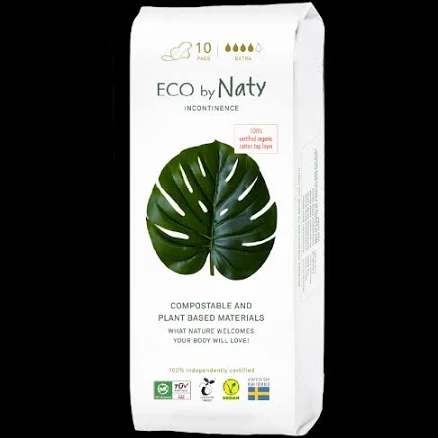
Eco By Naty
Incontinence Pads
- Bamboo-derived viscose, cotton, plant-based absorbent core
- We found no PFAS statement from the brand
- Heavy metals
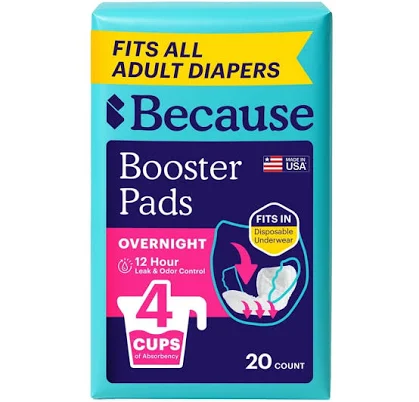
Because Market
Because Booster Pads
- Cellulose, superabsorbent polymer, cotton blend
- We found no PFAS statement from the brand
- Absorbent material degradation and bacterial growth
2 hazards checked on this product. See all of them.
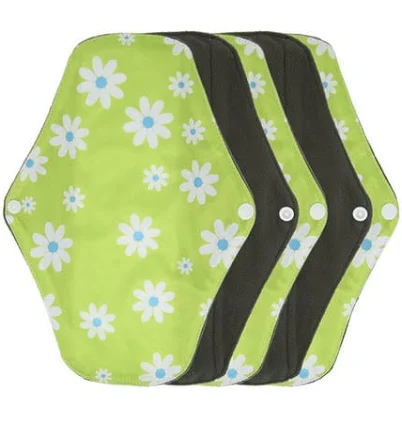
5pcs Bamboo Charcoal Washable Incontinence Pads
- bamboo charcoal textile, washable cotton-blend absorbent layer
- We found no PFAS statement from the brand
- Azo dyes and synthetic colorants
4 hazards checked on this product. See all of them.
More incontinence pads & protection grades
How we score, every product runs through the same public 0-100 rubric based on materials, coatings, brand disclosure, lab findings, and recalls. See the full methodology → Spotted a mistake? Report an error.