Rubbermaid · Food Storage Containers
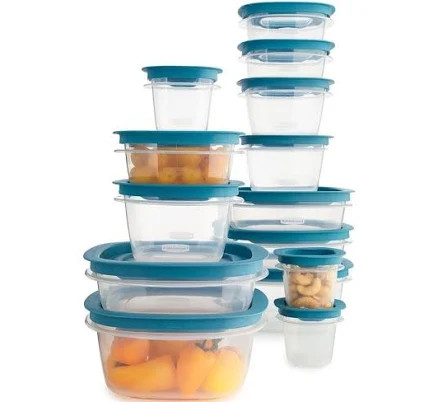
Rubbermaid Flex Seal 28-pc. Food Storage Set
Lower PFAS concern; standard rigid food storage containers without intentional coatings or treatments.
Rubbermaid Flex Seal containers are polypropylene plastic with polypropylene lids, base materials that don't inherently require PFAS. This product category typically carries lower PFAS risk than nonstick cookware or water-resistant textiles.
We flunk more products than we pass. This one earned its grade. How we grade
Material
Polypropylene (PP) plastic lids and containers
Brand disclosure
Brand is silent on PFAS
Lab data
No public lab test
You may also be interested in
Top-graded picks in the categories readers replace first, every one scored on the same rubric.

- polypropylene filter housing, carbon/sediment cartridge
- We found no PFAS statement from the brand
- Bacterial growth in spent cartridges
3 hazards checked on this product, all on its full breakdown.

Aquasure
Premier Series 75 GPD Under Sink Reverse Osmosis Water Filtration System
- RO membrane, carbon filters, stainless steel housing
- We found no PFAS statement from the brand
- Bacterial and microbial growth in housing and filters
4 hazards checked on this product, all on its full breakdown.

Avocado
Vegan Mattress
- organic cotton, natural latex, coconut coir, recycled steel coils
- The brand calls it PFAS-free, which we have not verified
- Heavy metals
2 hazards checked on this product, all on its full breakdown.
What Rubbermaid Flex Seal Food Storage Set is made of, ingredients and materials
This set uses polypropylene (PP, #5 plastic) for both containers and lids, a thermoplastic chosen for food storage because it has no BPA and resists degradation at normal kitchen temperatures. PP does not naturally contain phthalates or BPS, and rigid PP food containers do not shed microplastics under normal use or refrigeration. The main chemical concern with PP is that low-molecular-weight oligomers can migrate into food if containers are misused (extreme heat, repeated microwaving), but this is a design-use issue, not a material flaw.
What’s concerning
Category baseline
The starting point for this type of product, before anything specific to this product is counted.
No PFAS disclosure
No public statement from the brand about PFAS in this product.
Microplastic generation from wear
Repeated mechanical stress from stacking, opening, and closing lids can cause microscopic wear on PP surfaces; risk is low under normal use but increases if containers are roughly handled or loaded into dishwashers frequently.
Oligomer leaching under heat or lipid contact
PP can release low-molecular-weight oligomers into fatty or acidic foods, especially if containers are microwave-heated or used for long-term storage of oils and dressings; risk is minimal at refrigerator temperatures with non-fatty foods.
Lid seal degradation
Consumer reports indicate that PP lids on mass-market storage sets can lose flexibility and sealing integrity after 1-3 years of regular use, reducing air-tight function but not creating a direct chemical hazard; replacement lids are typically available separately.
What’s reassuring
Base material not linked to PFAS
The main material recorded for this product is not one associated with PFAS.
BPA & bisphenols
Polypropylene formulations used in food storage are not synthesized with BPA or BPS; no recalls or test reports indicate contamination of this product line.
Source, FDA ↗Phthalate plasticizers
Polypropylene rigid containers do not require phthalates for their structural properties; this hazard is associated with flexible PVC and polyvinyl chloride, not PP.
How is this PFAS grade calculated?
The brand's record and disclosure
Rubbermaid (owned by Newell Brands) does not publicly disclose PFAS content or testing for food storage lines, which is typical of the industry standard. The brand has no major recalls specifically for chemical leaching from rigid plastic food containers in the last decade. Rubbermaid holds FDA compliance certifications for food-contact plastics and does not market these products as non-toxic or PFAS-free, suggesting no special treatment claims to verify.
How it compares in its category
Polypropylene rigid containers are the industry baseline for affordable food storage and rank lower for chemical leaching risk than flexible plastics or older polycarbonate designs. This 28-piece set pricing and material choice are typical for mass-market storage; glass alternatives eliminate polymer leaching entirely but at higher cost and breakage risk. Compared to vintage plastic containers from the 1990s-2000s, modern PP formulations have phased out the additives that posed the greatest leaching hazards.
If you buy it
Avoid microwaving food in these containers; use the microwave-safe designation only for reheating empty containers. Do not store fatty foods (oils, butters, salad dressings) or acidic foods (tomato sauce, citrus) long-term, as these can promote oligomer migration. Replace containers if lids crack, seals degrade, or containers become cloudy or brittle, which signals polymer breakdown. Hand wash or use the top rack of the dishwasher; high-heat cycles can shorten the lifespan of lids.
What is not known about PFAS in this product?
- Basis
- Model estimate, 72% confidence, not a lab result
- Lab test
- None on record for this exact product
- Brand statement
- Rubbermaid has made none
Formulations change between production runs, so check the current label. How we grade.
What are the PFAS-free alternatives to Rubbermaid Flex Seal 28-pc. Food Storage Set?
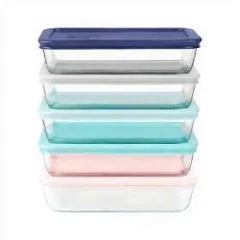
- borosilicate glass with metal lids (likely stainless steel or aluminum)
- Metal lid corrosion and leaching
3 hazards checked on this product, all on its full breakdown.
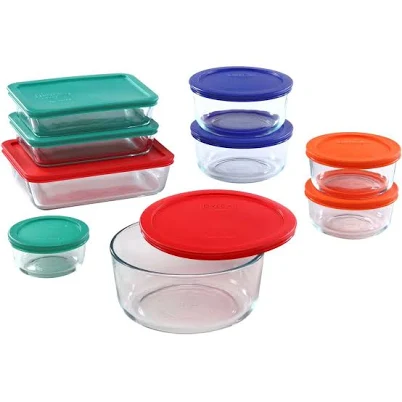
- borosilicate glass with plastic lids
- PFAS
4 hazards checked on this product, all on its full breakdown.
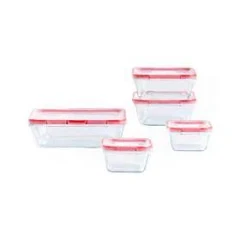
- Borosilicate glass containers with plastic lids (PP/TPE closure material unspecified)
- Microplastics
4 hazards checked on this product, all on its full breakdown.
More food storage containers grades
How we score, every product runs through the same public 0-100 rubric based on materials, coatings, brand disclosure, lab findings, and recalls. See the full methodology → Spotted a mistake? Report an error.