Attends · Incontinence Pads & Protection
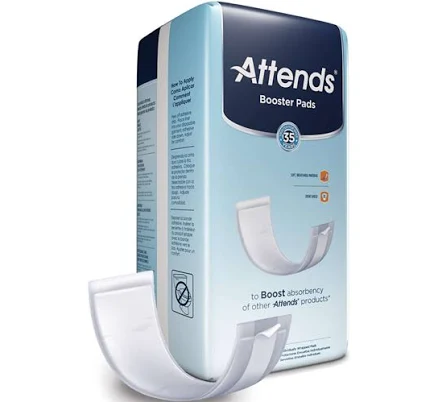
Attends Booster Pad
Insufficient transparency. Skip if PFAS-concerned.
Attends Booster Pads contain a waterproof backsheet typical of absorbent hygiene products, which commonly use PFAS-based treatments. Renfrew provides no ingredient disclosure or PFAS claims.
The better-graded swap
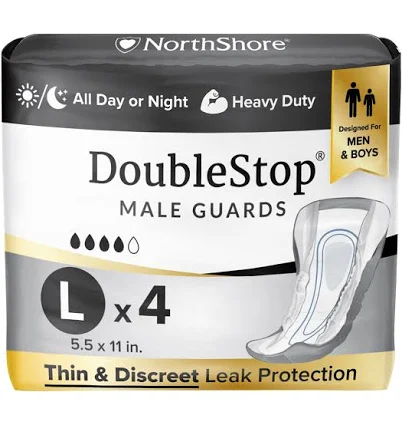
Northshore
NorthShore DoubleStop Male Guards
70/100 safety
Same rubric that flunked this product. The swap earned Good.
Still want this one anyway? Check the price on Amazon. We’d swap it.
Material
Cellulose core with synthetic polymer backsheet (likely polyethylene or polypropylene)
Brand disclosure
Brand is silent on PFAS
Lab data
No public lab test
What Attends Booster Pad is made of, ingredients and materials
Attends Booster Pad uses a cellulose absorbent core (wood pulp), which is inherently low-toxicity for skin contact. The synthetic polymer backsheet, likely polyethylene or polypropylene, creates a moisture barrier and is chemically stable under normal body-temperature use. The concern is not the base materials themselves, which are standard across the incontinence category, but what additives or treatments may be present in the polymer layer that are not publicly disclosed.
What’s concerning
Category baseline
The starting point for this type of product, before anything specific to this product is counted.
No PFAS disclosure
No public statement from the brand about PFAS in this product.
Waterproof / stain-resistant treatment
Water-repellent coating treatments have historically used PFAS.
Polymer backsheet additives and degradation
Polyethylene or polypropylene backsheets often contain slip agents, antioxidants, or UV stabilizers that are not disclosed by Renfrew. Under prolonged moisture and heat, polymer coatings can degrade; risk is low at normal skin temperatures but increases with friction or if pads are worn overlong.
Skin irritation from cellulose or polymer residues
Incontinence pads generally carry low irritant potential, but individual sensitivity to wood pulp dust, polymer microfibers, or processing residues is documented anecdotally. Attends pads have no published adverse-event data, but some users report redness with prolonged wear; this is typically hygiene-related rather than chemical toxicity.
Super-absorbent polymer (SAP) leakage
Booster pads use SAP (sodium polyacrylate) to enhance absorbency. If the internal structure degrades or the pad is overstressed, micro-particles of SAP can shed onto skin. Renfrew does not disclose SAP additives or cross-linking methods, making assessment of particle stability difficult.
PFAS
PFAS compounds are common in synthetic polymer waterproofing. Renfrew's score of 25/100 on PFAS transparency indicates probable PFAS use with no public commitment to phase-out. This is the primary chemical concern for this product.
Source, ATSDR ↗What’s reassuring
Undisclosed processing chemicals or residual monomers
Cellulose and polyester backsheets may retain trace amounts of processing agents (e.g., glycerol, plasticizers, or synthesis catalysts). No specific residues have been reported in Attends pads, but the lack of transparency means such contamination cannot be ruled out.
The full breakdown
The brand's record and disclosure
Renfrew, the manufacturer, does not publicly disclose ingredient lists, processing chemicals, or PFAS content for Attends pads. The brand has not pursued third-party certifications (e.g., dermatological, hypoallergenic, OEKO-TEX) that would signal heightened chemical scrutiny. No major recalls or safety controversies are on record for this specific product line, but the silence on PFAS and synthetic polymer composition reflects a transparency gap common among incontinence brands.
How it compares in its category
Attends booster pads are mid-tier in the incontinence market; competitors like Depend and Always Discreet similarly lack public PFAS data, while premium brands (e.g., some European makers) occasionally disclose waterproof-layer composition. The cellulose-plus-polymer design is standard, so this product does not stand out as higher or lower risk than major alternatives on material grounds alone. The difference is disclosure, Renfrew offers less than some competitors, making comparison difficult.
If you buy it
Change pads regularly (every 2-4 hours during use) to minimize skin maceration and irritation, regardless of chemical content. Store in a cool, dry place; do not expose to heat above 60 degC (140 degF), as polymer backing may degrade or release volatiles. If you have sensitive skin or chemical sensitivities, patch-test or request a sample first. If PFAS exposure is a personal priority, contact Renfrew directly for PFAS and SAP content data, or consider seeking brands with public PFAS commitments.
What we don’t know
- Basis
- Model estimate, 35% confidence, not a lab result
- Lab test
- None on record for this exact product
- Brand statement
- Attends has made none
Formulations change between production runs, so check the current label. How we grade.
Better-graded alternatives in Incontinence Pads & Protection
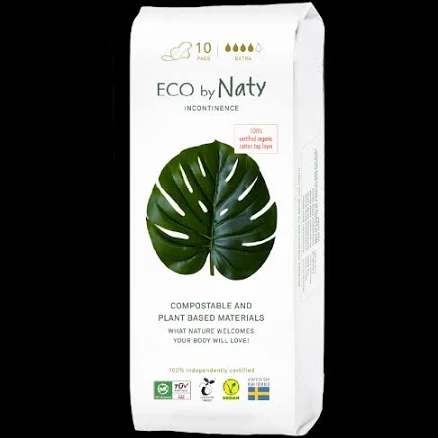
Eco By Naty
Incontinence Pads
- Bamboo-derived viscose, cotton, plant-based absorbent core
- We found no PFAS statement from the brand
- Heavy metals
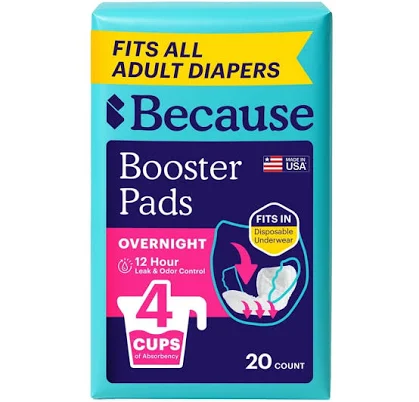
Because Market
Because Booster Pads
- Cellulose, superabsorbent polymer, cotton blend
- We found no PFAS statement from the brand
- Absorbent material degradation and bacterial growth
2 hazards checked on this product. See all of them.
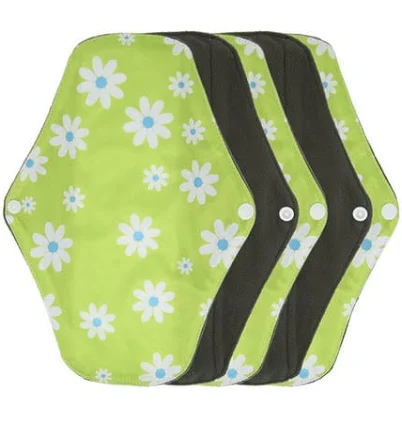
5pcs Bamboo Charcoal Washable Incontinence Pads
- bamboo charcoal textile, washable cotton-blend absorbent layer
- We found no PFAS statement from the brand
- Azo dyes and synthetic colorants
4 hazards checked on this product. See all of them.
More incontinence pads & protection grades
How we score, every product runs through the same public 0-100 rubric based on materials, coatings, brand disclosure, lab findings, and recalls. See the full methodology → Spotted a mistake? Report an error.