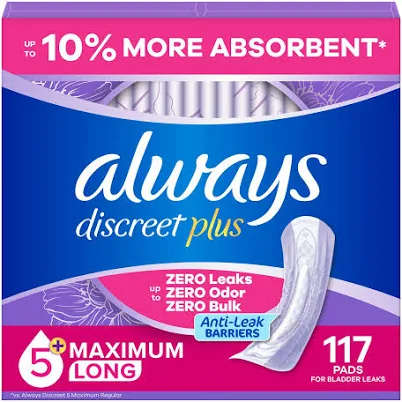
Always Discreet · Incontinence Pads & Protection
Always Discreet Heavy Long Incontinence Pads
Wait for brand to disclose coating or pursue PFAS-tested alternatives.
Always Discreet Heavy Long pads use undisclosed water-repellent coatings and absorbent cores. Incontinence pads require water-resistant treatment, a common PFAS application, but brand makes no transparency claims or verification. Without lab testing or disclosure, PFAS risk stays uncertain.
The better-graded swap
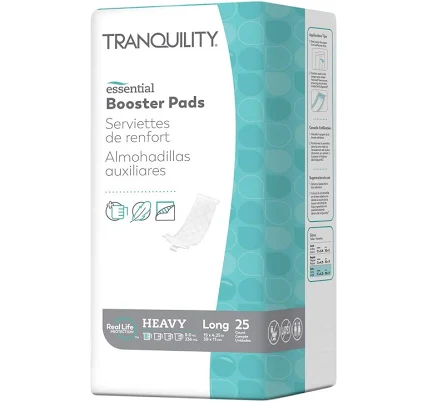
Tranquility
Tranquility Essential Booster Pads Heavy Absorbency, Long - 4-1/4 x 15 Inch (Case of 200)
70/100 safety
Same rubric that flunked this product. The swap earned Good.
Still want this one anyway? Check the price on Amazon. We’d swap it.
Material
nonwoven cellulose layers with unspecified water-repellent coating
Brand disclosure
Brand is silent on PFAS
Lab data
No public lab test
What Always Discreet Heavy Long Incontinence is made of, ingredients and materials
Always Discreet Heavy Long pads use nonwoven cellulose (wood pulp fibers) as the absorbent core, layered with a water-repellent coating whose chemical identity the brand does not publicly disclose. The coating is critical because it prevents leakage, but its composition determines whether synthetic chemicals, notably PFAS (forever chemicals), migrate to skin or enter wastewater. Nonwoven cellulose itself is relatively inert; the hazard profile depends almost entirely on what that coating contains.
What’s concerning
Category baseline
The starting point for this type of product, before anything specific to this product is counted.
No PFAS disclosure
No public statement from the brand about PFAS in this product.
Waterproof / stain-resistant treatment
Water-repellent coating treatments have historically used PFAS.
PFAS
Brand does not disclose coating chemistry; industry standard for incontinence pads is fluorinated polymers or PFAS-based repellents. Skin contact and environmental persistence are documented concerns for PFAS in personal care products.
Source, ATSDR ↗Skin irritation or allergic contact dermatitis from adhesives or synthetic fibers
Nonwoven synthetics and pressure-sensitive adhesives can trigger contact dermatitis in sensitive individuals; no specific adverse event reports found for Always Discreet, but is a class-level risk inherent to the material type.
Skin maceration or fungal/bacterial overgrowth if pads not changed frequently
Moisture barrier increases time urine remains in contact with skin; prolonged wear heightens risk of candidiasis and urinary dermatitis, regardless of coating chemistry. This is a use-pattern hazard, not material-specific.
Microplastic or degraded nonwoven fibers during extended wear
Nonwoven cellulose and synthetic fibers can shed or degrade with friction and moisture; no documented health impact from pad wear, but systemic microfiber ingestion from textiles is an emerging concern in medical literature.
Disposal and environmental persistence of coated materials
Used pads accumulate in landfills; if coating contains PFAS or other synthetic polymers, they do not biodegrade and may leach into soil and groundwater over decades.
The full breakdown
The brand's record and disclosure
Procter and Gamble (Always's parent) has not publicly committed to PFAS-free formulations or disclosed coating chemistries for incontinence products as of public record. The company does not list these products on third-party certification schemes (e.g., OEKO-TEX, Cradle to Cradle). No major product recalls for toxicant leaching or skin reactions have been widely documented, but absence of evidence is not evidence of safety, particularly given the proprietary nature of the coating.
How it compares in its category
Incontinence pads are a niche category with limited transparency industry-wide; most major brands (Depend, Tena, Poise) similarly do not disclose water-repellent coatings. Some smaller or eco-focused brands (e.g., Natracare, Seventh Generation) market PFAS-free or plant-based barrier options, though availability is limited. Always Discreet's silence is industry-typical rather than exceptional, but that does not reduce the information gap.
If you buy it
Store pads in a cool, dry place away from heat sources; do not microwave or place near open flame, as heating can affect coating stability and potentially release volatile compounds. Replace pads promptly after use to minimize skin maceration and irritation risk. Dispose of used pads in household trash (not toilets), as wastewater treatment does not reliably remove PFAS or other coating residues. If skin sensitivity develops, switch brands and consider requesting a sample disclosure from the manufacturer.
What we don’t know
- Basis
- Model estimate, 35% confidence, not a lab result
- Lab test
- None on record for this exact product
- Brand statement
- Always Discreet has made none
Formulations change between production runs, so check the current label. How we grade.
Better-graded alternatives in Incontinence Pads & Protection
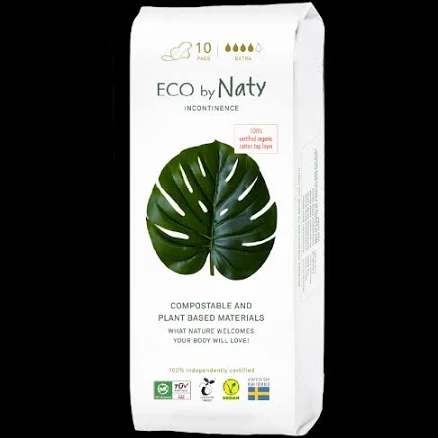
Eco By Naty
Incontinence Pads
- Bamboo-derived viscose, cotton, plant-based absorbent core
- We found no PFAS statement from the brand
- Heavy metals
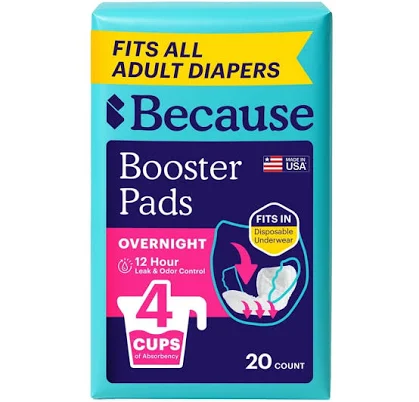
Because Market
Because Booster Pads
- Cellulose, superabsorbent polymer, cotton blend
- We found no PFAS statement from the brand
- Absorbent material degradation and bacterial growth
2 hazards checked on this product. See all of them.
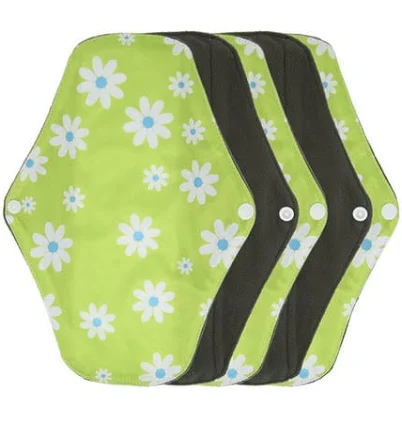
5pcs Bamboo Charcoal Washable Incontinence Pads
- bamboo charcoal textile, washable cotton-blend absorbent layer
- We found no PFAS statement from the brand
- Azo dyes and synthetic colorants
4 hazards checked on this product. See all of them.
More incontinence pads & protection grades
How we score, every product runs through the same public 0-100 rubric based on materials, coatings, brand disclosure, lab findings, and recalls. See the full methodology → Spotted a mistake? Report an error.